

Stories you may like
There are many opportunities for professional welders or sheet metal workers within the aviation industry. Earning potential for aviation welding jobs ranges from £30k (US$50k) to £65k (US$100k), so it’s an attractive career option.
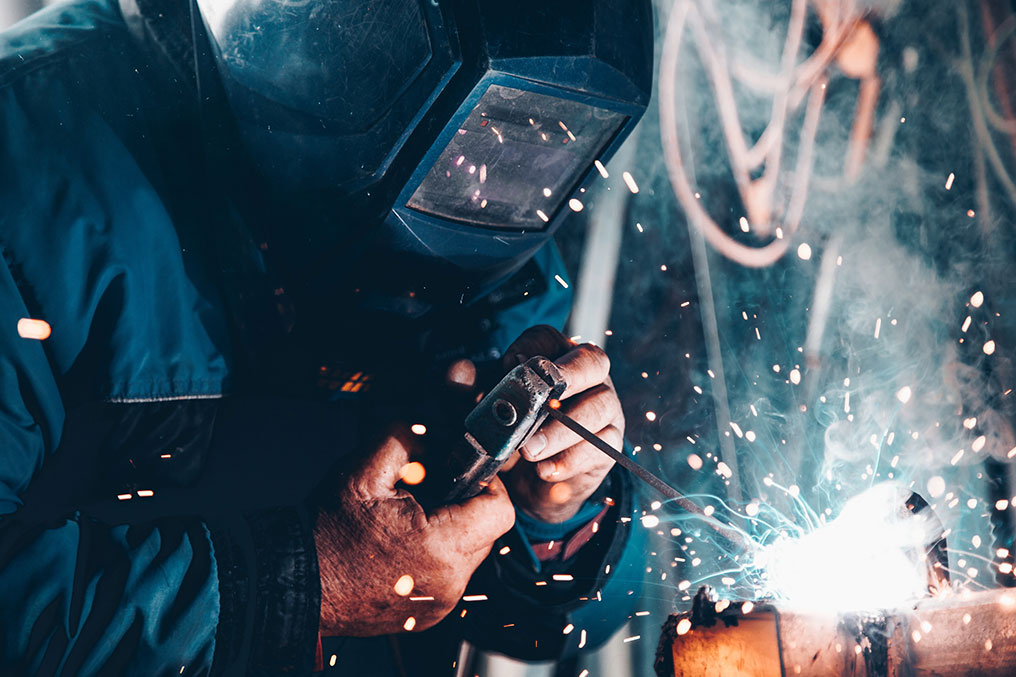
Aviation welding technicians will need to be thoroughly familiar with safety requirements and ‘practice safe’ work habits. They will know how to set up, operate, and maintain all welding equipment.
It will help to have dexterity, coordination and patience. After all, it takes time to develop the skills required of proficient welding.
It’s important that aviation welding technicians and managers remain up to speed with welding technology and welding standards. In some cases, specialist aviation welding training will be given by employers.
Aviation welders and sheet metal workers tend to work in heavy engineering fabrication workshops. Aviation welding focuses on securing deck plates on aircraft, or perhaps working on sealed flexible joints and duct components for aircraft ducting systems.
Senior welding jobs may involve inventory management and ordering consumable welding materials. There will also be team management responsibilities and the need to observe health and safety standards, and working time regulations.
Requirements
Successful candidates applying for aircraft welding jobs tend to be educated to HND or equivalent in welding engineering or metallurgy. It might also help to have professional membership of a welding institute or qualifications as a European welding engineer.
Employers will want to see a proven background and experience within welding and metallurgy. You might specifically be expected to be competent in resistance and fusion welding, using MIG welding and TIG welding procedures.
The contract type can sometimes be temporary for aviation welding jobs depending on the size of the project. Salaries range from £30,000 per annum for a junior post, to £65,000 for s
The Aviation Welding Technicians are tradesmen who will:
- be thoroughly familiar with safety requirements and practice safe work habits;
- set up, operate, and maintain all welding equipment;
- have dexterity, co-ordination and patience to develop the skills required of proficient welding technicians; and
- remain current with welding technology and welding standards established by the CCAA.
This Occupational Standard lists all the tasks which an Aviation Welding Technician should be able to perform. However, the minimum standard for each process is determined by equipment availability and job requirements in different parts of the country.
Rather than list job documentation and material preparation in detail for each welding process, these are listed as separate tasks. For example, Task 1 provides information on safe work practices and techniques. Task 2 describes how a technician uses reference material, interprets blueprints, and documents work completed. Task 15 deals with supplementary and disassembly procedures performed by an Aviation Welding Technician. Portions of these tasks will pertain to all duties performed by an Aviation Welding Technician.
- Fabrication and repair: Constructing new parts and repairing damaged components of an aircraft's structure.
- Welding techniques: Using specialized processes like Tungsten Inert Gas (TIG) and Metal Inert Gas (MIG) welding on various materials such as aluminum, titanium, and stainless steel.
- Quality control: Performing detailed inspections of all welded joints to detect any imperfections or flaws that could compromise safety.
- Blueprint interpretation: Reading and understanding complex blueprints, technical drawings, and specifications to ensure accuracy.
- Material knowledge: Possessing a strong understanding of metallurgy and the specific properties of the alloys used in aircraft construction.
- Technical proficiency: Mastery of advanced welding techniques, including new methods like laser and friction stir welding.
- Mathematical and precision skills: A high level of accuracy and the ability to perform precise calculations for angles and measurements.
- Certification: Training and certification are often required, sometimes involving years of specific experience in aviation welding.
- Safety awareness: A deep understanding of safety requirements and the ability to follow safe work practices, including using proper protective equipment against hazards like UV and IR radiation.









User's Comments
No comments there.