


Stories you may like
Renewable Energy Engineer
Renewable energy engineers play a key role in the fight against climate change. They design and develop technologies that use sustainable energy sources like the sun, wind, water, and geothermal heat to generate power.
Their work helps reduce reliance on foreign oil and gas, improve air and water quality, protect natural habitats, and support healthier ecosystems. By creating cleaner and more reliable energy solutions, they also contribute to better public health and a more sustainable future for everyone.
Duties and Responsibilities
Renewable energy engineers have a diverse range of responsibilities, all centered around advancing the clean energy solutions that will power our future. Here's a breakdown of their key tasks:
- Research and Development – Investigating and improving existing renewable energy technologies (solar, wind, hydro, geothermal, biomass); exploring and developing new and innovative ways to capture and utilize renewable energy; conducting experiments and simulations to test the efficiency and effectiveness of different technologies
- Design and Implementation – Planning and designing renewable energy systems, such as solar farms, wind farms, and hydroelectric power plants; selecting appropriate equipment and materials for specific projects; overseeing the construction and installation of renewable energy systems; ensuring projects comply with regulations and environmental standards
- Analysis and Optimization – Monitoring the performance of renewable energy systems; identifying areas for improvement in efficiency and energy output; analyzing data to optimize system operations and maintenance; troubleshooting technical issues and implementing solutions
- Integration and Grid Management – Working on integrating renewable energy sources into existing power grids; developing strategies for managing fluctuations in renewable energy supply; collaborating with utility companies to ensure smooth grid operation
- Environmental Impact Assessment – Evaluating the environmental impact of renewable energy projects; developing strategies to minimize any potential negative effects on ecosystems and wildlife; ensuring projects adhere to environmental regulations and sustainability guidelines
- Collaboration and Communication – Working with teams of engineers, scientists, and technicians; communicating technical information to clients, stakeholders, and the public; staying up to date on the latest advancements in renewable energy technology
Workplace of a Renewable Energy Engineer
Renewable energy engineers are in demand across a wide range of industries and organizations. These are among their most common employers:
- Renewable Energy Manufacturers – companies that produce solar panels (e.g., First Solar, SunPower), wind turbines (e.g., Vestas, GE Renewable Energy), and other renewable energy technologies
- Renewable Energy Developers – companies that plan, design, and build renewable energy projects (e.g., large-scale solar farms, wind farms, hydroelectric plants); examples: NextEra Energy, Ørsted, and Invenergy
- Renewable Energy Installers – companies that install and maintain renewable energy systems for residential, commercial, and industrial clients
- Utility Companies – electric utilities incorporating renewable energy sources into their energy mix, needing renewable energy engineers to help with grid integration, system planning, and optimization of renewable energy assets
- Engineering Firms –firms specializing in renewable energy projects, providing services such as feasibility studies, design, construction management, and environmental impact assessment
- Federal, State, and Local Governments – government agencies which develop and implement renewable energy policies, manage renewable energy programs, and oversee renewable energy projects
- Research institutions / Academia – government-funded and independent research labs and universities conducting research and development on new technologies and employing professors and instructors to educate the next generation of renewable energy professionals
- Non-Profit Organizations – environmental and advocacy groups that need renewable energy engineers to provide technical expertise, conduct research, and promote renewable energy adoption
- Consulting Firms – firms that specialize in sustainability and energy efficiency and advising clients on renewable energy options to help them implement sustainable energy solutions
- Startups – companies developing innovative technologies and solutions
- International Organizations – organizations like the International Renewable Energy Agency (IRENA) and the United Nations, which support the global transition to renewable energy
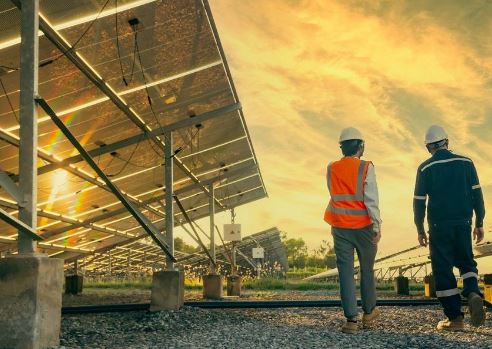
Renewable energy engineers work in a variety of settings, making their job both dynamic and diverse. They spend a lot of time in offices, working with colleagues to design and analyze renewable energy systems using specialized software. They also visit project sites to assess resources, oversee construction, and check how well renewable energy systems are performing. This means they may work outdoors in different weather conditions and travel to various locations. Sometimes, they also work in labs to test new technologies and conduct research.
The job moves quickly and requires knowledge in multiple areas of renewable energy. Engineers need to be adaptable, good at solving problems, and able to work well with others. Safety and sustainability are key priorities in their work. While the job can be challenging, it’s also rewarding because it allows them to help expand clean energy and protect the environment.
How to become a Renewable Energy Engineer
Becoming a renewable energy engineer requires a combination of education, skills development, and practical experience. Here's a roadmap to the process:
Build a Strong Foundation
In high school, focus on math and science courses, including algebra, trigonometry, calculus, physics, and chemistry. These subjects are crucial for understanding engineering principles. Join science clubs and environmental groups or participate in STEM-related competitions to explore your interest in renewable energy and develop relevant skills.
Bachelor's Degree
A bachelor's degree in an engineering discipline is the most common path. Among the popular choices are:
- Electrical Engineering – Focuses on electricity generation, distribution, and power systems, essential for renewable energy integration
- Mechanical Engineering – Deals with the design, analysis, and manufacturing of mechanical systems, relevant for wind turbines, hydropower systems, and other renewable energy technologies
- Environmental Engineering – Emphasizes environmental protection and sustainability, including renewable energy and pollution control
- Other Options – chemical engineering, civil engineering, or, if available, a specialized renewable energy engineering degree, which may be offered under different names like clean energy engineering, sustainable and renewable energy engineering, or sustainable energy management.
Ensure the program is accredited by ABET (Accreditation Board for Engineering and Technology) to meet professional standards. Expect to study thermodynamics, fluid mechanics, materials science, electrical circuits, and other fundamental engineering subjects. Seek internships in renewable energy companies or related organizations to gain practical experience and network with professionals.
Advanced Studies (Optional)
A master's degree in renewable energy engineering or a related specialization can provide deeper knowledge and expertise in specific areas, such as solar energy, wind energy, or energy storage. This can be beneficial for career advancement and specialized roles. A Ph.D. is typically pursued for academic and/or research-oriented careers in the renewable energy field.
Practical Experience
Look for entry-level engineering positions in renewable energy companies, consulting firms, or government agencies. Seek opportunities to work on renewable energy projects, gaining hands-on experience in design, construction, operation, and maintenance.
Professional Licensure (Optional but Recommended)
In the United States, engineering is a regulated profession, and a license is required to offer engineering services to the public. After earning a relevant bachelor’s degree, take the Fundamentals of Engineering (FE) exam. Following several years of experience, take the Principles and Practice of Engineering (PE) exam to become a licensed professional engineer. Licensure demonstrates engineering competence and can enhance career prospects.
Develop Essential Skills
- Technical Skills – Strong math and science skills, knowledge of engineering principles, and familiarity with renewable energy technologies are foundational.
- Software Proficiency – Learn to use computer-aided design (CAD) software, modeling tools, and other relevant software for design and analysis.
- Problem-Solving and Analytical Skills – Develop abilities to analyze data, identify problems, and find creative solutions.
- Communication and Teamwork Skills – Effective communication and collaboration are crucial for working in engineering teams and interacting with clients.
Continuous Learning
The renewable energy field is constantly evolving, so it is necessary to stay updated on the latest technologies, research, and industry trends through conferences, workshops, and professional publications.
Certifications
There are several certifications available for renewable energy engineers, which can demonstrate expertise and enhance career prospects. Here are some of the most recognized ones:
- Certified Renewable Energy Professional (REP) – Issued by the Association of Energy Engineers (AEE), this credential certifies expertise in renewable energy technologies, project management, and low-carbon strategies. It is suitable for engineers working across various renewable energy sectors, including wind, solar, and biomass. To earn the REP certification, candidates need to meet certain eligibility criteria (education and experience) and pass an exam covering various renewable energy topics.
- Leadership in Energy and Environmental Design (LEED) Certification – Issued by the US Green Building Council (USGBC), LEED certification demonstrates knowledge in green building practices and sustainable design. It is useful for engineers involved in designing and constructing energy-efficient buildings and infrastructure.
- Certified Energy Manager (CEM) – Offered by the Association of Energy Engineers (AEE), the CEM certification is the most recognized designation in the field of energy management and efficiency. It is targeted at engineers focusing on optimizing energy use and implementing sustainable solutions.
- Certified Sustainable Development Professional (CSDP) – Also issued by the AEE, this certification recognizes expertise in sustainable development practices and renewable energy integration. It is suitable for engineers focusing on sustainable energy solutions and environmental impact.
- Certified GeoExchange Designer – This is another AEE credential. It is designed to recognize professionals in applying the principles and practices of geothermal heat pump design and related disciplines.
- NABCEP (North American Board of Certified Energy Practitioners) Certifications – NABCEP offers several certifications in various renewable energy fields, particularly solar energy. Relevant certifications include PV Installation Professional (PVIP), for those involved in the installation of photovoltaic (PV) systems; PV Design Specialist (PVDS), for engineers specializing in the design of PV systems; and Solar Heating Installer (SHI), for those working on solar thermal systems.
- ISO 50001 Energy Management Systems Auditor/Lead Auditor – Issued by various certification bodies, this credential certifies expertise in auditing and implementing energy management systems according to ISO 50001 standards. It is useful for engineers involved in energy management and efficiency projects.
- Specialized Certifications – Some organizations and educational institutions offer certifications in specific renewable energy technologies, such as wind energy, geothermal energy, or energy storage.
Professional Organizations
In addition to the certifying bodies referenced above in the Certifications section, the following organizations also support the renewable energy community:
- American Council on Renewable Energy (ACORE) – This is a national non-profit organization that unites finance, policy, and technology to accelerate the transition to a renewable energy economy. ACORE offers resources, events, and advocacy for renewable energy.
- International Renewable Energy Agency (IRENA) – An intergovernmental organization supporting countries in their transition to a sustainable energy future, IRENA provides data, reports, and a platform for international cooperation on renewable energy.
- American Clean Power Association (ACP) – A leading trade association representing companies in the wind, solar, energy storage, and other clean power sectors, ACP advocates for policies that support renewable energy growth.
- Institute of Electrical and Electronics Engineers (IEEE) – This is a large professional organization for electrical engineers, with a strong focus on power and energy systems, including renewable energy integration.
- American Society of Mechanical Engineers (ASME) – ASME is a professional society for mechanical engineers, with divisions and interest groups related to renewable energy technologies like wind turbines and hydropower systems.
- Energy Storage Association (ESA) – ESA represents companies involved in energy storage technologies, which are crucial for integrating intermittent renewable energy sources.
- American Solar Energy Society (ASES) – ASES promotes the use of solar energy and sustainable living. It provides access to publications, conferences, webinars, and networking opportunities.
- International Solar Energy Society (ISES) – ISES advances the use of solar energy worldwide.
- Renewable Energy and Energy Efficiency Partnership (REEEP) – REEEP promotes renewable energy and energy efficiency in developing countries. It offers funding opportunities and policy insights and fosters international collaboration.
- International Hydropower Association (IHA) – IHA promotes sustainable hydropower development.
- Geothermal Rising – This international non-profit association supports the development of geothermal resources.
- Biomass Power Association (BPA) – BPA represents the biomass power industry in the United States through policy advocacy, industry reports, and networking events.
- International Geothermal Association (IGA) – IGA promotes geothermal energy worldwide.
- Solar Energy Industries Association (SEIA) – SEIA represents the solar energy industry in the United States through policy advocacy and market research.
- World Wind Energy Association (WWEA) – WWEA promotes wind energy globally.











User's Comments
No comments there.