

Stories you may like
Tour Guide
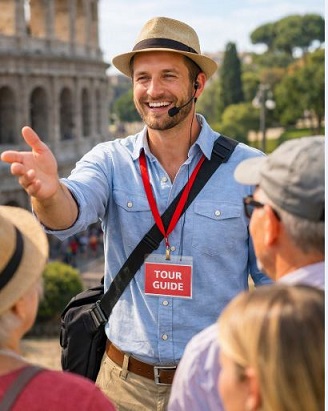
A tour guide provides assistance, information, and guidance to individuals or groups of tourists during their travels. Their primary role is to enhance the travel experience by sharing knowledge and insights about the destinations, attractions, and cultural aspects of the places being visited. Tour guides are well-versed in the history, geography, culture, and traditions of the locations they cover, and they use their expertise to educate and entertain the tourists.
Tour guides are responsible for organizing and leading tours, ensuring that the itinerary is followed, and the group stays on schedule. They may work in various settings, including cities, historical sites, natural landscapes, or cultural landmarks. During tours, guides provide commentary, answer questions, and engage with the tourists, creating an interactive and immersive experience. They may also assist with logistical matters, such as arranging transportation, coordinating entry to attractions, and recommending places to eat or shop.
Duties and Responsibilities
Tour guides have a range of duties and responsibilities to ensure a smooth and enjoyable travel experience for tourists. Some of the key responsibilities include:
- Planning and organizing: Tour guides research and plan tour itineraries, considering factors such as the duration of the tour, the interests of the group, and the availability of attractions. They arrange transportation, accommodation, meals, and any necessary permits or tickets, ensuring that everything is well-coordinated.
- Providing information and commentary: A primary role of tour guides is to offer informative and engaging commentary about the destinations being visited. They share historical facts, cultural insights, and interesting anecdotes to educate and entertain tourists. Guides should have a deep understanding of the locations, including their history, architecture, local customs, and traditions.
- Leading tours and managing groups: Tour guides are responsible for leading the group throughout the tour. They ensure that the group stays together, follows the itinerary, and adheres to any safety guidelines. Guides should have good organizational and leadership skills to manage groups of varying sizes and diverse backgrounds.
- Assisting with logistics: Tour guides handle practical aspects of the tour, such as coordinating transportation between sites, arranging entry to attractions, and managing timing to optimize the itinerary. They provide directions, answer questions, and offer recommendations for meals, shopping, and other activities.
- Ensuring safety and security: Guides prioritize the safety and security of the tourists. They inform the group about potential risks or hazards, and they take necessary precautions to prevent accidents or incidents. In emergency situations, guides should be prepared to provide assistance and follow appropriate protocols.
- Interacting and engaging with tourists: Tour guides create a welcoming and interactive environment for tourists. They foster a positive and friendly atmosphere, encourage questions, and actively engage with the group. Guides should be approachable and adaptable, catering to the needs and interests of the tourists.
- Resolving issues and addressing concerns: Tour guides act as a point of contact for tourists, addressing any concerns or issues that may arise during the tour. They handle complaints, resolve conflicts, and provide assistance or alternative solutions when needed.
- Promoting responsible and sustainable tourism: Guides play a crucial role in promoting responsible tourism practices. They educate tourists about local customs and cultural sensitivities, encourage respectful behavior towards local communities and the environment, and advocate for sustainable travel practices.
Workplace of a Tour Guide
The workplace of a tour guide can be quite diverse and dynamic, offering a mix of indoor and outdoor environments. One aspect of their workplace involves cultural and urban settings. City tour guides, for instance, operate within bustling cities, leading tourists through streets, squares, and iconic landmarks. They may work in vibrant neighborhoods, historic districts, or cosmopolitan areas, immersing tourists in the local culture and urban atmosphere. These guides navigate through crowded streets, interact with locals, and provide insights into the city's history, architecture, and vibrant lifestyle. They may also lead tours in museums, art galleries, or cultural centers, where they can showcase the city's artistic and cultural offerings.
Another significant aspect of a tour guide's workplace is outdoor settings. Nature and wildlife tour guides find themselves working in breathtaking natural landscapes, such as forests, mountains, or coastal areas. These guides lead groups on hikes, nature walks, or wildlife safaris, sharing their knowledge about the local flora, fauna, and ecosystems. Their workplace is characterized by stunning scenery, serene environments, and opportunities for visitors to connect with nature. Adventure tour guides also operate in outdoor settings, taking tourists on thrilling activities like rafting, rock climbing, or skiing. They work in adventurous and often remote locations, ensuring the safety of participants while providing an adrenaline-pumping experience.
Additionally, the workplace of a tour guide can extend to various modes of transportation. They may lead tours on buses, boats, trains, or even walking tours, utilizing different forms of transportation to explore diverse attractions and destinations. This allows guides to provide a comprehensive experience, showcasing various facets of a region while offering comfort and convenience to tourists.
How to become a Tour Guide
Becoming a tour guide involves a combination of education, training, and practical experience. Here is a detailed guide on how to pursue a career as a tour guide:
- Obtain a High School Diploma: Start by completing your high school education or its equivalent. A strong foundation in subjects such as history, geography, languages, and communication will be beneficial in your future career as a tour guide.
- Choose a Specialization: Decide on the type of tours you are interested in guiding. Consider whether you prefer city tours, nature and wildlife tours, historical tours, or any other niche area. This will help you focus your training and develop expertise in your chosen field.
- Acquire Relevant Education: While not always a requirement, pursuing a degree or certificate can enhance your knowledge and credibility as a tour guide. Look for degree programs in areas such as travel and tourism management, cultural studies, or history.
- Gain Local Knowledge: Familiarize yourself with the destinations you wish to guide tours in. Learn about the local history, landmarks, cultural traditions, and attractions. Explore museums, historical sites, and natural areas to deepen your understanding of the area's offerings.
- Develop Language Skills: If you plan to guide tours in a foreign country or cater to international tourists, it's beneficial to acquire proficiency in one or more foreign languages. This will enable you to communicate effectively and cater to a wider range of visitors.
- Obtain Relevant Licenses and Certifications: Check the requirements of the destination or country where you intend to work as a tour guide. Some locations may require you to obtain specific licenses or certifications to operate legally. Research and complete the necessary training or examinations to meet the requirements.
- Gain Practical Experience: Seek opportunities to gain practical experience in the tourism industry. Consider working part-time or as an intern with local tour operators, travel agencies, or visitor centers. This will provide valuable hands-on experience and help you develop your skills in guiding and managing groups.
- Enhance Communication and Interpersonal Skills: Effective communication and interpersonal skills are essential for a tour guide. Work on developing your public speaking, storytelling, and customer service skills. Practice engaging with different types of people and adapting your communication style to suit diverse audiences.
- Join Professional Associations: Consider joining professional associations or organizations for tour guides. These groups provide networking opportunities, access to industry resources, and professional development workshops or seminars.
- Continuously Update Your Knowledge: Stay updated on the latest developments, trends, and attractions in the destinations you guide tours in. Regularly research and read about new historical discoveries, cultural events, or changes in tourist regulations to provide accurate and up-to-date information to your clients.
- Market Yourself: Create a professional portfolio or resume highlighting your qualifications, experience, and areas of expertise. Establish an online presence through a website or social media platforms, showcasing your skills and providing information about the tours you offer.
- Start Guiding: Once you feel confident and ready, start offering your services as a tour guide. You can join an established tour company or operate independently. Consider offering free or discounted tours initially to gain testimonials and build a client base.
Key skills needed for a Tour Guide
Communication Skills
- Clear and confident speaking
- Storytelling to make history and culture interesting
- Ability to explain complex information in simple terms
Knowledge & Research Skills
- Strong knowledge of local history, culture, landmarks, and traditions
- Continuous learning and fact-checking
- Awareness of current events related to tourism
Interpersonal Skills
- Friendly and approachable personality
- Ability to handle diverse groups and age ranges
- Conflict management and customer service skills
Language Skills
- Fluency in the local language
- Knowledge of foreign languages (very helpful for international tourists)
Leadership & Organization
- Group management and time management
- Planning routes and schedules
- Ensuring group safety and comfort
Problem-Solving Skills
- Handling unexpected issues (weather, delays, lost guests)
- Quick decision-making under pressure
Presentation & Engagement
- Confidence, body language, and enthusiasm
- Use of humor and interactive techniques
Technical & Practical Skills
- Using microphones, headsets, and tour apps
- Basic first aid knowledge
- Navigation and map-reading skills
Personal Qualities
- Patience and adaptability
- Cultural sensitivity
- Passion for travel and teaching
Tour Guide Salary
India
- Entry-level: ₹15,000 – ₹25,000 per month
- Experienced: ₹30,000 – ₹60,000 per month
- Expert / Multilingual / Luxury tours: ₹70,000+ per month
- Per-day freelance rate: ₹1,500 – ₹5,000 (can be higher for foreign tourists)
International (Approximate)
- USA: $30,000 – $55,000 per year
- UK: £20,000 – £35,000 per year
- Europe: €22,000 – €40,000 per year
- Middle East: ₹40,000 – ₹80,000 per month (tax-free in some countries)
Factors Affecting Salary
- Location & tourist demand
- Experience and reputation
- Language skills (foreign languages = higher pay)
- Type of tours (heritage, adventure, luxury, cruise, wildlife)
- Freelance vs company-employed
Extra Earnings
- Tips from tourists
- Commission from hotels, shops, and travel agencies
- Private or customized tours
Top Colleges & Institutes for Tour Guide Courses in India
1. Indian Institute of Tourism & Travel Management (IITTM)
Gwalior, Bhubaneswar, Noida, Nellore
- Govt. of India institute (Ministry of Tourism)
- Courses:
- Certificate / Diploma in Tour Guiding
- MBA in Tourism & Travel Management
- Highly respected for professional tour guiding
2. Institute of Hotel Management (IHM – Tourism Courses)
Delhi, Mumbai, Kolkata, Chennai, Bangalore, etc.
- Under Ministry of Tourism
- Courses:
- Tourism & Travel Management
- Heritage & Cultural Tourism
- Strong industry exposure
3. National Institute of Tourism & Hospitality Management (NITHM)
Hyderabad
- Government institute
- Courses:
- Tourism & Hospitality Management
- Guide training programs
- Good placement support
4. Indira Gandhi National Open University (IGNOU)
Pan-India (Distance / Online)
- Courses:
- Certificate in Tourism Studies (CTS)
- BA in Tourism Studies
- Best for working professionals
- Affordable fees
5. Banaras Hindu University (BHU)
Varanasi
- Courses:
- Diploma / Degree in Tourism Management
- Excellent for heritage and cultural guiding
6. Jamia Millia Islamia
New Delhi
- Courses:
- Diploma in Tourism & Travel Management
- Strong academic reputation
7. Pondicherry University
Puducherry
- Courses:
- Tourism Studies
- Focus on eco-tourism and cultural tourism
8. Kerala Institute of Tourism & Travel Studies (KITTS)
Thiruvananthapuram
- Govt. of Kerala institute
- Specialized in tour guide and travel operations
- Excellent practical training
9. Universities with BBA / BA in Tourism
- Christ University (Bangalore)
- Amity University (multiple campuses)
- Lovely Professional University (Punjab)
- Manipal University










User's Comments
Emma 32 Reply
Had an amazing experience with the tour guide in De Panne! Their knowledge made the trip so fun and stress-free. Every spot felt special, and they shared great local tips. Definitely a highlight of our trip—check out other Ghent Belgium top locations for more!