


Stories you may like
AI Robot Pet
The relationship between humans and technology has reached a point where machines can offer companionship, emotional support, and joy. An AI robot pet is a robot designed to simulate the behavior of a real pet using artificial intelligence, sensors, and robotics. These pet-like companions are built to interact, learn, and adapt, creating an emotional connection that goes beyond a simple toy. As innovation in AI-powered robotics advances, robot pets are becoming smarter, more expressive, and increasingly lifelike.
1.Understanding the Concept of an AI Robot Pet
An AI robot pet is a robotic companion powered by AI that behaves like a living pet. Unlike traditional toys, a robot pet is designed to recognize its surroundings, listen to voice commands, and respond with expressive movements and sounds.
Using artificial intelligence, the robot learns from interaction and evolves over time. It can show curiosity, happiness, and comfort, simulating the emotional responses of a real pet. This makes an AI pet suitable for people who want companionship without the responsibilities of caring for a living animal.
2. How AI Robot Pets Learn and Adapt
One of the defining features of an AI robot pet is its ability to learn. Powered by AI, these robots use data from sensors, facial recognition, and voice input to understand how users interact with them.
As interaction continues, the robot adapts its personality and responses. It becomes more responsive, recognizes familiar voices, and adjusts behavior based on routines. This learning process allows the AI robot to feel intelligent and personalized rather than repetitive.
3. Interaction Through Sensors, Movement, and Expression
AI robot pets rely on advanced sensors to detect touch, movement, gestures, and sound. These sensors allow the robot to navigate its surroundings and react in a lifelike way.
Movement and animation play a major role in creating realism. Robotic pets can turn their heads, move their limbs, and express emotions through gestures and facial expression. This expressive behavior helps create joy and strengthens the emotional connection between the robot companion and its owner.
4. Emotional AI and Companionship
Emotional AI enables robot pets to simulate feelings such as curiosity, excitement, or calmness. These emotional responses are not random; they are generated by intelligent systems designed to mirror pet-like behavior.
This form of companionship is especially valuable for people seeking comfort or emotional support. An AI robot pet offers consistent interaction, cheer, and presence, making it a source of happiness without the unpredictability of a real pet.
5. Popular Examples Like Loona and AI Robot Dogs
Several innovative models have brought AI robot pets into mainstream awareness. The Loona robot is a well-known example of a smart, expressive AI pet that interacts using voice commands and gestures.
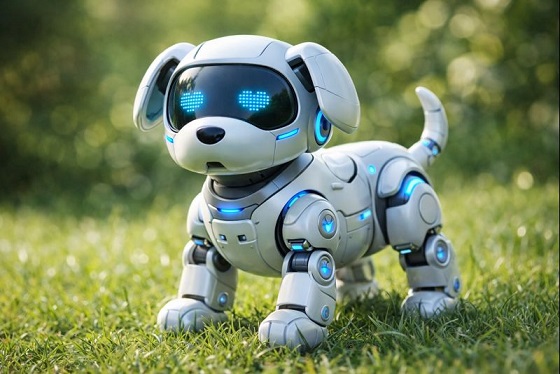
AI robot dogs are another popular category. These robotic companions use AI-powered systems to recognize faces, respond to voice commands, and display unique personalities. While some resemble a cat or dog, others adopt a more abstract pet-like design, focusing on interaction rather than realism.
6. Smart Features and App Connectivity
Many AI robot pets connect to a smartphone app that allows users to customize settings, update software, and monitor behavior. Through the app interface, owners can adjust personality traits, interaction styles, and language preferences.
Some robot pets integrate with smart home systems such as Alexa, enabling voice control and additional functionality. Built-in recognition systems and regular updates ensure that the robot remains intelligent and up to date with new features.
7. Battery Life, Portability, and Everyday Use
Practical design is another important aspect of an AI robot pet. Most models are compact, portable, and designed for everyday use around the home. Battery life is optimized so the robot can operate for hours before needing to charge.
Once charged, the robot is ready to interact again, moving freely and responding to its surroundings. This portability makes AI robot pets suitable for desks, living rooms, or even travel, depending on the model.









User's Comments
No comments there.