


Stories you may like
The Rise of Physical AI:Why the Boston Dynamics–Google DeepMind Alliance Changes Everything
Physical AI refers to intelligent systems that can sense, reason, and act inside the physical world. These systems do not remain limited to screens, servers, or digital spaces. Instead, they operate in environments where gravity, friction, and unstructured conditions prevail. Therefore, Physical AI must meet stricter technical and safety demands than traditional Artificial Intelligence (AI). Unlike software-only models, Physical AI connects perception and decision-making directly to actuators. This connection enables robots to handle real objects, navigate real spaces, and work alongside human operators in real time.
For many years, robotics and artificial intelligence developed along separate paths. Robotics research focused primarily on mechanical systems, including motors, joints, and control algorithms. In contrast, AI research concentrated on reasoning and learning in digital environments, including large language models and foundation models. This separation limited progress in general-purpose robotics. As a result, robots achieved high precision but lacked adaptability. AI systems, however, demonstrated strong reasoning ability but lacked a physical presence in factories or logistics centers.
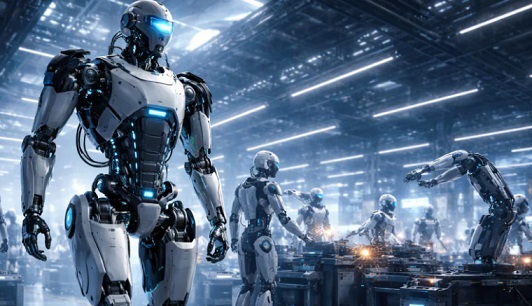
This divide began to narrow in 2026. The alliance between Boston Dynamics and Google DeepMind, supported by Hyundai Motor Group, brought advanced robotics hardware and foundation-model intelligence together inside real industrial environments. Therefore, physical systems and intelligent reasoning began operating as a single system rather than two separate layers. Consequently, Physical AI moved beyond experimental research and entered real operational use.
Physical AI and the GPT‑3 Moment for Robots
Physical AI operates in the real world, not just on screens or servers. Unlike generative AI, which produces text, images, or code with low-risk errors, Physical AI moves real robots around people, machines, and equipment. Mistakes in this world can cause damage, stop production, or even create safety hazards. Therefore, reliability, timing, and safety are built into every layer of system design, from sensing to movement.
The GPT-3 model helps explain the significance of Physical AI. GPT-3 showed that a single large language model could perform tasks such as translation, summarization, and coding without requiring separate systems for each. Similarly, Gemini-based robotics models give robots a shared cognitive layer that handles multiple tasks across different machines. Instead of engineers writing detailed instructions for every situation, robots improve through data and model updates. Their intelligence grows and spreads across all machines they control.
By combining advanced hardware with foundation-model intelligence, the Boston Dynamics–Google DeepMind partnership marks an actual GPT-3 moment for robots. It shows that robots can operate safely, adaptively, and continuously learn in complex, real-world environments.
Vision-Language-Action Models (VLA) and the New Approach to Robotics
VLA models solve a significant problem in robotics. Traditional robots treated perception, planning, and control as separate systems. Each module was designed, tuned, and tested independently. This made robots fragile. Even small environmental changes, such as a misplaced object or different lighting, can cause errors.
VLA models combine these steps into one system. They link what the robot sees, what it is told to do, and how it should act. This unification lets the robot plan and execute tasks more smoothly. There is no need to engineer each step separately.
For example, a robot using a VLA model can take images and depth data while receiving an instruction such as “clear this workstation and sort the metal parts by size.” The model translates this directly into action commands. Because the system learns from large datasets and simulations, it can handle changes in lighting, object positions, and clutter without constant reprogramming.
This design makes robots more flexible and reliable. They can work in complex environments, such as mixed-product warehouses or assembly lines shared with humans. In addition, VLA models reduce the time and effort needed to deploy robots in new environments. Consequently, Physical AI can perform tasks that were difficult or impossible for traditional robots.
Scaling Physical AI with Atlas and Gemini Robotics
Traditional industrial robots worked well in predictable environments where parts were fixed, and motion was repeatable. However, they struggled in settings with variation, such as warehouses with mixed products or assembly lines with changing tasks. The main issue was brittleness, because even small changes often required engineers to rewrite control logic. Consequently, scalability was limited, and automation remained expensive and inflexible.
The Boston Dynamics and Google DeepMind partnership addresses this problem by combining advanced hardware with foundation-model intelligence. Atlas has been re-engineered into an all-electric humanoid designed for industrial operations. Electric actuation provides precise control, energy efficiency, and reduced maintenance, which are essential for continuous production. Additionally, Atlas does not exactly mimic human anatomy. Its joints move beyond human limits, offering extra reach and flexibility. High degrees of freedom support complex manipulation tasks and allow the robot to adapt to confined spaces or unusual part orientations. Therefore, Atlas can perform a broader range of functions without needing specialized fixtures.
Gemini Robotics functions as a digital nervous system for Atlas, continuously processing visual, tactile, and joint feedback to maintain an updated understanding of the environment. This enables the robot to adjust movements in real time, correct mistakes, and recover from disturbances. Furthermore, skills learned by one Atlas unit can be shared across other robots, improving fleet-level performance. As a result, multiple robots can operate efficiently across factories and locations while continuously learning from experience.
Early humanoid robots relied heavily on teleoperation, where humans controlled each movement. This approach introduced latency, increased costs, and limited scalability. By contrast, Gemini Robotics supports intent-based task execution. Humans provide a goal, such as “organize these parts,” and Atlas plans and executes the necessary actions. Supervisors monitor operations, but direct control is kept to a minimum. Consequently, task execution becomes more efficient, and deployment across industrial environments becomes feasible at scale.
Hyundai’s Physical AI Vision and Industrial Advantage
Hyundai Motor Group has expanded its focus beyond vehicle manufacturing into robotics and intelligent systems. In addition, its meta-mobility vision includes factories, logistics hubs, and service environments. Therefore, Physical AI fits naturally into this strategy because it enables robots to perform tasks that traditional automation cannot handle. Moreover, robots collect operational data during work, which improves their performance over time. Consequently, they become part of the core infrastructure rather than experimental tools.
The Georgia Metaplant, known as Hyundai Motor Group Metaplant America, serves as the first real-world testbed for Physical AI. Here, automation, digital twins, and robots work closely together on live production floors. Skills learned in simulation are directly applied to real tasks. In addition, feedback from these operations updates the training models. This continuous loop improves robot performance and reduces operational risk. As a result, scalable deployments across multiple factories become possible, and the model could extend globally.
Traditional automation struggles with variability and high programming costs, which leaves many tasks manual. Similarly, labor shortages and product diversity limit what conventional robots can do. Physical AI-equipped humanoids overcome these limitations by adapting to changing environments and performing complex tasks. Furthermore, this flexibility closes the automation gap and enables operations that were previously impossible. Market forecasts suggest that humanoid robotics could reach tens of billions of dollars over the next decade. Consequently, Hyundai gains a strategic advantage by controlling both the deployment environment and the intelligence that powers the robots.
Google DeepMind’s Gemini-class models provide the intelligence for these robots. Workers can give instructions in natural language, and the robots interpret them using vision, tactile feedback, and spatial awareness. Therefore, robots translate human intent into precise actions without manual coding. Multimodal sensing enhances material handling. For example, robots combine visual and tactile data to adjust grip, force, and motion in real time. As a result, delicate or high-value parts are handled safely.
Digital twins make large-scale deployment practical and reliable. Skills and policies are first tested in simulation before being applied to real robots. Furthermore, once validated, updates can be shared across entire fleets of machines. Consequently, Physical AI scales in a software-like manner. This combination of advanced hardware, foundation-model intelligence, and connected deployment gives Hyundai both operational efficiency and a clear strategic edge in the emerging field of Physical AI.
The Future of Physical AI in Humanoids
Tesla’s Optimus program follows a vertically integrated approach. Hardware, AI, and deployment remain internal, and initial rollout occurs mainly inside Tesla factories. In contrast, the Boston Dynamics–Hyundai model combines specialized robotics, foundation-model intelligence, and industrial deployment through coordinated partners. Therefore, robots can operate in more diverse environments and handle a broader range of applications. This collaboration also benefits developers, who gain flexibility and access to a wider ecosystem.
Shared workspaces with humans increase the importance of safety. Physical AI systems must anticipate human movement and adjust actions proactively. Consequently, certified control layers, redundancy, and fleet-level monitoring remain critical for safe operations. Additionally, connected robots introduce new cyber-physical risks. Secure authentication, encryption, and runtime monitoring are necessary to prevent misuse. Therefore, cybersecurity is as much a physical concern as a digital one, and it must be integrated from the design stage.
Simulation-first workflows reduce operational risk and cost. Robots train extensively in virtual environments before deployment. Incremental rollout allows verification and refinement in the real world. Moreover, telemetry and feedback loops inform continuous updates, improving performance and confidence in adoption. In this way, Boston Dynamics and Hyundai demonstrate how Physical AI in humanoids can scale safely, intelligently, and reliably across future factories and logistics operations.
The Bottom Line
The Boston Dynamics–Google DeepMind–Hyundai alliance demonstrates a significant change in how robotics and AI work together. By combining Atlas’s advanced hardware with Gemini-class intelligence, robots now operate safely and adaptively in real-world environments. Therefore, Physical AI moves from experimental research into practical, general-purpose applications.
In addition, shared learning via foundation models and digital twins enables robots to improve continuously. Skills learned in one environment can be transferred to others, increasing efficiency and reliability across fleets. Consequently, humans can focus on supervision and complex decision-making, while robots handle repetitive or hazardous tasks.
Furthermore, industries that adopt Physical AI early may gain competitive advantages in productivity and flexibility. Conversely, those who delay adoption risk falling behind in operational efficiency. In conclusion, the alliance not only builds more innovative robots but also demonstrates a new model for managing and scaling work in physical spaces.




User's Comments
No comments there.