


Stories you may like
Top 5 AI Trends to Watch in 2026
Key takeaways
Artificial intelligence (AI) trends include increased adoption of GenAI, AI-enhanced scientific research, and intensified AI regulations.
- AI use is increasing in the workplace, with Deloitte’s 2025 Tech Value Survey revealing that 74 percent of surveyed businesses are prioritizing tech spending on AI and GenAI, which was almost 20 percent higher than the next most popular budgeted areas of data management, cloud platforms, Internet of Things, and enterprise resource planning technologies.
- Multimodal AI, capable of interpreting multiple data types such as audio, text, images, and video, is expected to advance significantly between 2025 and 2034 .
- You can mitigate risks associated with AI use by understanding and abiding by ethical AI standards.
5 AI trends to consider leveraging
Artificial intelligence is quickly transforming how we live and the business landscape in which we work. Wondering what some of the potential impacts of this exciting technology might be?
Here are five of the AI trends you can expect to see.
1. More GenAI app integration
Generative AI has arguably been the biggest trend in AI over the last several years. When ChatGPT and other text and image generators became accessible to the general public, they were widely used and adopted by business teams worldwide. This democratization of AI meant it was available to everyone, even those without technical knowledge.
Now, GenAI is becoming increasingly integrated into many of the apps that both organizations and individuals rely on every day. Hundreds of AI tools today already allow us to create content faster, translate between languages, and populate search engines. Over the next year, expect these integrations to increase, effectively continuing to change how we interact with each other, whether it's between friends and family, customers and businesses, or employers and workers.
2. Increasing AI adoption in the workplace
Another trend we'll see in AI this year is its place in workplace productivity. Artificial intelligence can speed up and enhance how we work, particularly by automating time-consuming or repetitive daily tasks. Whether inputting data in a spreadsheet, writing an outline for a business plan, or controlling quality at a manufacturing plant, AI has massive potential to increase our productivity at work.
While previous years have seen a steady increase in AI adoption in the workplace, Deloitte’s 2025 Tech Value Survey revealed 74 percent of surveyed businesses are prioritizing tech spending on AI and GenAI, which was almost 20 percent higher than the next most popular budgeted areas of data management, cloud platforms, Internet of Things, and enterprise resource planning technologies.
For those who may be concerned about AI replacing jobs, the technology often simply acts as a tool for automating repetition, leaving room for humans to focus on creativity, emotional intelligence, and moral judgment.
3. More advanced multimodal AI
Many large language models (LLMs) process only text data. Multimodal AI models, however, can grasp information from different data types, such as audio, video, and images, in addition to text. This technology is enabling search and content creation tools to become more seamless and intuitive and integrate more easily into other applications we already use.
For example, iPhones can now figure out who and what objects are in your photographs because they can process images, analyze metadata text, and search data. Similar to how a human can look at a photo and identify what’s in it, multimodals enable that same characteristic.
Multimodal AI is expected to advance significantly, with the market size growing at a CAGR of 36.92 percent between 2025 and 2034, expanding from $2.51 billion to $42.38 billion in that time period. It can equip both individual users and organizations with technology capable of performing increasingly complex tasks without human intervention. In particular, multimodal models enable business leaders to analyze a greater variety of data types and equip them with valuable insights that drive more strategic decision-making for a competitive advantage.
4. AI will accelerate scientific research and boost health care outcomes
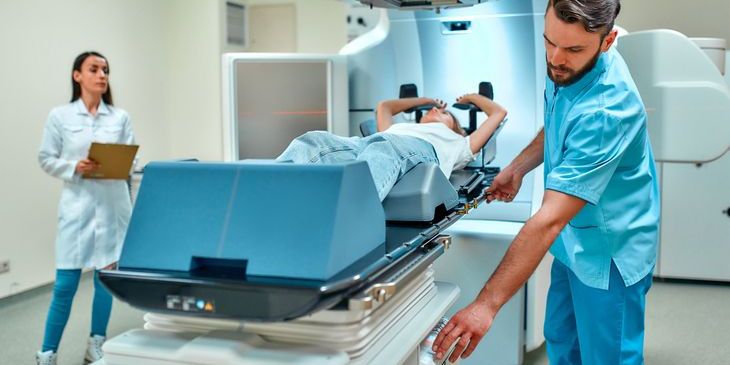
Besides their influence in business, AI tools also have great potential in science and health care. In early 2025, for example, Google revealed an "AI co-scientist system" meant to be a collaborative tool for scientists, capable of uncovering new and original knowledge rather than just reviewing standard research literature Tools like this aim to assist researchers and accelerate potentially transformative discoveries.
Chatbots are being deployed across disciplines, from agriculture to health care, helping farmers identify weeds and medical professionals diagnose patients. While the accuracy of this AI is in progress, these steps can accelerate scientific discoveries and medical breakthroughs.
5. Broader AI regulations and greater scrutiny of AI ethics
With the proliferation of AI worldwide, mitigating any risks associated with AI is paramount. Government agencies and organizations like OpenAI must ensure AI is used and deployed responsibly and ethically. In March 2024, the European Union debated a landmark comprehensive AI Act designed to regulate AI and address concerns for consumers. It became law later that year, in August.
On January 1, 2025, California began enforcing several AI laws focused on various areas, such as consumer privacy, health care, patient communications, and the use of deep fake technology . Throughout 2025, all 50 states, Washington, DC, Puerto Rico, and the Virgin Islands introduced AI legislation, and 35 states adopted and began enforcing about 100 new policies .
Ultimately, if AI is not regulated, data manipulation, misinformation, bias, and privacy risks can arise and pose greater societal risks. For example, tools can be susceptible to discrimination or legal risk if AI doesn’t collect data representative of a population. Generators like ChatGPT pull information from internet searches worldwide, but companies and publications have sued OpenAI for copyright infringement.









User's Comments
No comments there.