



Stories you may like
Can Artificial Intelligence Fully Replace Business Consultants?
In recent years, artificial intelligence (AI) has made significant inroads into various industries, including business consulting. The question of whether AI can replace human business consultants is increasingly relevant as AI technologies improve in data analysis, decision-making, and predictive capabilities. This article explores the evolving landscape of business consulting in the age of AI, examining the roles of human consultants, the transformative impact of AI, and the potential future of the consulting profession.
By dissecting the strengths and limitations of both AI systems and human experts, we aim to provide a balanced perspective on the extent to which AI can supplement or supplant traditional consulting services. From operational efficiencies to strategic insights, the interplay between AI and business consultants offers new opportunities and challenges for businesses worldwide.
Understanding the Role of Business Consultants Today
Business consultants serve as trusted advisors who help organizations solve complex problems, improve performance, and implement effective strategies. Their expertise spans a wide array of domains, including management, finance, marketing, operations, and human resources. Consultants bring a combination of industry knowledge, analytical skills, and interpersonal acumen to diagnose issues, design solutions, and guide implementation.
Beyond technical advice, consultants often play a crucial role in change management, stakeholder communication, and organizational alignment. They provide an external perspective that can challenge internal biases and help companies navigate uncertainty. Importantly, consultants tailor their recommendations to the unique context and culture of each client, which requires empathy, creativity, and nuanced judgment.
How Artificial Intelligence Is Transforming Consultancy
Artificial intelligence is increasingly being integrated into consultancy workflows, automating data collection, analysis, and reporting tasks. AI tools can process vast amounts of structured and unstructured data far faster than humans, uncovering patterns and insights that might otherwise go unnoticed. Natural language processing, machine learning, and predictive analytics are among the AI capabilities reshaping consulting practices.
Moreover, AI-powered platforms offer decision support systems that help consultants and clients simulate scenarios, forecast outcomes, and optimize strategies. This technology enhances the speed and accuracy of recommendations while freeing consultants to focus on higher-level problem-solving and client engagement. In some cases, AI-driven chatbots and virtual assistants provide real-time advice, further democratizing access to consulting expertise.
Comparing AI Capabilities with Human Business Experts
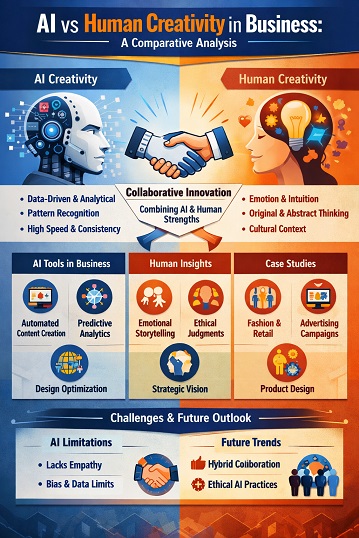
While AI excels at processing large datasets and identifying correlations, human consultants bring contextual understanding, ethical judgment, and interpersonal skills that machines currently lack. AI systems operate based on historical data and algorithms, which can limit their ability to adapt to novel or ambiguous situations. Humans, by contrast, can interpret subtle cues, manage conflicting interests, and exercise creativity in problem-solving.
Key distinctions include:
- Emotional intelligence: Consultants can navigate complex human dynamics and build trust.
- Strategic intuition: Humans can connect disparate ideas and anticipate future trends beyond data patterns.
- Ethical reasoning: Consultants consider moral implications and corporate values when advising clients.
While AI can augment decision-making with data-driven insights, it is not yet capable of fully replicating the holistic and empathetic approach of experienced consultants.
Potential Benefits of Using AI in Business Consulting
Integrating AI into consulting processes offers several advantages:
- Efficiency: Automation reduces time spent on data gathering and routine analysis.
- Accuracy: AI minimizes human errors and biases in data interpretation.
- Scalability: AI tools can serve multiple clients simultaneously at lower costs.
- Data-driven insights: AI uncovers trends and anomalies that may be invisible to humans.
- Consistency: Standardized AI algorithms ensure uniform quality in repetitive tasks.
These benefits enable consultants to focus more on strategic thinking, creativity, and client relationships. Additionally, AI can empower smaller businesses to access consulting-like services through affordable platforms, democratizing expertise.
Challenges and Limitations of AI Replacing Consultants
Despite its strengths, AI faces significant challenges in fully replacing human consultants. Limitations include:
- Lack of contextual awareness: AI may misinterpret data without understanding cultural or organizational nuances.
- Inability to manage interpersonal dynamics: AI cannot replicate empathy, persuasion, or conflict resolution.
- Dependence on data quality: Poor or biased data can lead to flawed AI recommendations.
- Ethical and accountability concerns: Responsibility for AI-driven decisions remains unclear.
- Resistance to change: Clients may prefer human interaction for sensitive or high-stakes issues.
Furthermore, AI systems may struggle with novel problems that fall outside their training data. These constraints suggest that AI is better suited as a complementary tool rather than a wholesale replacement for consultants.
Future Outlook: AI and the Evolution of Business Consulting
The future of business consulting is likely to be characterized by collaboration between AI technologies and human consultants. Rather than replacing consultants, AI will increasingly serve as an enabler, providing advanced analytics, scenario modeling, and automation to enhance human judgment. Consultants who adopt AI tools can offer more precise, timely, and customized advice.
This hybrid model may also transform the consulting profession by shifting the focus from data processing to higher-value activities such as innovation facilitation, stakeholder engagement, and ethical decision-making. Training and education will evolve to equip consultants with AI literacy and interdisciplinary skills. Ultimately, the integration of AI promises to expand the impact and accessibility of business consulting worldwide.








User's Comments
No comments there.