


Stories you may like
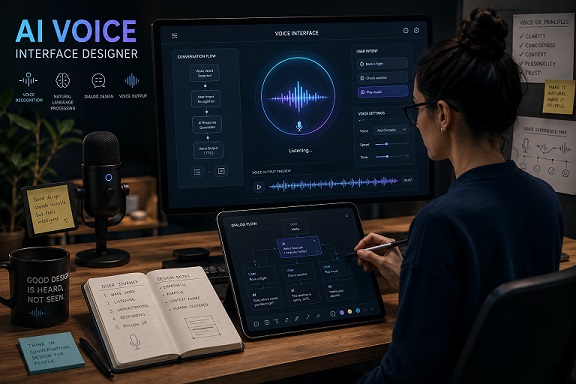
AI Voice Interface Designer
An AI voice interface designer designs how people interact with AI using their voice, like with smart speakers or voice assistants. They focus on making conversations feel natural, clear, and easy to follow, deciding how the AI should respond, what it should say, and how the interaction flows. The goal is to make talking to technology feel as simple and comfortable as talking to another person.
They also think about things like tone, timing, and how the AI handles misunderstandings or unclear requests. This role is a good fit for someone who enjoys both creativity and problem-solving, especially if they’re interested in language, communication, and user experience. It’s about turning complex technology into something people can use effortlessly just by speaking.
Duties and Responsibilities
The duties and responsibilities of an AI voice interface designer focus on creating natural, clear, and user-friendly voice interactions between people and AI systems. Their work involves designing how conversations sound, flow, and respond in real-world situations.
- Designing Voice Interaction Flows: Plan how users speak to the AI and how the system responds. Ensure conversations are smooth, logical, and easy to follow.
- Crafting Voice Responses: Write and refine what the AI says, including tone, wording, and personality. Make sure responses sound natural and are easy for users to understand.
- Handling Errors and Misunderstandings: Design how the AI responds when it doesn’t understand a user. Help guide users back on track with clear and helpful prompts.
- Collaborating with Teams: Work closely with developers, UX designers, and product teams to bring voice experiences to life. Ensure the final product matches the intended interaction design.
- Testing and Improving Voice Experiences: Evaluate how real users interact with the voice system. Use feedback to improve clarity, accuracy, and overall experience.
- Maintaining Consistency: Ensure the AI’s voice, tone, and responses stay consistent across different interactions. This helps create a reliable and familiar experience for users.
Workplace of an AI Voice Interface Designer
The workplace of an AI voice interface designer is a mix of creative thinking and technical work. Much of the job involves sitting at a computer, designing conversation flows, writing voice prompts, and testing how the AI responds. Designers often use specialized software and prototyping tools to simulate real-world voice interactions and make sure everything sounds natural.
Collaboration is a big part of the job. AI voice interface designers work closely with UX designers, developers, product managers, and sometimes data scientists to make sure the AI behaves correctly. They also gather feedback from users and test interactions repeatedly to refine the system, making sure it’s clear, helpful, and enjoyable to use.
The environment is fast-paced and constantly evolving because AI technology and voice interfaces are improving quickly. Designers need to stay up to date with the latest tools, techniques, and trends in conversational AI. It’s a role that combines creativity, problem-solving, and empathy, helping people use AI just by speaking naturally.
How to become an AI Voice Interface Designer
Becoming an AI voice interface designer involves building a combination of technical, design, and communication skills to create smooth, natural voice interactions. Here are the key steps most aspiring designers take:
- Formal Education (Optional): Many start with a degree in human-computer interaction (HCI), UX design, linguistics, or computer science. This provides a solid foundation in understanding users and designing technology interactions.
- Learn AI and Speech Basics: Familiarize yourself with AI concepts, speech recognition, and natural language processing (NLP). This knowledge helps you design interactions that work well with voice technology.
- Develop UX and Interaction Design Skills: Gain experience in designing interfaces, conversation flows, and prototypes. Use tools like Figma, Adobe XD, or voice prototyping platforms to practice creating real interactions.
- Practice Prototyping Voice Interfaces: Build and test voice-based projects, such as chatbots or smart speaker apps. Iterating on prototypes helps you understand what works and what feels natural to users.
- Conduct User Testing and Research: Observe how people interact with voice systems and gather feedback. Use insights to refine interactions, making them clear, intuitive, and engaging.
- Build a Portfolio: Showcase your best voice interaction projects, highlighting your design process and problem-solving skills. A strong portfolio often matters more than formal education when applying for jobs.
- Stay Updated and Network: Follow industry trends, attend workshops, and join professional communities. Networking helps you learn from others, discover opportunities, and stay current in this fast-moving field.
Skills Needed for an AI Voice Interface Designer











User's Comments
No comments there.