


Stories you may like
Key Advantages of AI Animation Software
AI animation software has become a transformative force across the animation industry. From solo creators to large animation studios, the use of artificial intelligence is reshaping how animated content is produced, refined, and delivered. By integrating machine learning, generative AI, and AI-powered tools into animation workflows, creators can automate complex tasks, expand creative possibilities, and produce animated video faster than ever before.
As AI’s growing influence continues to shape video production and content creation, understanding both the benefits and limitations of AI animation software is essential for making informed decisions.
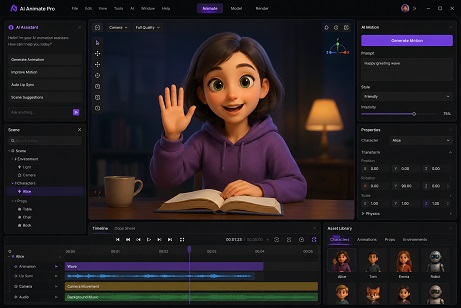
AI animation software refers to animation tools that use artificial intelligence, machine learning algorithms, and AI-driven systems to assist or automate parts of the animation process. These tools can generate character movements, automate lip-sync, enhance facial animation, create realistic backdrops, and support both 2D and 3D animation workflows.
Unlike traditional animation software, which relies heavily on manual keyframing and motion capture, AI animation tools analyze data, patterns, and inputs to produce animation in real-time or near real-time. This allows animators to focus more on creativity and storytelling while AI handles repetitive or technical tasks.
Advantages of AI Animation Software
1. Faster Animation Production
One of the biggest advantages of AI animation software is speed. AI automates time-consuming steps in the animation process, allowing creators to generate content quickly. Tasks that once took weeks can now be completed in days or even hours, saving substantial production time.
2. Cost Efficiency for Studios and Creators
By automating parts of production processes, AI reduces the need for large teams and expensive resources. This makes high-quality animation accessible to smaller studios and independent creators without sacrificing visual quality.
3. Enhanced Character Animation
AI-driven animation enables realistic character movements by analyzing motion data and behavior patterns. This results in lifelike character animation that feels more natural and immersive, especially in facial animation and body movement.
4. Improved Lip-Sync and Facial Animation
AI-powered tools can automatically match lip movements to dialogue, making lip-sync faster and more accurate. Facial animation benefits from AI algorithms that generate subtle expressions, improving emotional depth in animated video.
5. Support for Both 2D and 3D Animation
AI animation software supports 2D and 3D animation workflows, allowing animators to move seamlessly between styles. Whether creating stylized 2D scenes or complex 3D animation, AI tools adapt to different animation techniques.
6. Real-Time Animation Capabilities
Some AI animation tools enable real-time animation, allowing animators to preview character movements and scene creation instantly. This accelerates iteration and improves decision-making during production.
7. Expanded Creative Possibilities
By reducing technical barriers, AI allows animators to explore new creative directions. Generative AI can assist in scene creation, backdrops, and environments, opening new creative possibilities while preserving artistic vision.
8. Automation of Repetitive Tasks
AI automates repetitive animation tasks such as in-betweening, cleanup, and procedural animation. This improves workflow efficiency and allows animators to focus on storytelling experiences instead of manual labor.
9. Scalable Content Creation
AI animation tools make it easier to scale content creation. Studios can produce multiple animated videos or variations without proportionally increasing resources, which is especially valuable for marketing and media production.
10. Integration With Modern Production Pipelines
Integrating AI into existing animation workflows enhances collaboration across departments. AI-powered tools integrate with video production, VFX, and content creation pipelines used in modern animation studios.
11. Consistent Animation Quality
AI-driven tools ensure consistency in character movements, lighting, and environments across scenes. This reduces visual errors and improves the overall polish of animated content.
12. Accessibility for Non-Experts
AI makes animation more accessible to creators without extensive technical training. Using AI animation software, users can create animated videos without mastering traditional animation techniques.
13. Support for Immersive Experiences
AI enables immersive animation experiences by generating lifelike environments and realistic character movements. This is especially valuable in interactive media, virtual production, and storytelling experiences.
14. Continuous Improvement Through Machine Learning
Machine learning algorithms improve over time as they process more data. Since AI learns from usage patterns, animation quality and efficiency continue to improve with ongoing use.
Disadvantages of AI Animation Software
1. Risk of the Uncanny Valley
AI-generated characters can sometimes appear unnatural, leading to the uncanny valley effect. Achieving truly lifelike animation still requires careful artistic oversight.
2. Limited Unique Artistic Vision
AI-generated animation may lack a unique artistic vision if overused. Relying too heavily on generative AI can result in content that feels generic.
3. Dependence on Data Quality
AI animation tools rely on data to function effectively. Poor or biased training data can lead to inaccurate character movements or unrealistic animation results.
4. Reduced Hands-On Skill Development
Using AI in animation may reduce opportunities for animators to practice traditional animation skills, potentially impacting long-term craftsmanship.
5. Ethical and Creative Concerns
AI-generated content raises questions about authorship, originality, and creativity. Balancing human creativity with AI assistance remains a challenge.
6. Technical Complexity and Learning Curve
Although AI simplifies many tasks, integrating AI-powered tools into existing workflows can be technically complex and require training.
7. Over-Automation Risks
AI could automate too much of the creative process, reducing human input and weakening creativity and storytelling if not used thoughtfully.
The Future of AI Animation Software
The future of AI animation software points toward deeper integration of AI-driven tools in the animation industry. Advancements in machine learning, motion capture, and generative AI will further automate complex processes while enhancing realism and immersion.
AI is reshaping animation by enabling new creative workflows, real-time collaboration, and more accessible content creation. As AI algorithms become more sophisticated, the balance between creativity and automation will define the next era of animation.







User's Comments
No comments there.