


Stories you may like
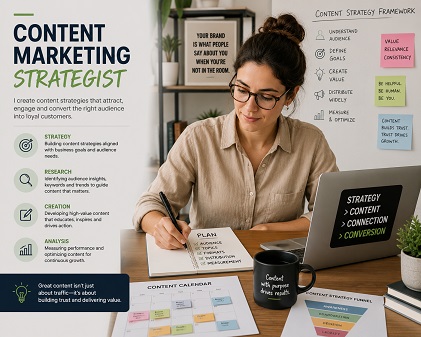
Content Marketing Strategist
A content marketing strategist plans, creates, and manages content to help a business reach its marketing goals. They decide what type of content to produce, who it’s for, and how it should be shared to attract and engage the right audience. Their work ensures that all content supports business objectives like increasing brand awareness, generating leads, or boosting customer engagement.
Content marketing strategists also track how content performs and use that information to improve future efforts. They often work closely with writers, designers, and marketers to make sure content is consistent, valuable, and effective. Their goal is to create content that not only looks good but also helps the business grow.
Duties and Responsibilities
The duties and responsibilities of a content marketing strategist may vary depending on the company, but generally include:
- Content Planning and Strategy: Develop content plans that align with marketing goals and target audience needs. This involves deciding on topics, formats, and publishing schedules to maximize impact.
- Content Creation Oversight: Oversee the production of blog posts, social media posts, videos, and other content. Ensure all content meets quality standards and reflects the brand’s voice.
- Audience Research: Study the target audience to understand preferences, challenges, and behaviors. Use insights from research to shape content that is engaging and relevant.
- SEO and Content Optimization: Make sure content is optimized for search engines to improve visibility. This includes selecting keywords, improving metadata, and applying SEO best practices.
- Performance Analysis: Track metrics such as traffic, engagement, and conversions to measure content effectiveness. Use this data to refine strategies and improve results over time.
- Collaboration and Communication: Work closely with marketing, design, and sales teams to align content with overall campaigns. Share updates and gather feedback to ensure all teams are coordinated.
- Content Promotion and Distribution: Plan how content will be shared through social media, email campaigns, partnerships, or paid promotions. The goal is to reach the right audience and maximize engagement and conversions.
Workplace of a Content Marketing Strategist
The workplace of a content marketing strategist can vary depending on whether they work for a company, an agency, or as a freelancer. Many work from an office, but remote work is common, allowing for flexible schedules and the ability to set up a comfortable home workspace. Strategists often use computers, project management tools, and analytics software to plan, track, and manage content.
A typical day involves a mix of planning content, collaborating with writers and designers, and analyzing how existing content is performing. They attend meetings with marketing, sales, or product teams to align strategies and ensure that content supports overall business goals. Much of the work is project-based, which requires balancing multiple deadlines while keeping quality and strategy in focus.
The environment is generally structured but allows for creativity and independent work. Communication and teamwork are important, especially when coordinating campaigns or working with cross-functional teams. A content marketing strategist’s workplace is both dynamic and collaborative, with the main goal of creating content that engages audiences and drives results.
How to become a Content Marketing Strategist
Becoming a content marketing strategist involves learning how to plan, create, and manage content that supports business and marketing goals. Here’s a simple guide to get started:
- Learn the Basics of Marketing and Content: Start by understanding marketing principles, content creation, and audience engagement. Online courses, blogs, and tutorials can provide a solid foundation.
- Develop Writing and Editing Skills: Practice writing clear, engaging, and persuasive content. Good communication skills are essential for creating content that resonates with audiences.
- Gain Experience in Content Creation: Build a portfolio by creating blog posts, social media content, email campaigns, or other marketing materials. Real-world experience helps demonstrate your skills to employers or clients.
- Understand SEO and Analytics: Learn how to optimize content for search engines and track performance using tools like Google Analytics. Data-driven insights help improve content strategies over time.
- Build Knowledge in Strategy and Planning: Study how to plan content calendars, define goals, and create campaigns that align with marketing objectives. Understanding strategy sets you apart from writers who focus only on content creation.
- Consider Formal Education (Optional): Degrees in marketing, communications, or digital media can strengthen your skills. Additional courses in content strategy, analytics, or SEO provide extra expertise and credibility.
- Network and Stay Updated: Connect with other marketers and content professionals through online communities or industry events. Keep learning about trends, tools, and best practices to stay competitive in the field.
Skills Needed for a Content Marketing Strategist
A Content Marketing Strategist combines creativity, marketing expertise, and analytical thinking to create content that attracts, engages, and converts audiences.
1. Content Strategy Development
- Creating long-term content plans aligned with business goals
- Identifying target audiences and buyer personas
- Developing content calendars and campaigns
2. SEO Knowledge
- Keyword research and optimization
- On-page SEO best practices
- Understanding search engine algorithms and ranking factors
3. Content Creation & Storytelling
- Strong writing and editing skills
- Crafting compelling brand narratives
- Creating engaging blog posts, articles, and website content
4. Digital Marketing Expertise
- Understanding inbound marketing principles
- Knowledge of email marketing, social media, and paid promotion
- Experience with content distribution channels
5. Analytics & Data Interpretation
- Using tools like Google Analytics and Search Console
- Measuring content performance and ROI
- Making data-driven content decisions
6. Audience Research
- Identifying customer needs and pain points
- Conducting market and competitor research
- Understanding consumer behavior trends
7. Social Media Management
- Developing social content strategies
- Community engagement and audience growth
- Platform-specific content optimization
8. Project Management
- Managing content production workflows
- Coordinating writers, designers, and marketers
- Meeting deadlines and campaign objectives
9. Marketing Automation Tools
- Experience with HubSpot, Marketo, Mailchimp, or similar platforms
- Lead nurturing and campaign automation
10. Content Management Systems (CMS)
- Working with platforms such as WordPress, Drupal, and Contentful
- Publishing and managing digital content
11. Basic Design & Multimedia Knowledge
- Understanding visual content principles
- Familiarity with video, graphics, and infographics
- Experience with tools like Canva or Adobe Creative Cloud
12. Communication & Leadership
- Presenting content strategies to stakeholders
- Collaborating across departments
- Leading content teams and initiatives
Valuable Certifications
- HubSpot Academy Content Marketing Certification
- Google Analytics Certification
- SEO Certifications from recognized training providers
- Digital Marketing Certifications
Key Soft Skills
- Creativity
- Strategic thinking
- Adaptability
- Critical thinking
- Problem-solving
- Time management
- Collaboration
Successful Content Marketing Strategists blend content creation, SEO, analytics, and business strategy to drive brand awareness, lead generation, and customer engagement.
Salary
India
- Entry-Level (0–2 years): ₹4 lakh – ₹8 lakh per year
- Mid-Level (3–7 years): ₹8 lakh – ₹18 lakh per year
- Senior-Level (8+ years): ₹18 lakh – ₹35 lakh+ per year
- Leadership Roles (Head of Content/Content Director): ₹35 lakh – ₹60 lakh+ per year
United States
- Entry-Level: $55,000 – $75,000 per year
- Mid-Level: $75,000 – $110,000 per year
- Senior-Level: $110,000 – $160,000+ per year
- Director/VP Level: $160,000 – $250,000+ per year
Factors Affecting Salary
- Experience and expertise
- SEO and analytics skills
- Industry (SaaS, technology, finance, healthcare often pay more)
- Team leadership responsibilities
- Knowledge of AI-powered content tools
- Location and company size











User's Comments
No comments there.