


Stories you may like
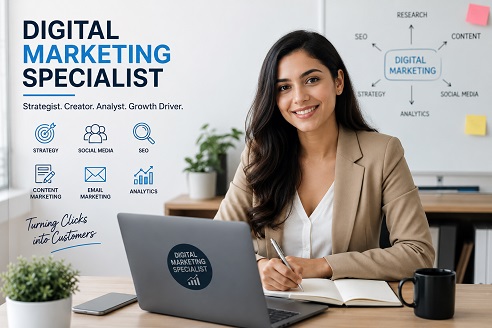
Digital Marketing Specialist
A digital marketing specialist helps businesses promote their products or services online. They use a variety of online tools and platforms, like social media, search engines, email, and websites, to reach customers and drive sales. Their job is to create and manage campaigns that attract attention, engage audiences, and encourage people to take action, such as making a purchase or signing up for a newsletter.
Digital marketing specialists also analyze data to see how well their campaigns are performing. They track things like website traffic, social media engagement, and sales results to figure out what works and what doesn’t. Based on these insights, they adjust strategies to get better results. In short, they combine creativity and technical skills to help a business grow and connect with customers in the digital world.
Duties and Responsibilities
The duties and responsibilities of a digital marketing specialist can vary depending on the organization, but here are the most common tasks:
- Developing Digital Marketing Strategies: Plan effective online marketing strategies that match the company’s goals. Analyze the target audience, do market research, and set key performance indicators (KPIs) to guide campaigns.
- Managing Digital Advertising Campaigns: Create, run, and optimize ads on platforms like search engines, social media, and mobile apps. Choose keywords, write ad copy, set budgets, and track results to get the best reach and engagement.
- Implementing SEO Techniques: Optimize websites and content to rank higher in search engines. Conduct keyword research, improve website pages, and track rankings to attract more organic traffic.
- Creating Engaging Content: Make blog posts, videos, social media posts, and other content that connects with the audience. Ensure content matches the brand’s voice and keeps customers interested.
- Social Media Management: Run social media accounts, post updates, create campaigns, and interact with followers. Monitor trends and analyze data to improve performance.
- Analyzing Data and Reporting: Use analytics tools to track website traffic, social engagement, email performance, and conversions. Create reports and use insights to improve campaigns.
- Staying Updated on Digital Marketing Trends: Keep learning about new tools, technologies, and best practices. Attend webinars, workshops, and conferences to stay current in the field.
- Collaboration and Communication: Work with designers, writers, developers, and managers to coordinate campaigns. Share goals and ensure everyone is on the same page to achieve results.
Workplace of a Digital Marketing Specialist
The workplace of a digital marketing specialist is usually fast-paced and technology-driven. Most of the work is done on computers, using tools to manage social media, email campaigns, websites, and online ads. Specialists often spend their day creating content, monitoring campaigns, and analyzing data to see how well their marketing efforts are performing.
Digital marketing specialists usually work as part of a team, collaborating with designers, writers, developers, and marketing managers. They attend meetings to discuss campaign strategies, plan upcoming promotions, and review performance metrics. Communication and coordination are important because marketing campaigns often involve multiple departments and deadlines.
The environment can vary depending on the organization. Some specialists work in offices with flexible hours, while others may work remotely or in hybrid setups. Since digital marketing is constantly changing, specialists also spend time learning about new tools, trends, and best practices, which keeps the job dynamic and constantly evolving.
How to become a Digital Marketing Specialist
To become a digital marketing specialist, you can follow these steps:
- Education: You don’t always need a specific degree, but studying marketing, advertising, business, or a related field helps. Look for courses that cover digital marketing, social media, SEO, analytics, and online advertising.
- Gain Hands-On Experience: Try internships, entry-level jobs, or freelance projects to get practical experience. This helps you learn the ropes, build skills, and create a portfolio of real campaigns.
- Learn Key Skills: Get comfortable with SEO, SEM, social media, content marketing, email marketing, and analytics. Keep up with industry trends and changes to stay sharp.
- Get Certified: Certifications like Google Ads, Google Analytics, HubSpot, Facebook Blueprint, or Hootsuite can boost your credibility and show employers you know your stuff.
- Build Your Network: Attend events, join online communities, and connect with other marketers. Networking can help you find opportunities, mentors, and advice.
- Create a Portfolio: Show off your work with a portfolio of campaigns, content, or analytics projects. It’s a great way to impress potential employers or clients.
- Keep Learning: Digital marketing changes fast, so read blogs, take courses, attend webinars, and stay curious.
- Apply for Jobs: Look for roles that match your skills and interests, whether at agencies, companies, or in-house teams. Tailor your resume and cover letter to highlight your digital marketing experience.
- Prepare for Interviews: Be ready to talk through your projects, analyze data, and explain how you’ve improved campaigns. Showing your problem-solving and strategy skills will make you stand out.
Skills Needed for a Digital Marketing Specialist
- Search Engine Optimization (SEO): Optimize websites and content to improve search engine rankings and increase organic traffic.
- Search Engine Marketing (SEM): Create and manage paid advertising campaigns using platforms like Google Ads.
- Content Marketing: Develop engaging blog posts, articles, videos, and other content that attracts and retains audiences.
- Social Media Marketing: Plan, create, and manage campaigns across platforms such as Facebook, Instagram, LinkedIn, X, and TikTok.
- Email Marketing: Design and execute email campaigns that nurture leads and build customer relationships.
- Analytics and Data Interpretation: Use tools like Google Analytics to measure campaign performance and make data-driven decisions.
- Pay-Per-Click (PPC) Advertising: Manage advertising budgets, optimize bids, and improve return on investment (ROI).
- Marketing Automation: Use automation platforms to streamline campaigns, customer journeys, and lead nurturing.
- Copywriting: Write compelling ad copy, website content, email campaigns, and social media posts.
- Graphic Design Basics: Create or edit simple visuals using tools such as Canva or Adobe Express.
- Video Marketing: Plan, edit, or optimize video content for social media, websites, and advertising campaigns.
- Conversion Rate Optimization (CRO): Improve website and landing page performance to increase conversions.
- Customer Relationship Management (CRM): Work with CRM systems to manage customer data and marketing activities.
- Market Research: Analyze competitors, customer behavior, and industry trends to identify new opportunities.
- Project Management: Coordinate multiple campaigns, deadlines, and stakeholders effectively.
- Communication Skills: Clearly present ideas, collaborate with teams, and communicate with clients or management.
- Creativity: Develop innovative marketing campaigns that capture audience attention.
- Analytical Thinking: Evaluate campaign results, identify trends, and solve marketing challenges.
- Adaptability: Stay current with evolving digital marketing tools, algorithms, and industry best practices.
- Time Management: Prioritize tasks and manage multiple campaigns simultaneously.
- Problem-Solving: Quickly identify issues and implement effective marketing solutions.
Salary
A Digital Marketing Specialist earns a competitive salary that increases with experience, technical skills, certifications, and industry.
- Entry-Level (0–2 years): $45,000–$60,000 per year
- Mid-Level (3–5 years): $60,000–$85,000 per year
- Senior-Level (6–10 years): $85,000–$120,000 per year
- Lead or Expert-Level: $120,000–$150,000+ per year
Average Salary in India
- Entry-Level: ₹3–6 LPA
- Mid-Level: ₹6–12 LPA
- Senior-Level: ₹12–20 LPA
- Top Professionals/Managers: ₹20–35+ LPA
Digital Marketing Specialists with expertise in SEO, Google Ads, social media advertising, email marketing, marketing automation, AI-powered marketing, analytics, and conversion optimization typically command higher salaries. Freelancers and consultants may also earn significantly more depending on their client base and project volume.











User's Comments
No comments there.