


Stories you may like
Set Designer
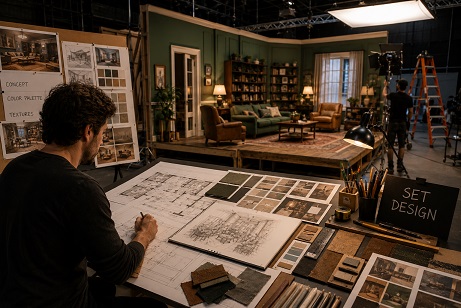
A set designer works in the field of theatre, film, and television, and is responsible for creating the visual world of a production. They work closely with the director and other members of the creative team to design and construct the physical environment in which the action of the production takes place. This can include everything from the set pieces and scenery to the lighting, props, and special effects.
Set designers use their skills in art, design, architecture, and engineering to create immersive and convincing environments that help to tell the story and transport the audience to another world. They may work on a variety of productions, from small-scale plays to large-scale films, and are an essential part of the creative process in the entertainment industry.
Set designers play an important role in the creative process of visual storytelling, using their artistic skills, design expertise, and collaboration to create captivating and immersive sets that enhance the overall production and bring the director's vision to life.
Duties and Responsibilities
Here are the key duties and responsibilities of a set designer:
- Conceptualization and Design Development: Set designers work closely with directors and other creative team members to understand the artistic vision and concept of the production. They participate in discussions and brainstorming sessions to develop ideas for the overall look and feel of the sets that align with the production's theme and narrative.
- Set Design Creation: Once the concept is established, set designers create detailed set designs, often in the form of sketches, digital renderings, or 3D models. These designs showcase the layout, architecture, and visual elements of the sets, helping the production team visualize the final product.
- Collaboration with Production Team: Set designers collaborate with various members of the production team, including costume designers, lighting designers, directors, and producers. They ensure that all design elements work harmoniously together to achieve a cohesive and unified visual style.
- Research and Sourcing: Set designers conduct research to gather information and inspiration for their designs. They may study historical periods, cultural references, or specific architectural styles to create authentic and realistic settings.
- Materials and Construction: Set designers are responsible for selecting appropriate materials, props, and scenic elements that meet the artistic and budgetary requirements of the production. They work with construction teams to oversee the actual construction and installation of the sets.
- Budget Management: Set designers work within the budget allocated for the production. They must find creative solutions and make cost-effective choices without compromising the artistic integrity of the design.
- Adaptability and Problem-Solving: Set designers must be adaptable and able to adjust their designs based on changing requirements or limitations. They also need to solve practical challenges related to set construction, transportation, and logistics.
- Communication and Presentation: Effective communication is crucial for set designers. They present their designs to the production team and stakeholders, explaining their vision and how the sets will contribute to the storytelling.
- On-Set Supervision: During production, set designers may be involved in supervising the implementation and arrangement of the sets. They ensure that the sets are accurately constructed, dressed with appropriate props, and maintain continuity throughout the production.
- Post-Production Wrap-Up: After the production is complete, set designers may participate in the wrap-up process, including the disassembly and storage of sets, as well as evaluating the success of the designs in achieving the desired visual impact.
Types of Set Designers
Set designers can specialize in various areas of entertainment and live events, each requiring unique skills and expertise. Some common types of set designers include:
- Film Set Designer: Film set designers work in the film industry, designing and creating sets for movies and television productions. They collaborate with directors, art directors, and production teams to bring the film's visual concepts to life, creating realistic and immersive sets that enhance the storytelling.
- Television Set Designer: Television set designers focus on designing sets specifically for television shows and series. They work with producers and art departments to create sets that suit the show's format and meet the requirements of multiple episodes and seasons.
- Theater Set Designer: Theater set designers specialize in designing sets for live theater productions. They work closely with directors and stage managers to create sets that fit the play's theme, period, and artistic vision, taking into consideration practical aspects of stage construction and lighting.
- Event Set Designer: Event set designers create temporary sets and installations for live events such as concerts, conferences, trade shows, and special occasions. They design stages, backdrops, and immersive environments that align with the event's theme and purpose.
- Exhibition Set Designer: Exhibition set designers design displays and booths for trade shows, museums, galleries, and other public exhibitions. They create visually engaging and interactive spaces that showcase products, artworks, or information in an impactful way.
- Theme Park Set Designer: Theme park set designers work in the amusement park industry, designing themed environments, attractions, and rides that transport visitors into fantastical worlds. They create immersive experiences that align with the park's overall theme and story.
- Corporate Set Designer: Corporate set designers work with companies to design sets for corporate events, presentations, and product launches. They create professional and branded environments that support the company's messaging and image.
- Interior Set Designer: Interior set designers focus on designing sets for interior scenes in films, television shows, or theater productions. They pay particular attention to the layout, furniture, and décor to create believable and aesthetically pleasing interior spaces.
- Historical Set Designer: Historical set designers specialize in designing sets that accurately reflect specific historical periods or eras. They conduct extensive research to recreate authentic settings that transport audiences back in time.
- Digital Set Designer: With the advancement of digital technology, digital set designers work on virtual sets used in green screen productions and visual effects-heavy projects. They create digital environments and backgrounds that seamlessly integrate with live-action footage.
Workplace of a Set Designer
The workplace of a set designer can vary depending on the type of productions they work on. Set designers typically spend a significant amount of their time in design studios or production offices, where they collaborate with directors, producers, art directors, and other members of the creative team. In these environments, set designers engage in brainstorming sessions, concept development, and design meetings to discuss the artistic vision and requirements of the production.
Set designers use various tools, including computer-aided design (CAD) software and traditional art supplies, to create sketches, drawings, and 3D models of their set designs. They may also work with digital design tools to visualize virtual sets for green screen productions and visual effects-heavy projects.
For film and television productions, set designers may spend time on location scouting to find suitable sites or on soundstages to oversee the construction and dressing of the sets. They collaborate closely with construction crews, scenic artists, prop masters, and other professionals involved in bringing the sets to life.
In theater productions, set designers work directly with the stage management team and technical crews to ensure that the sets are practical, safe, and functional for live performances. They may be present during rehearsals to make adjustments to the sets and ensure that the design aligns with the director's vision.
For event set designers, their workplace can involve working on-site at event venues, conference centers, or exhibition halls. They collaborate with event planners and production teams to design and set up stages, backdrops, and immersive environments for live events and presentations.
The workplace of a set designer is often dynamic and creative, requiring adaptability and problem-solving skills to overcome challenges and create visually captivating and immersive environments. It is a collaborative environment where ideas are shared, and teamwork is essential in bringing the director's vision to life. Whether in a design studio, on a film set, in a theater, or at an event venue, set designers contribute their artistic expertise to enhance the overall visual storytelling and create memorable experiences for audiences.
How to become a Set Designer
Becoming a set designer involves a combination of education, practical experience, and building a strong portfolio of work. Here are the general steps to pursue a career as a set designer:
- Education and Training: Obtain a Bachelor's Degree in Theater Design, Scenic Design, Production Design, Fine Arts, or a related field. Look for programs that offer courses in set design, drafting, 3D modeling, and other relevant design skills. Consider pursuing a Master's Degree in Set Design or a related discipline for advanced training and specialization. While not always required, an advanced degree can enhance your skills and competitiveness in the field.
- Gain Experience: Seek internships, apprenticeships, or entry-level positions in theater companies, film or television production studios, event planning companies, or any other production-related organization. Practical experience is valuable for learning the industry's workings, building connections, and improving your skills.
- Develop Technical Skills: Familiarize yourself with computer-aided design (CAD) software, 3D modeling tools, and other digital design programs commonly used in set design. Proficiency in these tools will be essential for creating detailed design plans and visualizations.
- Build a Portfolio: As you gain experience, document your set design projects and compile them into a professional portfolio. Include sketches, renderings, and images of your work to showcase your creativity, design ability, and range of skills.
- Network: Attend industry events, workshops, and theater or film festivals to network with professionals in the field. Networking can lead to valuable connections and potential job opportunities.
- Collaborate and Showcase Your Skills: Collaborate with other artists and filmmakers on small projects to gain exposure and add to your portfolio. You can also participate in student productions or independent film projects to showcase your set design abilities.
- Stay Updated: Keep abreast of current design trends, technology advancements, and industry developments. Continuous learning and staying updated with the latest design tools and techniques will help you remain competitive in the field.
- Apply for Set Design Positions: Look for job openings in theater companies, film studios, television production houses, event management firms, and other production companies. Submit your resume, portfolio, and any relevant work samples when applying for positions.
Helpful Resources
Set designers can access a variety of helpful resources to enhance their skills, stay updated on industry trends, and connect with fellow professionals. Here are some valuable resources for set designers:
- United States Institute for Theatre Technology (USITT): A leading organization for theater and live entertainment professionals. They offer educational programs, workshops, conferences, and networking opportunities.
- The Art Directors Guild (Local 800): Represents production designers, art directors, and other professionals in the entertainment industry. They provide information on industry news, events, and educational programs.
- Entertainment Technician Certification Program (ETCP): Offers certifications for entertainment technicians, including riggers, which can be valuable for set designers working in the theater or event industry.
- Theatre Communications Group (TCG): A national organization for the American theater community. They provide resources for theater professionals, including set designers, such as publications, job listings, and grants.
- American Society of Cinematographers (ASC): While primarily focused on cinematography, ASC's website features informative articles, interviews, and behind-the-scenes insights that can be useful for set designers working in film and television.
- Backstage: An online platform with casting calls, audition opportunities, and job listings for actors, crew members, and set designers in the performing arts and entertainment industry.
- Educational Institutions: Many universities and colleges with theater or film programs offer resources, workshops, and events for set designers. Check the websites of schools with design or theater departments for relevant information.
- Professional Organizations and Social Media Groups: Joining professional organizations and social media groups related to set design can provide opportunities to network with peers, share experiences, and stay updated on industry news and events.
- Trade Shows and Industry Events: Attending trade shows, theater festivals, and industry events can offer exposure to new products, technology, and design trends, while also providing networking opportunities.
Skills Needed for a Set Designer
- Creativity and Artistic Vision – Ability to develop visually compelling and imaginative set designs.
- Drawing and Sketching Skills – Creating concept sketches, floor plans, and design illustrations.
- Knowledge of Design Principles – Understanding color theory, composition, scale, proportion, and spatial design.
- CAD and 3D Modeling – Proficiency in software such as AutoCAD, SketchUp, Rhino, Vectorworks, or Blender for creating digital designs.
- Model Making – Building scale models to visualize set layouts and structures.
- Technical Drawing – Producing accurate construction drawings and blueprints for builders and production teams.
- Knowledge of Materials and Construction – Understanding wood, metal, fabrics, paint finishes, and construction techniques used in set building.
- Attention to Detail – Ensuring every element of the set supports the production's visual style and continuity.
- Problem-Solving Skills – Finding creative solutions to design, budget, and space limitations.
- Communication Skills – Collaborating effectively with directors, producers, art directors, costume designers, and construction crews.
- Project Management – Planning schedules, managing budgets, and coordinating multiple tasks during production.
- Time Management – Meeting strict production deadlines while maintaining quality.
- Research Skills – Studying historical periods, architectural styles, and cultural references to create authentic environments.
- Adaptability – Adjusting designs based on script changes, production needs, and available resources.
- Teamwork – Working closely with art departments, lighting crews, prop masters, and carpenters to bring the design to life.
- Knowledge of Lighting and Stage Design – Understanding how lighting, camera angles, and stage layouts affect the appearance of the set.
- Budget Awareness – Designing visually impressive sets while staying within financial constraints.
- Computer Skills – Using graphic design, rendering, and presentation software to communicate design ideas effectively.
Salary
The salary of a Set Designer varies depending on experience, industry (film, television, theater, live events, or advertising), location, and the size of the production.
Average Annual Salary
- Entry-Level: $40,000–$60,000 per year
- Mid-Level: $60,000–$85,000 per year
- Experienced: $85,000–$120,000+ per year
Average Hourly Wage
- $20–$60 per hour, depending on experience, project type, and employer.
Factors That Affect Salary
- Years of experience
- Industry (film, television, theater, advertising, or event production)
- Geographic location
- Employer (production company, theater, design studio, or freelance work)
- Portfolio quality and reputation
- Technical skills in CAD, 3D modeling, and rendering software
- Union membership (where applicable)
- Budget and scale of productions
Experienced Set Designers working on major film productions, high-budget television series, Broadway or West End productions, or large commercial projects can earn well above $120,000 per year, especially with an established portfolio and strong industry reputation.










User's Comments
No comments there.