


Stories you may like
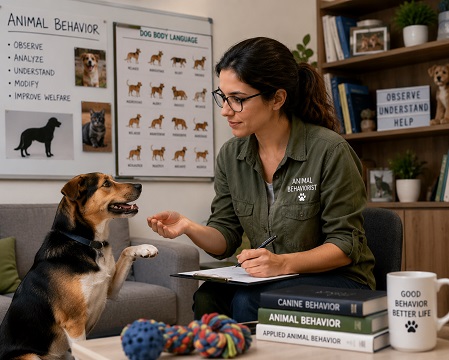
Animal Behaviorist
An animal behaviorist studies the behavior of animals and applies scientific principles to understand, predict, and modify their behavior. These professionals typically have a background in fields such as psychology, biology, ethology, or veterinary medicine, and they may specialize in specific species or types of behavior. Animal behaviorists seek to understand the factors that influence animal behavior, including genetics, environmental conditions, social interactions, and learning processes, and they may work in a variety of settings, including research institutions, zoos, aquariums, veterinary clinics, and animal shelters.
Animal behaviorists may work with pet owners, animal trainers, veterinarians, and other professionals to provide behavioral assessments, training programs, and behavior modification plans for companion animals or animals in captive environments.
Duties and Responsibilities
The duties and responsibilities of an animal behaviorist can vary depending on their specific role, specialization, and the setting in which they work. However, some common duties and responsibilities may include:
- Behavioral Assessment: Conducting behavioral assessments and evaluations of animals to understand their behavior patterns, social interactions, and environmental influences. This may involve observing animals in their natural habitat, controlled settings, or during interactions with humans or other animals.
- Behavior Modification: Developing and implementing behavior modification plans to address behavioral issues or improve the welfare of animals. This may include designing training programs, implementing positive reinforcement techniques, and providing environmental enrichment to promote desired behaviors and reduce problem behaviors.
- Research and Data Analysis: Conducting research studies and experiments to investigate specific aspects of animal behavior, such as social behavior, communication, cognition, or learning processes. Animal behaviorists may collect and analyze data, publish research findings in scientific journals, and contribute to the advancement of knowledge in the field of animal behavior.
- Consultation and Education: Providing consultation services and educational resources to pet owners, animal trainers, veterinarians, and other professionals. Animal behaviorists may offer advice on behavior management techniques, training methods, and strategies for addressing behavior problems in companion animals, livestock, or exotic species.
- Training and Workshops: Conducting training sessions, workshops, and seminars to educate pet owners, animal care professionals, and the general public about animal behavior, welfare, and responsible pet ownership. Animal behaviorists may also provide continuing education opportunities for veterinarians, animal shelter staff, and other professionals.
- Collaboration and Interdisciplinary Work: Collaborating with veterinarians, animal scientists, biologists, ethologists, and other professionals to address complex issues related to animal behavior, health, and welfare. Animal behaviorists may contribute to interdisciplinary research projects, conservation efforts, and animal welfare initiatives.
- Advocacy and Policy Development: Advocating for animal welfare and promoting ethical treatment of animals through policy development, public outreach, and advocacy efforts. Animal behaviorists may participate in professional organizations, serve on advisory boards, and engage in public speaking to raise awareness about animal behavior issues and promote positive change.
Workplace of an Animal Behaviorist
The workplace of an animal behaviorist can vary depending on their specific role, specialization, and employment setting. Many animal behaviorists work in academic or research institutions, such as universities, colleges, or research laboratories, where they conduct experiments, observational studies, and applied research projects on animal behavior. In these settings, animal behaviorists may have access to specialized equipment and facilities for studying behavior in controlled environments, such as animal behavior testing rooms or outdoor enclosures.
Additionally, animal behaviorists may work in zoos, aquariums, or wildlife conservation organizations, where they study and manage the behavior of captive or wild animals. In these settings, animal behaviorists may collaborate with zookeepers, animal trainers, veterinarians, and other professionals to develop enrichment programs, training protocols, and behavior management strategies to enhance animal welfare and promote natural behaviors in captive environments. They may also conduct educational outreach programs for zoo visitors, school groups, and the general public to raise awareness about animal behavior and conservation.
Some animal behaviorists work in clinical settings, such as veterinary clinics, animal shelters, or private consulting practices, where they provide behavior consultation services for pet owners dealing with behavior problems in companion animals. In these settings, animal behaviorists may conduct behavior assessments, develop behavior modification plans, and provide training and support for pet owners to address issues such as aggression, anxiety, or compulsive behaviors in their pets.
How to become an Animal Behaviorist
Becoming an animal behaviorist involves several steps, including obtaining relevant education, gaining practical experience, and pursuing further specialization. Here's a general guide on how to become an animal behaviorist:
- Earn a Bachelor's Degree: Start by completing a bachelor's degree in a relevant field such as biology, psychology, zoology, animal sciences, or ethology. During your undergraduate studies, focus on coursework related to animal behavior, ecology, evolution, and psychology to build a strong foundation in the principles of animal behavior.
- Gain Practical Experience: Seek out opportunities to gain hands-on experience working with animals and studying their behavior. This could involve volunteering or working as a research assistant in animal behavior labs, zoos, wildlife rehabilitation centers, or animal shelters. Practical experience will help you develop essential skills and knowledge in animal handling, observation, data collection, and research methods.
- Complete a Graduate Degree: Consider pursuing a graduate degree (Master's or Ph.D.) in Animal Behavior, Ethology, Psychology, or a related field to further specialize and advance your education. Graduate programs in animal behavior provide advanced coursework, research opportunities, and mentorship from faculty members who are experts in the field. A graduate degree can enhance your qualifications and open up more career opportunities in animal behavior research, academia, or applied settings.
- Specialize in a Specific Area: Choose a specific area of interest within animal behavior to focus your studies and research. This could include topics such as animal cognition, communication, social behavior, conservation behavior, or behavioral ecology. Specializing in a particular area allows you to develop expertise and contribute to advancing knowledge in that field.
- Obtain Professional Certification: While not required, obtaining professional certification or credentials can demonstrate your expertise and credibility as an animal behaviorist. Organizations such as the Animal Behavior Society (ABS) offer certification programs for Certified Applied Animal Behaviorists (CAAB) and Associate Certified Applied Animal Behaviorists (ACAAB) who have met specific education, experience, and ethical standards (see certifications below).
- Gain Practical Skills and Training: Hone your practical skills and training in areas such as behavioral assessment, experimental design, data analysis, and behavior modification techniques. Participate in workshops, seminars, and conferences to stay updated on the latest research findings and best practices in animal behavior.
- Build a Professional Network: Network with other professionals in the field of animal behavior, including researchers, practitioners, educators, and organizations. Join professional associations such as the Animal Behavior Society (ABS) and attend conferences, workshops, and events to connect with others and stay informed about job opportunities, research collaborations, and professional development opportunities.
- Seek Employment Opportunities: Look for employment opportunities in academia, research institutions, zoos, wildlife conservation organizations, veterinary clinics, animal shelters, government agencies, or private consulting firms. Be proactive in seeking out job openings, internships, or research assistant positions that align with your career goals and interests in animal behavior.
Certifications
There are voluntary certifications and credentials available that can demonstrate expertise and professionalism in the field of animal behavior. Here are some notable certifications for animal behaviorists:
- Certified Applied Animal Behaviorist (CAAB): Offered by the Animal Behavior Society (ABS), the CAAB credential is designed for individuals who have a graduate degree in a relevant field and extensive experience in applied animal behavior. Candidates must pass a rigorous examination and meet specific education, experience, and ethical requirements to become certified.
- Associate Certified Applied Animal Behaviorist (ACAAB): Also offered by the Animal Behavior Society (ABS), the ACAAB credential is designed for individuals who have a master's degree in a relevant field and experience in applied animal behavior. Similar to the CAAB certification, candidates must pass an examination and meet specific education, experience, and ethical requirements.
- Certified Professional Dog Trainer (CPDT): Offered by the Certification Council for Professional Dog Trainers (CCPDT), the CPDT credential is geared towards professionals who work with dogs and specialize in dog training and behavior modification. Candidates must demonstrate knowledge and skills in areas such as learning theory, canine behavior, training techniques, and ethics.
- Certified Dog Behavior Consultant (CDBC): Also offered by the Certification Council for Professional Dog Trainers (CCPDT), the CDBC credential is designed for individuals who specialize in addressing behavior problems in dogs. Candidates must have extensive experience working with dogs and pass a comprehensive examination covering topics such as behavior assessment, behavior modification, and client communication.
- Certified Cat Behavior Consultant (CCBC): Offered by the International Association of Animal Behavior Consultants (IAABC), the CCBC credential is geared towards professionals who specialize in addressing behavior problems in cats. Candidates must demonstrate knowledge and skills in areas such as feline behavior, behavior modification techniques, and client education.
- Certified Horse Behavior Consultant (CHBC): Also offered by the International Association of Animal Behavior Consultants (IAABC), the CHBC credential is designed for professionals who specialize in understanding and addressing behavior issues in horses. Candidates must have a strong background in equine behavior, training, and management, and pass a comprehensive examination.
Skills Needed for an Animal Behaviorist
Hard Skills
- Knowledge of animal behavior and psychology
- Animal observation and behavior assessment
- Behavioral modification techniques
- Positive reinforcement training methods
- Animal learning theory and conditioning
- Understanding of animal body language
- Species-specific behavior knowledge (dogs, cats, horses, wildlife, etc.)
- Animal welfare and ethics
- Data collection and behavior recording
- Research and analytical skills
- Report writing and documentation
- Knowledge of veterinary behavior and health basics
- Risk assessment and safe animal handling
- Familiarity with behavior assessment tools and software
Soft Skills
- Excellent observation skills
- Patience and empathy
- Strong communication skills
- Problem-solving ability
- Critical thinking
- Attention to detail
- Decision-making skills
- Emotional intelligence
- Teamwork and collaboration
- Client counseling and education
- Adaptability and flexibility
- Time management
- Organizational skills
- Stress management
- Professional ethics and responsibility
Technical Skills
- Behavior assessment and diagnostic techniques
- Animal training equipment handling
- Data analysis using spreadsheets or research software
- Video analysis of animal behavior
- Record-keeping and case management
- Basic computer proficiency (MS Office, databases)
- Knowledge of animal welfare laws and regulations
- Understanding of environmental enrichment techniques
- First aid awareness for animals
- Presentation and educational outreach skills
Salary of an Animal Behaviorist
The salary of an Animal Behaviorist varies depending on education, experience, specialization, employer, and location.
India
- Entry-level (0–2 years): ₹3 lakh–₹5 lakh per year
- Mid-level (3–7 years): ₹5 lakh–₹8 lakh per year
- Senior-level (8+ years): ₹8 lakh–₹15 lakh+ per year
- Independent Consultant/Private Practice: ₹10 lakh–₹25 lakh+ per year (depending on reputation and client base)
International Average Annual Salary
- United States: USD 55,000–100,000+
- United Kingdom: GBP 30,000–60,000+
- Canada: CAD 55,000–90,000+
- Australia: AUD 70,000–110,000+
Factors That Influence Salary
- Educational qualifications (Bachelor's, Master's, or Ph.D. in Animal Behavior, Zoology, Psychology, or Veterinary Science)
- Professional certifications
- Years of experience
- Type of employer (zoo, wildlife organization, veterinary hospital, research institute, university, or private practice)
- Area of specialization (companion animals, wildlife, livestock, marine animals, or exotic species)
- Geographic location
- Research publications and professional reputation
With advanced qualifications, specialized expertise, and a successful consulting practice, experienced Animal Behaviorists can earn significantly higher incomes, particularly in private consulting, research, and international organizations.











User's Comments
No comments there.