


Stories you may like
Welder
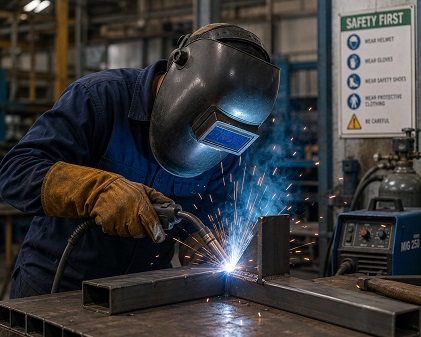
A welder specializes in joining metal parts together using various welding techniques. Welding is a process that involves melting the edges of two or more metal pieces and fusing them together to form a strong and durable bond. Welders work with a wide range of metals, including steel, aluminum, and stainless steel, and they use different methods such as arc welding, gas welding, and resistance welding, among others.
The work of a welder requires precision, technical knowledge, and the ability to interpret and understand blueprints, drawings, and welding symbols. Welders use specialized tools and equipment, including welding machines, torches, electrodes, filler metals, and protective gear such as helmets and gloves. Welders are employed in various industries, including construction, manufacturing, automotive, aerospace, shipbuilding, and oil and gas.
Welders play an important role in fabricating and repairing metal structures, components, and equipment. Skilled welders are in high demand, as their expertise is required to ensure the integrity and quality of welded joints, contributing to the construction and production of a wide range of products and structures.
Duties and Responsibilities
The responsibilities and details of a welder's job can vary depending on the specific industry and employer, but here are some general details and responsibilities of welders:
- Welding Techniques: Welders are proficient in different welding techniques, including shielded metal arc welding (SMAW), gas metal arc welding (GMAW), flux-cored arc welding (FCAW), gas tungsten arc welding (GTAW), and submerged arc welding (SAW). They select the appropriate technique based on the materials being welded, joint design, and project requirements.
- Reading Blueprints and Specifications: Welders interpret technical drawings, blueprints, and specifications to understand the welding requirements of a project. They identify welding symbols, dimensions, and tolerances to ensure accurate and precise welds.
- Material Preparation: Before welding, welders prepare the materials to be joined. This involves cleaning, cutting, grinding, and shaping metal parts to the specified dimensions using tools such as grinders, shears, and plasma cutters. They also remove rust, paint, or other contaminants that can affect the quality of the weld.
- Welding Equipment Setup: Welders are responsible for setting up and maintaining welding equipment and tools. This includes selecting the appropriate welding machine, electrodes, wires, shielding gases, and other consumables required for the specific welding process. They ensure the equipment is calibrated, in good working condition, and follows safety standards.
- Welding Execution: Welders perform the actual welding process by applying heat to the metal parts to be joined and adding filler material, if necessary. They control the welding parameters, such as voltage, amperage, and travel speed, to achieve optimal weld quality and penetration. Welders must maintain accuracy, precision, and consistency while welding.
- Quality Control: Welders inspect the completed welds to ensure they meet the required quality standards. They check for defects such as cracks, porosity, incomplete fusion, or excessive spatter. Welders may use visual inspection techniques, non-destructive testing (NDT) methods like ultrasonic testing or X-ray, and destructive testing methods when required.
- Safety and Compliance: Welders prioritize safety throughout the welding process. They follow safety protocols, wear appropriate personal protective equipment (PPE) such as helmets, gloves, and safety glasses, and ensure proper ventilation in confined spaces. They are knowledgeable about safety regulations and codes related to welding operations.
- Maintenance and Repair: Welders may be responsible for the maintenance and repair of welding equipment and tools. They troubleshoot equipment issues, perform routine maintenance tasks, and replace or repair faulty parts. Proper maintenance ensures the reliability and longevity of the welding equipment.
- Collaboration and Communication: Welders often work as part of a team, collaborating with supervisors, engineers, and other tradespeople. They may need to communicate effectively to understand project requirements, report progress, and coordinate tasks. Good communication skills help ensure a smooth workflow and efficient completion of projects.
- Continuous Learning: Welders stay updated with the latest welding techniques, materials, equipment, and safety practices. They may attend training programs, workshops, or pursue certifications to enhance their skills and knowledge. Continuous learning is vital in the welding profession to adapt to evolving industry standards and advancements.
Types of Welders
There are several types of welders, each specializing in specific welding techniques and industries. Here are some common types of welders and a brief description of what they do:
There are various career paths and specializations within the field of welding. Here are some common types of welder careers and a brief description of what they involve:
- Structural Welder: Structural welders work primarily in construction and are responsible for joining metal components used in the construction of buildings, bridges, and infrastructure projects. They read blueprints, measure and cut materials, and perform welding operations to create strong and durable structural connections.
- Pipe Welder: Pipe welders specialize in welding pipes used in industries such as oil and gas, power generation, and plumbing. They are skilled in welding different types of pipes, including carbon steel, stainless steel, and non-ferrous metals. Pipe welders often work with complex joint designs and must ensure leak-free and high-integrity welds.
- Underwater Welder: Underwater welders are skilled professionals who perform welding tasks in underwater environments. They typically use dry hyperbaric welding or wet welding techniques. Underwater welders may work in offshore oil and gas industry, marine construction, and underwater repairs of structures such as bridges and dams. They require specialized training and equipment to work safely in underwater conditions.
- Pressure Vessel Welder: Pressure vessel welders are involved in the fabrication and assembly of pressure vessels, which are used to store and transport fluids or gases under high pressure. These vessels are used in industries like chemical processing, oil refineries, and power plants. Pressure vessel welders follow strict codes and standards to ensure the safety and reliability of these critical components.
- Aerospace Welder: Aerospace welders work in the aerospace industry, where they weld components used in aircraft manufacturing and maintenance. They must have a high level of precision and expertise to meet the stringent quality requirements and safety standards of the aerospace sector. Aerospace welders often work with specialized materials like aluminum and titanium alloys.
- Automotive Welder: Automotive welders are involved in the production or repair of vehicles. They weld components such as chassis frames, body panels, exhaust systems, and other automotive parts. Automotive welders may work in manufacturing plants, auto body shops, or repair centers, ensuring the structural integrity and safety of vehicles.
- Boilermaker: Boilermakers often perform welding as part of their job. While welding is a significant aspect of a boilermaker's work, their role extends beyond welding alone. Boilermakers primarily focus on the fabrication, assembly, installation, and maintenance of boilers, tanks, pressure vessels, and other large metal structures.
- Robotic Welding Technician: Robotic welding technicians operate and maintain robotic welding systems used in manufacturing processes. They program the robots, set up welding parameters, and monitor the automated welding operations. Robotic welding technicians troubleshoot any issues that arise during production and ensure the robots operate efficiently and produce high-quality welds.
- Welding Inspector: Welding inspectors play a crucial role in quality control and assurance. They inspect welded joints and ensure they meet specified codes, standards, and project requirements. Welding inspectors use various techniques, including visual inspection, non-destructive testing (NDT), and destructive testing to assess the quality and integrity of welds.
- Welding Educator/Trainer: Welding educators or trainers work in educational institutions, vocational schools, or training centers. They teach aspiring welders the necessary skills, techniques, and safety practices required for a career in welding. Welding educators may develop curriculum, deliver lectures, provide hands-on training, and assess students' progress.
Workplace of a Welder
The workplace of a welder can vary depending on the industry and specific job requirements. Welders can be found in a range of environments, including manufacturing facilities, construction sites, repair and maintenance shops, and specialized welding workshops.
In manufacturing facilities, welders typically work in dedicated areas equipped with welding stations or booths. These spaces are designed to ensure proper ventilation, safety, and access to welding equipment and tools. The environment is often indoors, with a controlled atmosphere and organized workflow. Welders may work as part of a larger production team, collaborating with other professionals to complete projects.
On construction sites, welders are involved in joining metal components to assemble structures, bridges, and infrastructure projects. This means their workplace can be outdoors and subject to various weather conditions. They may work at heights, in confined spaces, or on elevated platforms. Welders in construction need to adapt to changing work environments and adhere to strict safety protocols to ensure their well-being and the quality of their work.
Repair and maintenance shops employ welders who handle tasks such as repairing equipment, machinery, or vehicles. These shops are equipped with welding equipment, tools, and other resources required for welding operations. Welders in these settings often work on a variety of projects, making repairs or modifications as needed.
Specialized welding workshops may be found in industries such as aerospace, automotive, or shipbuilding. These workshops are equipped with advanced welding equipment and technologies specific to the industry. Welders in these environments may work on intricate components, follow precise specifications, and ensure the highest quality standards.
Regardless of the specific workplace, welders are typically surrounded by welding equipment, tools, and safety gear. They may work with different metals, gases, and welding techniques based on the project requirements. Safety is paramount in their work, and welders are expected to adhere to safety guidelines, wear appropriate personal protective equipment, and follow proper procedures to prevent accidents and ensure the quality of their welds.
High School
If you're interested in pursuing a career in welding, certain high school courses can provide a solid foundation and help you develop relevant skills and knowledge. Here are some recommended high school courses for aspiring welders:
- Mathematics: Taking courses in mathematics, such as algebra and geometry, can be beneficial for welders. Math skills are often used in measurements, calculations, and understanding blueprints or technical drawings.
- Science: Courses in physics and chemistry can provide a deeper understanding of the scientific principles underlying welding processes, such as heat transfer, metallurgy, and material properties.
- Industrial Arts/Metalworking: If your high school offers courses in industrial arts or metalworking, taking them can provide hands-on experience with tools, equipment, and basic metalworking techniques. These courses can introduce you to welding concepts and help you develop skills in metal fabrication.
- Mechanical Drawing/Blueprint Reading: Courses that focus on mechanical drawing or blueprint reading can be valuable for welders. Understanding how to interpret and work with technical drawings and blueprints is essential for accurate welding and fabricating.
- Shop Classes: Participating in shop classes that offer hands-on experience with various tools, machinery, and metalworking processes can provide a practical foundation for welding. These classes often cover topics like welding safety, basic fabrication techniques, and using hand tools
Steps to Become a Welder
Becoming a welder involves a combination of education, training, and hands-on experience. Here are detailed steps to help you navigate the process of becoming a welder:
- Complete High School Education: Obtain a high school diploma or its equivalent. High school education provides a foundation in math, science, and technical skills that are relevant to welding.
- Research Training Programs: Explore vocational schools, community colleges, or trade schools that offer welding training programs. Look for programs that are accredited and recognized in the industry. Research the curriculum, training facilities, faculty expertise, and any additional certifications or credentials offered.
- Enroll in a Welding Training Program: Apply and enroll in a welding training program that suits your interests and goals. These programs typically range from a few months to a couple of years and can include classroom instruction, hands-on practice, and internships or cooperative education opportunities.
- Gain Practical Skills: During the training program, focus on developing practical welding skills. Learn various welding techniques, such as MIG welding, TIG welding, and stick welding. Acquire proficiency in reading blueprints, interpreting welding symbols, and understanding welding procedures.
- Earn Certifications: Obtain industry-recognized certifications to enhance your employability. Common certifications include those offered by the American Welding Society (AWS), such as Certified Welder (CW) or Certified Welding Inspector (CWI). Certification requirements may include a combination of written exams, practical assessments, and visual inspections.
- Gain Hands-On Experience: Seek opportunities to gain hands-on experience through internships, apprenticeships, or entry-level positions. Practical experience will help refine your welding skills, expose you to different industries, and provide valuable industry connections.
- Continue Learning: Stay updated with advancements in welding technology, materials, and techniques. Attend workshops, seminars, and conferences to expand your knowledge and skills. Consider pursuing advanced certifications or specialized training in areas such as pipe welding, underwater welding, or robotic welding.
- Build a Professional Network: Join professional organizations, attend industry events, and engage with other welders and industry professionals. Building a network can provide job leads, mentorship opportunities, and a platform for sharing knowledge and experiences.
- Seek Employment: Utilize job search resources such as online job boards, industry-specific websites, and networking connections to find welding job opportunities. Prepare a professional resume highlighting your education, training, certifications, and relevant experience. Practice interview skills to effectively communicate your skills, knowledge, and enthusiasm for the field.
- Start Your Career: Once hired, demonstrate professionalism, safety consciousness, and a strong work ethic. Continuously strive to improve your skills, take on challenging projects, and seek opportunities for career advancement.
Certifications
There are several certifications available for welders that are recognized and valued by employers in the industry. These certifications are often offered by professional organizations and institutions.
- Certified Welder (CW) - Offered by the American Welding Society (AWS), the CW certification is a fundamental certification that validates a welder's ability to perform welding tasks according to specific welding procedures. It includes practical welding tests and visual inspection of welds.
- Certified Welding Inspector (CWI) - The CWI certification is also offered by AWS and is designed for individuals who inspect and evaluate welds. It demonstrates proficiency in welding codes, standards, and inspection techniques. CWI certification requires passing a written exam, a practical exam, and meeting education and experience requirements.
- Certified Welding Educator (CWE) - The CWE certification, provided by AWS, is intended for welding educators who teach and train aspiring welders. It verifies the educator's knowledge of welding processes, safety practices, and instructional techniques.
- Certified Welding Supervisor (CWS) - AWS offers the CWS certification for welding supervisors who oversee welding operations and ensure compliance with welding procedures, codes, and safety standards. CWS certification demonstrates knowledge of welding supervision, quality control, and welding management.
- Certified Welding Sales Representative (CWSR) - The CWSR certification, offered by AWS, is for professionals involved in the sales and promotion of welding products and services. It validates knowledge of welding processes, equipment, and industry practices.
- Certified Welding Engineer (CWEng) - The CWEng certification, provided by AWS, is for experienced professionals who have advanced knowledge and expertise in welding engineering. It requires meeting specific education and experience requirements and passing a comprehensive examination.
Apart from AWS certifications, there may be additional certifications specific to certain industries or welding processes. For example, the American Petroleum Institute (API) offers certifications for welding in the oil and gas industry, such as API 1104 Welding of Pipelines and API 653 Aboveground Storage Tank Inspector.
Apprenticeships
Apprenticeships are an excellent way for aspiring welders to gain practical, on-the-job training while earning a wage. Through apprenticeship programs, individuals can receive hands-on experience, mentorship, and a pathway to becoming a skilled welder.
- Finding Apprenticeship Programs: Start by researching local trade unions, vocational schools, community colleges, or industry associations that offer apprenticeship programs for welders. These organizations often have established partnerships with employers and can help connect you with apprenticeship opportunities.
- Program Requirements: Each apprenticeship program may have specific requirements, such as a minimum age (usually 18 years or older), a high school diploma or equivalent, and passing a basic skills assessment test. Some programs may require completion of specific coursework or prior experience in metalworking.
- Application Process: Follow the application process outlined by the apprenticeship program. This typically involves submitting an application, providing relevant documents (such as high school transcripts or certifications), and possibly attending an interview or orientation session.
- Classroom Instruction: Many apprenticeship programs combine on-the-job training with classroom instruction. Apprentices may attend scheduled classes or workshops to learn theoretical knowledge related to welding processes, safety practices, blueprint reading, and metallurgy.
- On-the-Job Training: The core of an apprenticeship is on-the-job training. Apprentices work alongside experienced welders, learning various welding techniques, equipment operation, and fabrication skills. They gain hands-on experience in real work environments, which may include construction sites, manufacturing facilities, or repair shops.
- Wage Progression: Apprentices earn a wage that generally starts at a percentage (around 50-60%) of the journeyman welder's wage rate. As the apprenticeship progresses, wages gradually increase based on skill development and the completion of specific milestones or hours of training.
- Mentorship and Supervision: Apprentices typically receive guidance and mentorship from experienced welders who serve as their supervisors. These mentors provide instruction, feedback, and support throughout the apprenticeship period.
- Completion and Certification: Upon completing the required number of on-the-job training hours and meeting the program's educational requirements, apprentices can obtain a certificate of completion from the apprenticeship program. Some programs may also lead to additional certifications, such as those offered by the American Welding Society (AWS).
Apprenticeships can vary in duration, ranging from one to four years, depending on the program and industry. They provide a structured pathway for skill development, networking opportunities, and a stepping stone to a successful career as a welder.
Welding Levels
In the welding profession, there are several levels or stages that a welder can progress through as they gain experience, expertise, and certifications. These levels are often associated with increasing skill, responsibility, and potential career opportunities. While the specific titles and criteria may vary between industries and companies, here is a general overview of the common levels in welding:
- Entry-Level Welder: At this stage, individuals are typically new to the field and have completed basic welding training or an apprenticeship. Entry-level welders perform simple welding tasks under the supervision of more experienced welders or supervisors. They focus on developing fundamental welding skills and gaining practical experience.
- Journeyman Welder: A journeyman welder has acquired a significant amount of experience and expertise in welding. They can perform a wide range of welding techniques and have demonstrated proficiency in meeting quality and safety standards. Journeyman welders can work independently, interpret welding specifications and blueprints, and may mentor and oversee entry-level welders.
- Welding Inspector: A welding inspector is responsible for examining and evaluating welds to ensure they meet specific codes, standards, and quality requirements. Inspectors may hold certifications such as Certified Welding Inspector (CWI) from the American Welding Society (AWS). They perform visual inspections, conduct non-destructive testing (NDT), and verify compliance with welding procedures.
- Welding Supervisor: Welding supervisors oversee welding operations, manage teams of welders, and ensure compliance with safety standards, project deadlines, and quality control. They coordinate work schedules, provide technical guidance, and may liaise with clients or project managers. Welding supervisors often have several years of experience as journeyman welders and may hold certifications related to welding supervision or management.
- Welding Engineer: Welding engineers possess in-depth knowledge of welding processes, metallurgy, and materials science. They are responsible for designing and optimizing welding procedures, developing welding specifications, and solving complex welding-related challenges. Welding engineers often hold bachelor's or advanced degrees in welding engineering or related fields.
- Welding Instructor/Educator: Welding instructors work in educational institutions or training centers to teach aspiring welders. They have extensive welding experience and may hold certifications such as Certified Welding Educator (CWE) from AWS. Welding instructors develop lesson plans, deliver classroom instruction, and provide hands-on training to students.
It's important to note that these levels are not universally standardized and may vary in different industries and companies. Additionally, there may be opportunities for further specialization within specific welding techniques (e.g., pipe welding, structural welding) or industries (e.g., aerospace welding, automotive welding). Continuous professional development, advanced certifications, and expanding skills in specialized areas can open doors to further career advancement and opportunities as a welder.
Skills Needed for a Welder
Hard Skills
- Welding techniques (MIG, TIG, Stick/SMAW, Flux-Cored Arc Welding)
- Reading and interpreting blueprints and technical drawings
- Metal cutting and fabrication
- Knowledge of different metals and alloys
- Joint preparation and fitting
- Measuring and layout skills
- Grinding, finishing, and polishing welds
- Welding equipment setup and maintenance
- Welding inspection and quality control
- Understanding welding symbols and specifications
- Pipe welding and structural welding
- Brazing and soldering techniques
- Knowledge of heat treatment and metallurgy
- Basic mathematics and geometry
- Safety procedures and hazard awareness
Soft Skills
- Attention to detail
- Hand-eye coordination
- Physical stamina and strength
- Problem-solving skills
- Patience and precision
- Time management
- Teamwork and collaboration
- Communication skills
- Adaptability
- Dependability and reliability
- Ability to work under pressure
- Strong work ethic
Technical Skills
- Operating welding machines and tools
- Using plasma cutters and oxy-fuel cutting equipment
- Operating grinders, drills, and power tools
- Weld testing and defect identification
- Understanding welding codes and standards (AWS, ASME, ISO)
- Preventive maintenance of welding equipment
- Safe handling of gas cylinders and compressed gases
- Using measuring instruments such as calipers, gauges, and tape measures
- Computer Numerical Control (CNC) basics (preferred in advanced manufacturing)
- Knowledge of workplace safety regulations and Personal Protective Equipment (PPE) usage
Salary of a Welder
The salary of a welder depends on their experience, welding specialization, certifications, industry, and location.
India
- Entry-level (0–2 years): ₹2 lakh–₹3.5 lakh per year
- Mid-level (3–7 years): ₹3.5 lakh–₹6 lakh per year
- Senior-level (8+ years): ₹6 lakh–₹10 lakh+ per year
- Specialized Welders (Pipe, Underwater, Pressure Vessel, Aerospace): ₹8 lakh–₹20 lakh+ per year
- Self-employed/Contract Welders: Income varies widely and can exceed ₹15 lakh per year depending on projects and expertise.
International Average Annual Salary
- United States: USD 45,000–80,000+
- Canada: CAD 50,000–85,000+
- United Kingdom: GBP 28,000–45,000+
- Australia: AUD 65,000–110,000+
- Middle East (UAE, Qatar, Saudi Arabia): Equivalent of ₹6 lakh–₹18 lakh+ per year, often with additional benefits such as accommodation and transportation.










User's Comments
No comments there.