

Stories you may like
AI Localization Specialist
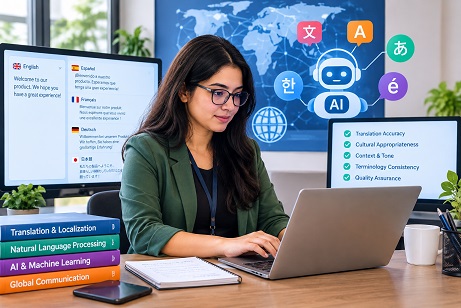
An AI localization specialist helps adapt AI systems, tools, and content so they work well for users in different languages, cultures, and regions. They make sure that AI-generated text, voice outputs, interfaces, and instructions feel natural and accurate for local audiences. This can include translating content, adjusting tone and phrasing, and ensuring cultural references make sense in each region.
AI localization specialists work with AI developers, linguists, product teams, and translators to improve how AI performs in global markets. They test AI outputs in different languages, identify errors or awkward translations, and help refine models so they respond appropriately across cultures. Important skills for this role include language proficiency, cultural awareness, communication, attention to detail, and a basic understanding of how AI language systems work.
Duties and Responsibilities
An AI localization specialist has a range of duties and responsibilities focused on making sure AI systems work accurately and naturally across different languages and cultures.
- Localization Strategy Development: Plan how AI products and content should be adapted for different regions and languages. Ensure consistency in tone, meaning, and user experience across markets.
- Translation and Adaptation Review: Review and refine AI-generated translations and localized content. Adjust wording, grammar, and phrasing so it sounds natural to native speakers.
- Cultural Adaptation: Identify cultural differences that may affect how AI content is understood. Modify examples, references, and expressions to make them appropriate for each audience.
- Quality Assurance Testing: Test AI outputs in multiple languages to check for errors, awkward phrasing, or misinterpretations. Report issues and work with teams to improve accuracy.
- Collaboration with Cross-Functional Teams: Work with AI engineers, linguists, product managers, and translators to improve multilingual performance. Provide feedback on how AI models handle different languages.
- Terminology and Style Management: Maintain consistent terminology, glossaries, and style guides across all localized AI content. Ensure AI systems follow these standards in all supported languages.
Types of AI Localization Specialists
AI localization specialists can focus on different areas depending on the type of content, AI system, and languages they work with.
- AI Linguistic Localization Specialist: Focuses on translating and refining AI-generated text so it is grammatically correct and natural in different languages. Ensures meaning is preserved across translations.
- AI Cultural Localization Specialist: Adapts AI content to fit cultural norms, values, and expectations in different regions. Adjusts tone, examples, and references to avoid misunderstandings or offense.
- AI Product Localization Specialist: Works on localizing AI-powered products and interfaces, including apps, chatbots, and digital tools. Ensures user experience is consistent and intuitive across languages.
- AI Voice and Speech Localization Specialist: Focuses on AI voice systems, such as text-to-speech and voice assistants. Ensures pronunciation, accent, and tone are appropriate for different languages and regions.
- AI Data Localization Specialist: Works with training data to ensure AI models are properly exposed to diverse languages and regional variations. Helps improve accuracy and reduce bias in multilingual outputs.
Workplace of an AI Localization Specialist
The workplace of an AI localization specialist is usually in technology companies, AI development firms, translation and language service companies, or large global organizations that use AI products. They often work in office environments or remotely, using digital tools to review and edit AI-generated content across different languages. A big part of their day involves checking translations, testing AI outputs, and ensuring content is accurate and culturally appropriate.
AI localization specialists work closely with AI engineers, linguists, translators, product managers, and UX designers. They take part in meetings to discuss how AI systems perform in different languages and suggest improvements to make outputs more natural and consistent. Strong communication skills are important because they need to explain language issues clearly and collaborate with both technical and non-technical teams.
The work is detail-oriented and focused on quality. Specialists often switch between multiple languages and projects, testing AI responses and reviewing large amounts of text or speech data. Because AI systems are constantly updated, they also spend time adapting localization rules and staying up to date with new features, tools, and language changes.
How to become an AI Localization Specialist
Becoming an AI localization specialist involves building strong language skills, cultural understanding, and knowledge of how AI systems process and generate language.
- Earn a Relevant Degree: Start with a Bachelor’s Degree in Linguistics, Translation, Communications, Computer Science, or International Studies. Some roles may also value a degree in cultural studies.
- Develop Strong Language Skills: Become fluent in at least one additional language beyond your native language. Strong writing, grammar, and translation skills are essential for reviewing and improving AI outputs.
- Learn How AI Language Systems Work: Gain a basic understanding of how AI models generate text, translation tools, and speech systems. This helps you identify errors and improve accuracy in localized content.
- Gain Experience in Translation or Content Work: Look for roles or internships in translation, localization, editing, UX writing, or content review. Practical experience helps you understand real-world language challenges.
- Build Cultural Knowledge: Study how culture affects communication styles, tone, humor, and meaning. This is important for adapting AI content so it feels natural in different regions.
- Create a Portfolio: Build samples of translated, localized, or edited content. A portfolio showing your ability to improve clarity and cultural accuracy can help you stand out to employers.
Certifications
Professional certifications can help AI localization specialists strengthen their expertise in translation, localization technology, multilingual content management, and AI-powered language workflows.
- ATA Certification (American Translators Association): A widely recognized credential that validates professional translation skills and language proficiency.
- RWS Trados Studio Certification: Demonstrates proficiency with one of the world's leading computer-assisted translation and localization platforms used throughout the localization industry.
- Google Cloud Professional Machine Learning Engineer: Provides knowledge of AI and machine learning systems, helping localization specialists understand how multilingual AI models and language technologies are developed and deployed.
- Phrase Academy Certification: Offers role-based certifications focused on localization workflows, translation management, automation, and use of the Phrase localization platform.
Skills Needed for an AI Localization Specialist
An AI Localization Specialist adapts AI-generated content, software, chatbots, applications, and digital products for different languages, cultures, and regions. The key skills include:
- Language Proficiency – Excellent command of at least two languages, including grammar, vocabulary, tone, and cultural nuances.
- Translation Skills – Ability to accurately translate AI-generated text while preserving meaning, context, and intent.
- Cultural Awareness – Understanding cultural differences, local customs, expressions, humor, and sensitivities.
- AI and Machine Learning Knowledge – Basic understanding of AI systems, language models, machine translation, and natural language processing (NLP).
- AI Output Evaluation – Ability to review AI-generated translations and identify errors, unnatural wording, cultural problems, and inappropriate content.
- Localization Tools – Familiarity with translation management systems (TMS), computer-assisted translation (CAT) tools, terminology databases, and localization platforms.
- Natural Language Processing (NLP) – Knowledge of how AI processes and generates human language is useful for improving localized AI outputs.
- Editing and Proofreading – Strong attention to grammar, spelling, punctuation, style, and consistency.
- Contextual Understanding – Ability to understand the purpose and audience of content so that translations sound natural rather than word-for-word.
- Terminology Management – Maintaining consistent translations of technical, business, product, and industry-specific terms.
- Quality Assurance – Checking localized websites, applications, chatbots, interfaces, and other AI products for linguistic and functional errors.
- Attention to Detail – Detecting small language, formatting, cultural, and contextual issues that can affect the user experience.
- Research Skills – Ability to research regional language usage, terminology, regulations, and cultural preferences.
- Communication Skills – Working effectively with developers, translators, product teams, marketers, and AI engineers.
- Problem-Solving Skills – Finding appropriate solutions when AI translations produce ambiguous, culturally inappropriate, or technically incorrect results.
- Basic Technical Skills – Familiarity with spreadsheets, content management systems, APIs, JSON/XML, and basic coding can be beneficial.
- Adaptability – Ability to work with rapidly changing AI tools, localization technologies, languages, and international markets.
Salary of an AI Localization Specialist
The salary of an AI Localization Specialist varies depending on experience, language expertise, location, company, and technical skills.
India
- Entry-level: ₹3–6 lakh per year
- Mid-level: ₹6–12 lakh per year
- Experienced: ₹12–20 lakh+ per year
- Senior/Lead roles: ₹20–30 lakh+ per year
Professionals with expertise in AI, NLP, machine translation, localization technology, and multiple high-demand languages may command higher salaries.
International
- United States: approximately $60,000–$110,000+ per year
- United Kingdom: approximately £35,000–£70,000+ per year
- Europe: approximately €40,000–€80,000+ per year
Freelance AI localization specialists may also charge per word, project, or hourly, depending on language pair and technical complexity.











User's Comments
No comments there.