

Stories you may like
AI Manufacturing Specialist
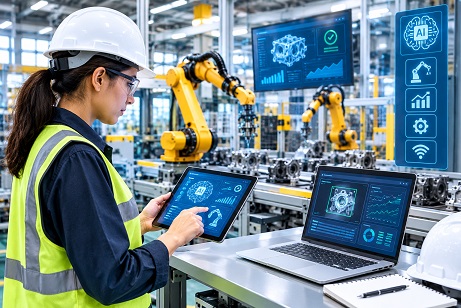
An AI manufacturing specialist uses artificial intelligence to help improve how products are designed, made, and delivered in factories and industrial settings. They work with AI systems that can monitor machines, predict equipment failures, optimize production lines, reduce waste, and improve product quality. Their goal is to make manufacturing faster, safer, more efficient, and more cost-effective.
AI manufacturing specialists work in factories, manufacturing plants, engineering companies, technology firms, and industrial automation organizations. They collaborate with engineers, production managers, data scientists, and machine operators to implement and manage AI-driven systems. This career combines problem-solving, technology, and real-world production processes, making it a strong fit for people interested in both engineering and artificial intelligence.
Duties and Responsibilities
AI manufacturing specialists have a variety of duties and responsibilities focused on using artificial intelligence to improve production efficiency, product quality, and equipment performance in manufacturing environments.
- Monitor Production Systems: Use AI-powered tools to track manufacturing processes in real time. This helps identify inefficiencies, defects, or machine issues early.
- Predict Equipment Maintenance Needs: Apply AI models to predict when machines are likely to fail or need maintenance. This helps reduce downtime and prevent costly breakdowns.
- Improve Production Efficiency: Analyze data from production lines to optimize workflows, reduce waste, and increase output. AI insights help make factories run more smoothly.
- Support Quality Control: Use AI systems to detect defects in products during or after production. This ensures higher product quality and fewer errors reaching customers.
- Develop and Implement AI Solutions: Help design and deploy AI tools that automate manufacturing processes. These systems can improve speed, accuracy, and consistency in production.
- Collaborate with Engineering Teams: Work closely with engineers, technicians, data scientists, and production managers. Collaboration ensures AI systems fit real manufacturing needs and improve operations effectively.
Types of AI Manufacturing Specialists
AI manufacturing specialists can focus on different areas of production and industrial technology depending on the type of AI systems they work with and the manufacturing problems they help solve.
- Predictive Maintenance Specialist: Uses AI to predict when machines and equipment will fail or need servicing. This helps reduce downtime and keep production running smoothly.
- Quality Control Specialist: Focuses on using AI vision systems and data analysis to detect defects in products. Their work helps improve product quality and reduce waste.
- Process Optimization Specialist: Uses AI to analyze production workflows and improve efficiency. They help factories produce more goods in less time with fewer resources.
- Robotics and Automation Specialist: Works with AI-powered robots and automated systems used in manufacturing. They help design and manage machines that perform tasks like assembly, packaging, and sorting.
- Supply Chain AI Specialist: Uses AI to improve planning, inventory management, and logistics. Their work helps ensure materials and products move efficiently through the supply chain.
- Industrial Data Analyst: Collects and analyzes manufacturing data to find patterns and insights. These insights help companies make better operational and strategic decisions.
Workplace of an AI Manufacturing Specialist
The workplace of an AI manufacturing specialist is usually found in factories, manufacturing plants, industrial facilities, engineering companies, and large technology-driven production environments. Some also work in office settings or remotely, where they analyze data from manufacturing systems and design AI solutions that improve production processes.
AI manufacturing specialists work closely with engineers, machine operators, production managers, maintenance teams, data scientists, and automation technicians. Collaboration is very important because they need to understand how real machines and production lines operate in order to apply AI effectively. Meetings, factory floor visits, and system testing are common parts of the job.
The work is hands-on, technical, and focused on solving real-world problems. AI manufacturing specialists spend their time monitoring equipment data, improving production systems, testing AI models, and helping reduce downtime or defects. Because manufacturing technology and AI systems are constantly evolving, continuous learning and adapting to new tools is an important part of the role.
How to become an AI Manufacturing Specialist
Becoming an AI manufacturing specialist involves building knowledge in engineering, manufacturing processes, and artificial intelligence so you can help improve how products are made using smart technology.
- Earn a Relevant Degree: Start with a Bachelor's Degree in Industrial Engineering, Mechanical Engineering, Manufacturing Engineering, Computer Science, Data Science, or a related field. This gives you a strong foundation in both production systems and technical problem-solving.
- Learn Manufacturing Fundamentals: Gain an understanding of how factories and production lines work, including quality control, supply chains, automation systems, and equipment maintenance. Knowing real manufacturing processes is essential.
- Develop AI and Data Skills: Build skills in programming (such as Python), data analysis, machine learning, and AI tools used for predictive maintenance and process optimization. These skills allow you to work with industrial data effectively.
- Learn Automation and Industrial Technology: Get familiar with robotics, sensors, IoT systems, and industrial control systems (like SCADA or PLCs). These are commonly used in modern smart factories.
- Gain Practical Experience: Look for internships or entry-level roles in manufacturing companies, engineering firms, or industrial automation organizations. Hands-on experience is key to understanding real production environments.
- Build Projects and Experience: Work on projects like predictive maintenance models, production optimization tools, or quality inspection systems. These help demonstrate your ability to apply AI in manufacturing settings.
Certifications
Professional certifications can help an AI manufacturing specialist build strong skills in automation, industrial systems, data analysis, and AI-driven production technologies.
- Microsoft Certified: Azure AI Engineer Associate: Validates skills in building and deploying AI solutions, including predictive systems that can be applied to manufacturing environments.
- Siemens SITRAIN Digital Industry Academy (Industrial Automation Training): Official Siemens training program covering PLC systems, industrial automation, and smart factory technologies used in modern manufacturing.
- AWS Certified Machine Learning – Specialty: Demonstrates expertise in building, training, and deploying machine learning models that can support predictive maintenance and process optimization.
- Six Sigma Green Belt Certification (ASQ): Focuses on process improvement, quality control, and reducing waste in manufacturing systems using data-driven methods.
Skills Needed for an AI Manufacturing Specialist
An AI Manufacturing Specialist combines manufacturing knowledge with artificial intelligence, automation, and data analytics to improve production processes, quality, efficiency, and safety.
1. Artificial Intelligence & Machine Learning
- Understanding of machine learning algorithms
- Knowledge of predictive analytics
- Familiarity with generative AI and AI automation
- Ability to develop and apply AI models for manufacturing problems
2. Data Analysis
- Collecting and interpreting manufacturing data
- Knowledge of statistics and data visualization
- Identifying production trends and patterns
- Using data to support operational decisions
3. Industrial Automation
- Understanding automated production systems
- Knowledge of robotics and robotic process automation
- Familiarity with sensors, actuators, and control systems
- Understanding of PLCs and industrial automation equipment
4. Manufacturing Processes
- Knowledge of production planning and processes
- Understanding of supply chains and inventory management
- Familiarity with lean manufacturing and continuous improvement
- Knowledge of quality-control procedures
5. Programming Skills
- Python for AI and data analysis
- SQL for working with databases
- Basic knowledge of programming and scripting
- Familiarity with AI/ML frameworks can be beneficial
6. Predictive Maintenance
- Monitoring equipment performance
- Detecting potential machine failures
- Using AI to predict maintenance requirements
- Analyzing sensor and machine data
7. Computer Vision
- Understanding AI-based image recognition
- Detecting manufacturing defects automatically
- Using cameras and vision systems for quality inspection
- Knowledge of image-processing techniques
8. Problem-Solving Skills
- Identifying production bottlenecks
- Finding causes of manufacturing problems
- Designing AI-based solutions
- Evaluating the effectiveness of implemented solutions
9. Communication & Teamwork
- Working with engineers, technicians, data scientists, and managers
- Explaining technical concepts clearly
- Preparing reports and presentations
- Collaborating on automation and AI projects
10. Cybersecurity & Data Privacy
- Understanding industrial cybersecurity
- Protecting manufacturing systems and operational data
- Awareness of access controls and secure networks
- Understanding responsible use of AI in industrial environments
11. Cloud & IoT Knowledge
- Understanding Industrial Internet of Things (IIoT)
- Working with connected machines and sensors
- Familiarity with cloud-based manufacturing platforms
- Understanding edge computing and real-time data processing
12. Continuous Learning
AI and smart-manufacturing technologies evolve rapidly. An AI Manufacturing Specialist should continuously learn about new AI models, robotics, digital twins, automation technologies, and Industry 4.0 solutions.
AI Manufacturing Specialist Salary
The salary of an AI Manufacturing Specialist varies depending on experience, location, industry, technical skills, and company size. Because this is an emerging job title, salaries are often reported under related roles such as AI Engineer, Manufacturing Data Scientist, Industrial AI Engineer, or Automation Engineer.
Salary in India
- Entry-level: ₹4–8 lakh per year
- Mid-level (3–7 years): ₹8–18 lakh per year
- Senior-level (7+ years): ₹18–30+ lakh per year
- Highly experienced/specialized professionals: ₹30–45+ lakh per year
In major technology and manufacturing hubs such as Bengaluru, Hyderabad, Chennai, Pune, Mumbai, and Delhi-NCR, professionals with strong AI, robotics, automation, and manufacturing expertise may receive higher compensation.
International Salary
- United States: approximately $90,000–$160,000+ per year
- United Kingdom: approximately £45,000–£90,000+ per year
- Canada: approximately CAD 75,000–CAD 140,000+ per year
- Australia: approximately AUD 90,000–AUD 160,000+ per year
Specialization in machine learning, industrial robotics, computer vision, predictive maintenance, digital twins, and IIoT can significantly influence earning potential.








User's Comments
No comments there.