



Stories you may like
Examples of AI in Research
1. DeepMind: AlphaFold and Protein Structure Prediction
To overcome the long-standing challenge of predicting protein structures, DeepMind developed AlphaFold, an AI system capable of modeling protein folding with unprecedented accuracy. The goal was to accelerate biomedical research and drug discovery by providing reliable 3D structures of proteins, which are critical for understanding disease mechanisms. By leveraging deep learning models trained on vast datasets of known protein structures, AlphaFold can predict how a protein folds from its amino acid sequence alone.
The system analyzes patterns in protein sequences and uses attention-based neural networks to model the spatial arrangements of atoms within proteins. Millions of experimental and simulated protein data points were used to train the model, allowing it to generalize to previously unseen proteins. Researchers integrate these predictions into drug design workflows and structural biology studies to guide experiments and prioritize targets efficiently.
As a result, AlphaFold successfully predicted the structures of nearly all human proteins and thousands from other organisms. This breakthrough has dramatically reduced the time required to obtain experimentally verified structures, accelerating research in genetics, drug discovery, and disease understanding. The system is now widely used by academic and pharmaceutical researchers worldwide, exemplifying AI’s transformative impact on scientific discovery.
2. IBM Watson Health: Accelerating Drug Discovery
IBM Watson Health applied AI to process vast medical literature and patient data to identify potential drug candidates and optimize clinical trial designs. The initiative aimed to reduce the time-consuming and costly traditional drug discovery process, where analyzing research papers, trial outcomes, and chemical interactions manually could take years. Watson uses natural language processing and machine learning to extract meaningful insights from unstructured medical data, making connections between diseases, treatments, and biomarkers.
The platform integrates clinical data, genomic datasets, and published research to suggest new therapeutic approaches and predict patient responses. Machine learning algorithms rank drug candidates based on efficacy, safety, and novelty while identifying potential side effects early in development. This AI-driven system enables research teams to focus on the most promising avenues, reducing trial-and-error in the lab.
Watson Health has helped pharmaceutical companies identify novel compounds faster than conventional methods. By prioritizing drug candidates and refining trial designs, AI has reduced R&D costs and shortened development cycles. This case demonstrates how AI accelerates biomedical research and improves the efficiency of healthcare innovation.
3. Google AI for Earth: Environmental Research
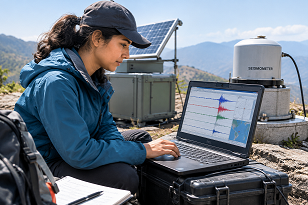
Google AI for Earth leverages AI to monitor environmental changes and inform conservation strategies, addressing challenges such as deforestation, biodiversity loss, and climate change. The initiative uses satellite imagery, sensor networks, and climate datasets to detect patterns and predict ecological trends. AI models can identify illegal logging activities, monitor ecosystem health, and track wildlife populations in real time, providing actionable insights to researchers and policymakers.
Machine learning algorithms process petabytes of remote sensing data to detect subtle environmental changes that humans might miss. AI models integrate temporal and spatial data to forecast trends like forest degradation or habitat loss, guiding targeted conservation actions. The system also supports climate modeling and resource management, helping scientists and governments make data-driven decisions to preserve natural ecosystems.
Through AI-assisted monitoring, Google has enabled faster detection of deforestation hotspots in regions like the Amazon rainforest. Conservation organizations use these insights to respond proactively, protecting endangered habitats and species. The initiative highlights AI’s ability to enhance environmental research and support sustainable management of natural resources.










User's Comments
No comments there.