



Stories you may like
Biophysicist
A biophysicist is a specialized scientist who applies principles and methods from physics to study biological systems and processes. These professionals bridge the disciplines of physics and biology, employing quantitative and analytical approaches to investigate how physical forces and principles govern life at various scales, from molecular interactions to complex biological systems. Biophysicists utilize a wide range of techniques including computational modeling, spectroscopy, imaging, and experimental methods to explore topics such as protein structure and function, cellular dynamics, biomechanics, neuroscience, and environmental interactions. Their research contributes to advancements in medicine, biotechnology, agriculture, and environmental sustainability, aiming to understand fundamental biological mechanisms and address global challenges through innovative solutions.
Understanding the Role of a Biophysicist in Advancing Scientific Knowledge
A biophysicist is a dedicated scientist who applies the principles of physics to unravel the mysteries of biological systems. By studying the physical properties and dynamics of molecules, cells, and organisms, biophysicists contribute valuable insights into health, disease, and the environment. Explore how these experts utilize cutting-edge technologies and interdisciplinary approaches to drive discoveries that shape our understanding of life and pave the way for innovative solutions in healthcare and beyond.
Job Options:
- Clinical Biophysicist - There are several medical applications for clinical biophysics. In plastic surgery, neurology, cancer, orthopedics, etc., it is crucial.
- Nuclear Medicine Physicist - Radiation Therapy Physics researchers look at things like radiation dosimetry, nuclear imaging technology, and interactions between matter and ionizing radiation. Furthermore, they have advanced knowledge of computer science and picture processing.
- Research -For biophysicists, research is a key career path. Most biophysicists work primarily in laboratories where they perform research, evaluate the findings, and record their findings. They frequently handle dangerous organic and inorganic compounds.
- Education - At universities and colleges, biophysicists might hold full-time or temporary positions as lecturers. Additionally, there are chances for educational and training programs.
Duties and Responsibilities
Some of the key duties and responsibilities of biophysicists include:
- Research and Experimentation: Biophysicists conduct research and experiments to understand the physical and chemical properties of biological systems. For example, they may use techniques such as X-ray crystallography, NMR spectroscopy, and electron microscopy to study the structure of proteins and other biomolecules.
- Data Analysis: Biophysicists analyze the data generated from their experiments using statistical methods and computational modeling. They use this data to develop models and theories to explain the behavior of biological systems.
- Development of New Technologies: Biophysicists often develop new technologies and techniques to study biological systems. For example, they may develop new imaging techniques that allow for the visualization of biological processes in real-time.
- Collaboration With Other Scientists: Biophysicists work closely with scientists from other disciplines, including biochemists, molecular biologists, and computational scientists. They collaborate to design experiments and interpret data.
- Teaching and Mentoring: Biophysicists may also teach and mentor students at the undergraduate and graduate levels. They may teach courses in biophysics, physics, and other related disciplines.
Real-life examples of what biophysicists do:
- Understanding the structure of DNA: Biophysicists have made significant contributions to our understanding of the structure of DNA. For example, Rosalind Franklin used X-ray crystallography to obtain the first images of DNA, which were crucial to the discovery of its double helix structure.
- Studying the properties of membrane proteins: Biophysicists have used a range of techniques to study the physical properties of membrane proteins, which play a key role in a variety of biological processes. For example, NMR spectroscopy has been used to study the structure and dynamics of membrane proteins in their natural environment.
- Developing new imaging techniques: Biophysicists are constantly developing new imaging techniques to study biological systems. For example, super-resolution microscopy allows for the visualization of biological processes at the nanoscale level.
Types of Biophysicists
Here are some of the different types of biophysicists and what they do:
- Molecular Biophysicists: Study the physical and chemical properties of molecules involved in biological processes. They use techniques such as X-ray crystallography, nuclear magnetic resonance (NMR) spectroscopy, and computational modeling to understand the structure, dynamics, and interactions of proteins, nucleic acids, and other biomolecules.
- Cellular Biophysicists: Investigate the physical properties of cells and their membranes, including the forces that govern cell shape, motility, and signaling. They use tools such as microscopy, atomic force microscopy (AFM), and electrophysiology to study cell structure and function.
- Neurobiophysicists: Focus on the physical principles underlying the function of the nervous system, including the mechanisms of signal transmission and processing in neurons and the dynamics of neural circuits. They use techniques such as electrophysiology, imaging, and modeling to understand the biophysical basis of brain function.
- Biomechanists: Study the mechanical properties of biological systems, including the forces that govern movement, deformation, and growth. They use tools such as biomechanical modeling, motion capture, and force sensing to understand how organisms and tissues respond to mechanical stimuli.
- Biophysical Chemists: Investigate the chemical and physical properties of biological molecules and their interactions, using tools such as spectroscopy, mass spectrometry, and computational modeling to understand the thermodynamics and kinetics of these processes.
- Systems Biophysicists: Study the interactions between different components of biological systems, including cells, tissues, and organisms, to understand how they function as a whole. They use tools such as network analysis, computational modeling, and high-throughput assays to understand the complex behavior of biological systems.
What is the workplace of a Biophysicist like?
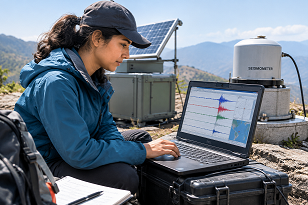
The workplace of a biophysicist can vary depending on their specific area of research and employment setting. Biophysicists can work in a variety of settings, including academic institutions, research organizations, government agencies, and private companies.
Many biophysicists work in academic institutions, such as universities and research institutes, where they conduct research, teach courses, and mentor students. In these settings, they typically have access to state-of-the-art research facilities and equipment, such as advanced microscopes, computational resources, and specialized laboratory instruments. They may work in individual or collaborative research teams, depending on the nature of their work.
Biophysicists employed in research organizations or government agencies may work on a variety of projects, ranging from basic research to applied science. They may be involved in the development of new technologies or medical treatments, or they may conduct research to inform public policy decisions. In these settings, they may work in teams with other scientists and engineers, or they may work independently on their own projects.
Some biophysicists work in private companies, such as biotechnology or pharmaceutical companies, where they may be involved in the development of new drugs or medical devices. In these settings, they may work in research and development teams, collaborating with other scientists and engineers, or they may work in product development or quality control.
Regardless of their employment setting, biophysicists spend a significant amount of time conducting experiments and analyzing data. They may work long hours, especially when conducting experiments that require close monitoring or time-sensitive measurements. They may also spend time writing grants and research proposals, presenting their research at scientific conferences, and publishing their findings in scientific journals.
How to become a Biophysicist
Becoming a biophysicist typically requires a combination of education, experience, and specialized training. Here is a detailed guide on how to become a biophysicist:
- Obtain a Bachelor's Degree: A Bachelor's Degree in Biology, Physics, Biophysics, Chemistry, or a related field is typically required for entry-level positions in biophysics. This degree should provide a solid foundation in the principles of physics, chemistry, and biology.
- Pursue Graduate Studies: Most biophysicists have a Master's Degree or a Ph.D. in Biophysics, Physics, or a related field. Graduate programs in biophysics are designed to provide advanced training in the field, including courses in biophysical principles, molecular biology, biochemistry, and statistical mechanics.
- Gain Research Experience: Many biophysicists gain research experience by working in a laboratory or research institution during their undergraduate or graduate studies. Research experience is essential for developing skills in data analysis, experimental design, and critical thinking.
- Attend Conferences and Workshops: Attending conferences and workshops in biophysics is a great way to stay up-to-date with the latest research in the field and to network with other biophysicists.
- Develop Specialized Skills: Biophysics is a multidisciplinary field that requires a broad range of skills. Biophysicists need to be proficient in the use of laboratory equipment, computer modeling and simulation, and data analysis software.
- Find Employment: Biophysicists can work in a variety of settings, including universities, research institutions, government agencies, and private industry. Some biophysicists work in academia, conducting research and teaching courses. Others work in industry, developing new technologies or products.
- Continue Professional Development: Biophysics is a rapidly evolving field, and biophysicists need to stay current with the latest developments in research, technology, and techniques. Continuing education, attending conferences, and engaging in ongoing professional development activities are essential to staying up-to-date in the field.










User's Comments
No comments there.