


Stories you may like
AI Compliance Officer
An AI compliance officer ensures that an organization’s artificial intelligence systems follow relevant laws, regulations, and internal policies. In a time when AI can influence areas such as healthcare, finance, and hiring, these professionals help organizations manage legal and ethical risks. Their focus goes beyond whether a system works. They assess whether it meets regulatory requirements, protects user privacy, and aligns with responsible AI practices. By connecting technical development with compliance standards, they help organizations innovate while reducing legal and reputational risk.
AI compliance officers often work in regulated industries such as banking, healthcare, insurance, and government technology. They collaborate with legal teams, data scientists, and product managers to ensure compliance is considered throughout the development and deployment of AI systems. This role requires a mix of legal awareness, analytical thinking, and an interest in how AI systems work. In the United States, this often includes familiarity with evolving guidelines and frameworks such as those from the National Institute of Standards and Technology, as well as relevant federal and state laws related to data privacy, consumer protection, and algorithmic accountability.
Duties and Responsibilities
AI compliance officers manage the intersection of law and technology, ensuring every algorithm meets rigorous standards for safety and fairness. Their duties and responsibilities include:
- Regulatory Mapping: They continuously track evolving global and local AI laws to determine how they affect company products. This proactive monitoring ensures the business is never blindsided by new legal requirements or hefty fines.
- Algorithmic Auditing: They conduct regular reviews of AI models to ensure they are not producing biased or discriminatory outcomes. These audits provide a documented paper trail that proves the company is meeting its ethical obligations.
- Risk Assessment: They evaluate new AI initiatives to identify potential privacy leaks, security vulnerabilities, or reputational risks. This process helps leadership decide which projects are safe to launch and which need more refinement.
- Policy Development: They draft and implement internal governance frameworks that dictate how data can be collected and used for training models. Having these "rules of the road" in place keeps development teams aligned with the company’s core values.
- Stakeholder Training: They lead workshops for engineers and executives to raise awareness about responsible AI practices. Education is key to building a culture where compliance is seen as a feature rather than a hurdle.
- Incident Management: They develop protocols for what to do if an AI system fails or behaves unexpectedly. Fast response times are critical for mitigating damage and reporting issues to the proper authorities.
Workplace of an AI Compliance Officer
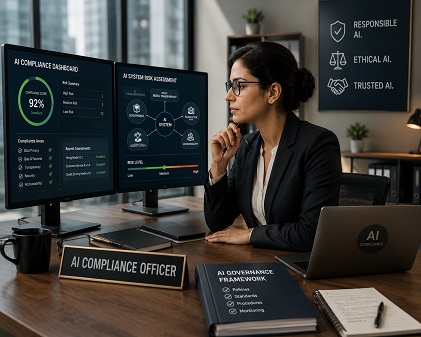
The workplace of an AI compliance officer is professional, collaborative, and deeply integrated into the heart of a company’s operations. Most spend their time in corporate offices, though the digital nature of the role makes remote work a common and viable option. Their daily toolkit includes governance, risk, and compliance (GRC) software like OneTrust or ServiceNow, which helps them track model performance and regulatory changes. While they may not be coding every day, they are frequently reviewing technical dashboards and legal briefs side-by-side.
Collaboration is the defining feature of the atmosphere. An AI compliance officer might start their morning debating the fine print of a new regulation with the legal team and spend the afternoon in a deep-dive session with data scientists. They act as "translators," turning dense legal jargon into actionable steps for developers and turning technical performance metrics into clear reports for the board of directors. It is an environment that values diplomatic communication as much as technical expertise, as these officers must often deliver tough news about why a project might need to be delayed for safety reasons.
In industries like healthcare or finance, the workspace can feel high-pressure, especially during external audits or when preparing for a major product launch. However, the culture is generally one of careful deliberation rather than "moving fast and breaking things." The goal is sustainable innovation, meaning the workplace is structured around checklists, documentation, and rigorous testing phases. It is a perfect fit for those who thrive on organization and enjoy being the final line of defense for a company’s integrity.
How to become an AI Compliance Officer
Aspiring AI compliance officers follow a path of education, skill building, and practical experience to prepare for success in the field. Here are the key steps many professionals take to enter this career:
- Formal Education: Most employers look for a Bachelor’s Degree in Law, Computer Science, or Business Administration. Many professionals in this role also hold an advanced degree, such as a J.D. (Law) or a Master’s in Data Ethics, to handle the complex regulatory landscape.
- Build Technical Literacy: You don't need to be a senior developer, but you must understand how machine learning works. Taking courses in data science and AI fundamentals allows you to speak the same language as the engineering teams you’ll be auditing.
- Master Regulatory Frameworks: Study the major "rulebooks" of the industry, such as the NIST AI Risk Management Framework and the EU AI Act. Understanding these documents is essential for designing the compliance programs that companies rely on.
- Gain Practical Experience: Look for entry-level roles in general compliance, data privacy, or risk management. Hands-on experience with auditing processes and documentation is a prerequisite for moving into the specialized AI niche.
- Develop Communication Skills: Practice the art of "technical translation" by learning to explain complex laws to engineers and technical risks to lawyers. Successful compliance officers are those who can find common ground between these two very different worlds.
- Pursue Certifications: Earning specialized credentials validates your expertise in AI governance. These certifications are often the deciding factor for hiring managers looking for proof that you understand the latest 2026 standards.
- Networking and Professional Development: Join organizations like the International Association of Privacy Professionals (IAPP) or the AI Governance Group. Staying active in these communities helps you keep up with "best practices" as the industry continues to mature.
Skills Needed for an AI Compliance Officer
An AI Compliance Officer ensures that artificial intelligence systems follow legal, ethical, security, and industry regulations. This role combines expertise in AI technologies, governance, risk management, and regulatory compliance.
1. Understanding of AI & Machine Learning
- Basics of machine learning, deep learning, and generative AI
- Knowledge of AI model lifecycle and deployment
- Understanding of algorithmic bias and fairness
- Familiarity with AI risk assessment
2. Regulatory & Legal Knowledge
- Data privacy laws (GDPR, CCPA, HIPAA, etc.)
- AI governance frameworks and standards
- Compliance auditing procedures
- Industry-specific regulations (banking, healthcare, finance)
3. Risk Management Skills
- Identifying AI-related risks
- Creating mitigation strategies
- Monitoring AI system performance and compliance
- Managing ethical and operational risks
4. Data Governance & Security
- Data protection and cybersecurity principles
- Secure data handling practices
- Access control and information security
- Understanding of data quality and integrity
5. Ethical AI Knowledge
- Responsible AI principles
- Transparency and explainability
- Bias detection and fairness evaluation
- Human oversight and accountability
6. Analytical & Problem-Solving Skills
- Risk analysis and reporting
- Compliance gap analysis
- Critical thinking and decision-making
- Investigative and auditing abilities
7. Communication & Documentation
- Writing compliance reports and policies
- Explaining regulations to technical teams
- Cross-functional collaboration
- Presentation and stakeholder management
8. Technical & Compliance Tools
- Familiarity with AI governance platforms
- Knowledge of compliance monitoring tools
- Understanding of cloud security platforms
- Basic SQL or data analysis skills
9. Project Management
- Policy implementation
- Managing compliance timelines
- Coordinating audits and reviews
- Change management skills
10. Business & Industry Awareness
- Understanding business operations
- Knowledge of AI use cases across industries
- Awareness of emerging AI regulations and trends
Certifications That Help
- Certified Information Privacy Professional (CIPP)
- Certified Compliance & Ethics Professional (CCEP)
- ISO/IEC 42001 AI Management certification
- AI Ethics and Governance certifications
- Cybersecurity certifications like CISSP or CISM
Important Soft Skills
- Attention to detail
- Ethical judgment
- Leadership abilities
- Adaptability
- Negotiation and teamwork skills
Salary
| Experience Level | Average Annual Salary (India) | Average Annual Salary (USA) |
| Entry Level | ₹6 LPA – ₹10 LPA | $70,000 – $95,000 |
| Mid-Level | ₹12 LPA – ₹22 LPA | $100,000 – $140,000 |
| Senior Level | ₹25 LPA – ₹45+ LPA | $150,000 – $220,000+ |
Factors Affecting Salary
- AI and regulatory expertise
- Knowledge of cybersecurity and data privacy
- Industry (banking, healthcare, fintech, insurance)
- Certifications like CIPP, CISSP, CCEP
- Experience with AI governance frameworks
- Leadership and audit experience
Industries Hiring AI Compliance Officers
- Banking & Financial Services
- Healthcare
- Insurance
- Technology Companies
- Government & Regulatory Bodies
- FinTech and AI Startups
High-Paying Related Roles
- AI Governance Manager
- AI Risk Officer
- Responsible AI Lead
- AI Ethics Consultant
- Data Privacy Officer
- Compliance Analytics Manager
Top Companies Hiring for AI Compliance Roles
- Microsoft
- IBM
- Deloitte
- PwC
- Accenture
- Infosys
- TCS











User's Comments
No comments there.