


Stories you may like
Conservation Behaviorist
Conservation behaviorists are scientists who apply principles from behavioral science to address conservation challenges. They study the behaviors of both humans and animals in natural environments to develop strategies for wildlife conservation, habitat protection, and sustainability.
By understanding and influencing human behavior, conservation behaviorists aim to mitigate human-wildlife conflicts, promote environmental education and awareness, conserve biodiversity, encourage sustainable resource use, and provide evidence-based recommendations to policymakers and stakeholders to support conservation initiatives. Their interdisciplinary approach combines knowledge from psychology, ethology, ecology, and other related disciplines to bridge the gap between scientific research and practical conservation action.
Duties and Responsibilities
Conservation behaviorists use their interdisciplinary expertise to develop and implement effective strategies that protect and sustain our planet's biodiversity and natural resources. Their work involves:
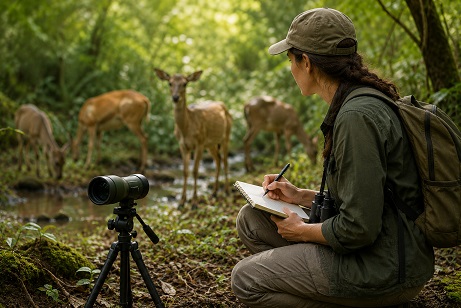
- Studying Animal Behavior – observing and analyzing the behavior of wildlife to understand their interactions with their environment, other species, and humans, often involving the use of remote cameras
- Data Analysis – analyzing data collected in the field, entering observations into databases, and using statistical tools to identify patterns, trends, and insights related to wildlife behavior, habitat use, or human-wildlife conflicts
- Developing Conservation Strategies – tailoring conservation strategies to the specific needs and behaviors of different species
- Monitoring and Evaluation – assessing the effectiveness of conservation interventions and adapting strategies based on ongoing research and monitoring to ensure that conservation efforts are achieving their objectives and making a positive impact on biodiversity and ecosystem health
Workplace of a Conservation Behaviorist
Conservation behaviorists can work for a variety of organizations, institutions, and agencies that are involved in wildlife conservation and environmental management, research, education, and advocacy. These are among their most common employers:
- Government Agencies – Conservation behaviorists may work for state or federal government agencies responsible for managing and protecting natural resources, wildlife habitats, and public lands. Examples include the Department of Environmental Conservation and Department of Natural Resources.
- Fish and Wildlife Services – They may work for agencies like the US Fish and Wildlife Service or similar organizations in other countries, focusing on wildlife conservation, habitat restoration, and endangered species protection.
- Non-Governmental Organizations (NGOs) – Conservation behaviorists are often employed by conservation and environmental protection organizations such as the World Wildlife Fund, Conservation International, The Nature Conservancy, and Wildlife Conservation Society. They may also work for research-focused NGOs and institutes that specialize in wildlife research, conservation biology, and environmental science.
- Academic Institutions – Conservation behaviorists may work as faculty members, researchers, or postdoctoral fellows at universities, colleges, and research institutions. They may also work at field stations, ecological observatories, or research facilities dedicated to studying wildlife behavior, ecology, and conservation in natural habitats.
- Zoos, Aquariums, and Wildlife Parks – Conservation behaviorists may be employed by zoos, aquariums, and wildlife parks to conduct research, manage conservation programs, and develop educational initiatives focused on wildlife conservation, animal behavior, and habitat preservation.
- Environmental and Conservation Consultancies – Conservation behaviorists may work for consulting firms, providing expertise and services to government agencies, NGOs, private companies, and other clients on a wide range of conservation and environmental management projects.
- Community-based Organizations – They may work with community conservation groups and organizations, developing and implementing local conservation projects.
- International Organizations and Agencies – Conservation behaviorists may work for international organizations such as the United Nations Environment Programme (UNEP), the International Union for Conservation of Nature (IUCN), and other intergovernmental agencies involved in global conservation initiatives, policy development, and capacity-building activities.
Conservation behaviorists may also work as independent consultants, freelancers, or entrepreneurs, offering specialized services, expertise, and solutions to a diverse range of clients and stakeholders involved in conservation and environmental sustainability.
Work environments in the conservation behavior sector can vary widely, but commonly include:
- Field Sites – Conservation behaviorists often spend a significant amount of time working in the field, in natural habitats such as forests, grasslands, wetlands, deserts, and marine environments. Fieldwork can be physically demanding and may involve working in remote or challenging conditions, including extreme temperatures, rugged terrain, and inclement weather.
- Research Laboratories – They may work in research laboratories or field stations equipped with specialized equipment and facilities for studying animal behavior, ecology, genetics, and physiology. They may conduct experiments, analyze samples, and use advanced technologies and scientific tools to study wildlife and gather data for conservation research.
- Office Settings – Conservation behaviorists also spend time working in office settings, where they conduct data analysis; write reports, research papers, or funding applications; develop conservation plans and proposals; manage projects; collaborate with team members; and communicate with stakeholders, partners, and clients. They may use computers, software, and other technology tools to organize data, create presentations, and facilitate remote communication and collaboration with colleagues and clients.
- Teaching Spaces – Conservation behaviorists who teach courses and mentor students in academic settings spend some of their time in classrooms and lecture halls as well as research labs and field study sites.
How to become a Conservation Behaviorist
Becoming a conservation behaviorist requires a combination of formal education, training, and practical experience in the fields of biology, ecology, animal behavior, conservation science, and behavioral science. Here is an outline of the pathway to the career:
High School Diploma or Equivalent
Earn a high school diploma or equivalent. High school education provides a foundation in basic communication and math and organizational skills, and it lays the groundwork for further learning.
Bachelor's Degree
A bachelor’s degree in conservation biology, biology, ecology, zoology, wildlife science and management, environmental science, or a related discipline is often the first formal step towards becoming a conservation behaviorist. Coursework at the undergraduate level should include animal behavior, ecology and conservation biology, genetics and evolution, physiology, environmental science and policy, and statistics and research methods.
Master’s Degree
While not always mandatory, a master’s in one of the disciplines referenced above is generally recommended for advanced positions in conservation behavior. At this level programs encompass specialized coursework, research opportunities, and training in conservation behavior, behavioral science, and interdisciplinary approaches to wildlife conservation and management. Many programs offer concentrations in subfields like the ones described in the What does a Conservation Behaviorist do section in the career overview.
To earn their master’s degree, students must complete a research thesis or project focusing on conservation behavior, animal behavior, human-wildlife interactions, or related topics to develop specialized knowledge, skills, and expertise in the field.
Doctoral Degree
A relevant doctoral degree (Ph.D.) is often necessary for obtaining academic positions and leading research projects in conservation behavior. Ph.D. candidates focus on conducting original, independent research, working with advisors who have expertise in conservation behavior, behavioral ecology, ethology, and interdisciplinary approaches to conservation.
Doctoral students are required to develop a research proposal, complete a dissertation, and defend their findings. This process frequently involves publishing research findings in scientific journals and presenting research at conferences to demonstrate expertise, contribute to the field, and build a professional reputation in conservation behavior.
Research Experience and Specialized Skills
Engage in research projects, internships, volunteer opportunities, and fieldwork with universities, research institutes, conservation organizations, and government agencies to gain practical experience, learn field research techniques and observational methods, develop data collection and analysis skills, and apply knowledge and theory in real-world wildlife and conservation contexts.
Fellowship or Postdoctoral Training (Optional)
After earning their master’s or doctoral degree, graduates may pursue a fellowship or postdoctoral position. These are temporary positions that allow graduates to work with leading researchers in the field, collaborate on interdisciplinary projects, and prepare for independent research or academic positions. Generally, fellowships and postdocs come from three sources: colleges and universities, government agencies, and foundations. However, some may be available in private industry.
Continuing Education and Research Publication
Stay informed about the latest research, trends, advancements, and best practices in conservation biology, animal behavior, and behavioral science. Attend workshops, conferences, and seminars to present your work, and participate in professional development and networking activities to keep your knowledge current.
As you progress in your academic journey and career, aim to publish your research findings in peer-reviewed journals. Building a strong publication record and establishing yourself as a contributor to the field of behavioral ecology will enhance your credibility and visibility within the scientific community.
Certification and Professional Organizations
There isn't a specific certification widely recognized as a standard credential for conservation behaviorists. Instead, qualifications and credentials are primarily based on their educational background, research experience, and expertise in specific areas of animal behavior and conservation. There are, however, professional certifications and training programs related to skills or methodologies that conservation behaviorists might find useful, depending on their focus or specialization. Here’s a sampling:
- Certified Behavior Analyst (CBA) – Offered by the Behavior Analyst Certification Board (BACB), the CBA certification is a professional credential for individuals who have demonstrated expertise in applied behavior analysis, behavioral science, and behavior modification through education, training, and practical experience in working with individuals with behavioral challenges, developmental disabilities, and other behavioral disorders. While this certification is not specific to conservation, conservation behaviorists who work on human-wildlife conflict resolution, community-based conservation, and environmental education may find this credential beneficial in understanding and influencing human behavior in conservation contexts.
- Certified Applied Animal Behaviorist (CAAB) – Offered by the Animal Behavior Society (ABS), the CAAB credential is designed for individuals who have a graduate degree in a biological or behavioral science and specialized training and experience in animal behavior.
- Certified Wildlife Biologist (CWB) – Offered by The Wildlife Society (TWS), the CWB credential is designed for professionals specializing in wildlife biology and management, including those involved in research, conservation, and management of wildlife populations and habitats.
- Certified Ecologist (CE) – Offered by the Ecological Society of America (ESA), the CE certification recognizes professionals who have demonstrated a high level of skill, knowledge, and experience in the field of ecology.
- Certified Environmental Educator – Offered by the North American Association for Environmental Education (NAAEE), this certification is awarded to individuals who meet stringent requirements for proficiency in both the interdisciplinary content and pedagogy necessary to develop and deliver high-quality, effective environmental education programs.
- Zookeeping and Husbandry Certifications – For conservation behaviorists working in zoos or focusing on captive animal behavior, certifications related to zookeeping, animal husbandry, or enrichment strategies may be relevant. These certifications are often provided by organizations like the American Association of Zoo Keepers (AAZK).
- Ethics and Compliance Training – Given the ethical considerations involved in animal research, conservation behaviorists may undergo training in research ethics, animal welfare regulations, and laboratory safety protocols. While not certifications in the traditional sense, completion of such training programs may be required by institutions or funding agencies.
- Certifications in Research Methods and Technologies – Conservation behaviorists may pursue certifications in specific research methods, technologies, and analytical tools used in conservation, such as Geographic Information Systems (GIS), telemetry tracking, bioacoustics, molecular and genetic techniques, and statistical analysis software. Organizations, training providers, and professional associations often offer specialized training programs and certifications in these areas.
In addition to these certifying bodies, the following organizations also support the conservation behavior community, providing advocacy, access to resources, and platforms for networking, information exchange and collaboration, and continuing education and professional development:
- International Society for Applied Ethology (ISAE)
- Association for Behavior Analysis International (ABAI)
- International Union for Conservation of Nature (IUCN)
- Society for Conservation Biology (SCB)
- Conservation Psychology Institute (CSI)
- International Society for Behavioral Ecology (ISBE)
- International Society for Anthrozoology (ISAZ)
- American Veterinary Society of Animal Behavior (AVSAB)
- Association for the Study of Animal Behaviour (ASAB)
- European Society for Cognitive Psychology (ESCoP)
Skills Needed for a Conservation Behaviorist
A Conservation Behaviorist studies animal behavior to support wildlife conservation, habitat management, and species protection efforts.
1. Animal Behavior Knowledge
- Understanding animal communication, learning, and social behavior
- Studying behavioral patterns in natural habitats
- Identifying factors influencing animal actions
2. Wildlife Conservation Expertise
- Knowledge of conservation principles and biodiversity protection
- Understanding endangered species management
- Supporting habitat restoration initiatives
3. Research Skills
- Designing and conducting behavioral studies
- Collecting and analyzing field data
- Applying scientific research methods
4. Field Observation Skills
- Monitoring wildlife in natural environments
- Recording behavioral changes accurately
- Using observation techniques with minimal disturbance
5. Data Analysis
- Interpreting behavioral and ecological data
- Using statistical tools and software
- Identifying trends and conservation implications
6. Critical Thinking
- Evaluating research findings objectively
- Developing evidence-based conservation strategies
- Solving complex environmental challenges
7. Geographic Information Systems (GIS)
- Mapping animal movements and habitats
- Analyzing spatial data for conservation planning
- Supporting habitat management decisions
8. Technology Proficiency
- Using GPS tracking devices, camera traps, and drones
- Managing research databases
- Working with conservation monitoring software
9. Communication Skills
- Writing scientific reports and research papers
- Presenting findings to stakeholders and policymakers
- Educating communities about conservation issues
10. Problem-Solving Abilities
- Addressing human-wildlife conflicts
- Developing behavioral interventions for species protection
- Creating practical conservation solutions
11. Teamwork and Collaboration
- Working with ecologists, wildlife biologists, and conservation organizations
- Coordinating field research projects
- Engaging with local communities and government agencies
12. Environmental and Ecological Knowledge
- Understanding ecosystems and species interactions
- Assessing environmental impacts on behavior
- Supporting sustainable conservation practices
13. Patience and Attention to Detail
- Conducting long-term behavioral observations
- Maintaining accurate records
- Detecting subtle behavioral changes
14. Ethical and Regulatory Awareness
- Following wildlife research ethics
- Complying with conservation laws and regulations
- Ensuring responsible treatment of animals
Recommended Qualifications
- Bachelor's degree in Zoology, Wildlife Biology, Ecology, Animal Behavior, or Environmental Science
- Master's or PhD for advanced research and conservation roles
- Certifications in GIS, wildlife management, or conservation biology can be beneficial
These skills help Conservation Behaviorists understand wildlife behavior and develop effective strategies to protect species and ecosystems.
Salary
specialization, and location.
Entry-Level (0–2 Years)
- India: ₹3 lakh – ₹6 lakh per year
- United States: $40,000 – $60,000 per year
Mid-Level (3–7 Years)
- India: ₹6 lakh – ₹12 lakh per year
- United States: $60,000 – $85,000 per year
Senior-Level (8+ Years)
- India: ₹12 lakh – ₹25 lakh+ per year
- United States: $85,000 – $130,000+ per year
Top-Paying Employers
- Wildlife conservation organizations
- Environmental consulting firms
- Government wildlife departments
- Research institutes and universities
- International conservation NGOs such as World Wildlife Fund and Wildlife Conservation Society
Factors That Increase Salary
- Master's degree or PhD in Animal Behavior, Ecology, or Conservation Biology
- Expertise in GIS, statistical analysis, and wildlife tracking technologies
- Published research and field experience
- Leadership of conservation projects
- Experience with endangered species management and environmental policy










User's Comments
No comments there.