


Stories you may like
Contact Lens Specialist
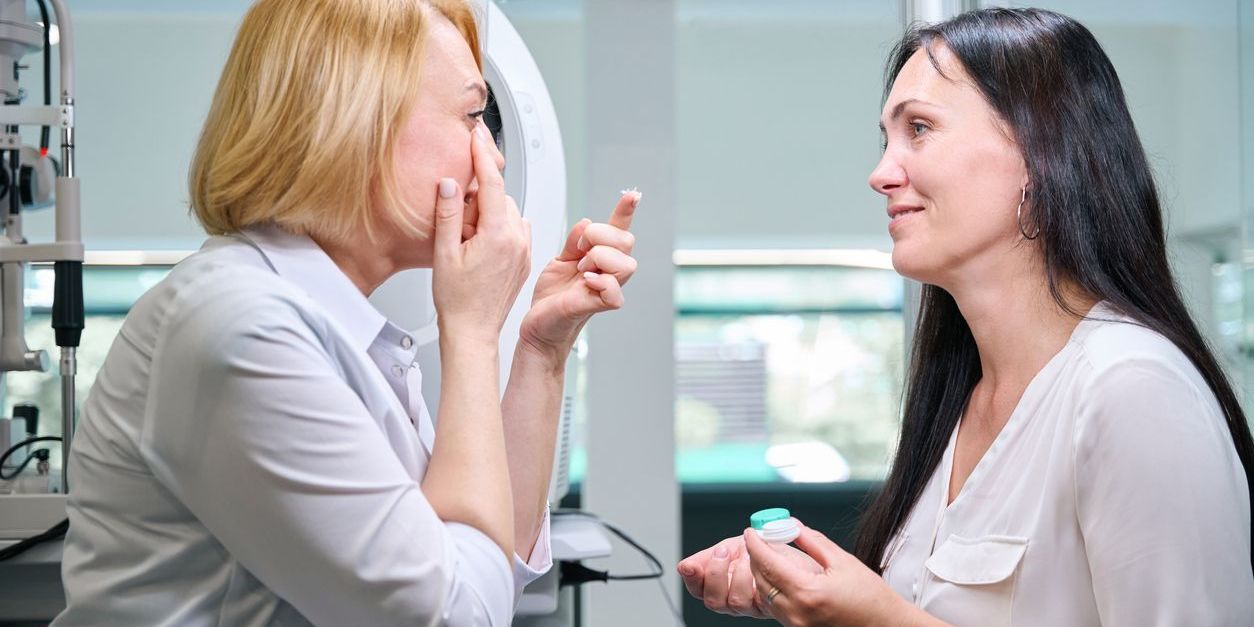
A contact lens specialist is an eye doctor, usually an optometrist or ophthalmologist, who has extra training in fitting and managing contact lenses. They make sure patients get lenses that not only correct vision but are also safe and comfortable to wear. Wearing the wrong lenses or having a poor fit can cause eye irritation, infections, or even damage to the cornea, so their expertise helps keep eyes healthy.
Duties and Responsibilities
The duties and responsibilities of a contact lens specialist focus on helping patients achieve clear, comfortable, and safe vision through contact lenses. Key responsibilities include:
- Comprehensive Assessment: Carefully evaluate each patient’s eyes, vision needs, and lifestyle to determine the most suitable type of contact lenses. This includes checking for conditions like dry eyes, astigmatism, or other eye health issues that may affect lens choice.
- Fitting and Prescribing Lenses: Select and fit lenses that provide the best vision while ensuring comfort and proper alignment. This may involve trying different lens types or brands until the patient finds the best fit for daily use.
- Patient Education: Teach patients how to insert, remove, clean, and store their lenses safely. Specialists also guide patients on proper wearing schedules and how to avoid common problems like irritation or infections.
- Monitoring and Follow-Up: Regularly check on patients to make sure their lenses are working well and their eyes remain healthy. Adjust prescriptions or recommend different lens types when needed to maintain comfort and clear vision.
- Problem-Solving: Identify and manage any lens-related issues, such as redness, dryness, or infections. They provide advice, treatment, or referrals if the patient experiences complications.
- Collaboration: Work closely with other eye care professionals, like optometrists or ophthalmologists, to ensure patients with complex eye conditions receive comprehensive care.
Different Types of Contact Lens Specialists
While all contact lens specialists share core skills, many focus on particular patient needs and conditions or specialized lens types, allowing them to provide customized solutions beyond standard lenses:
- General Contact Lens Specialists fit standard soft lenses and handle routine prescriptions for everyday vision correction.
- Rigid Gas-Permeable (RGP) Lens Specialists focus on fitting hard lenses for patients needing sharper vision or those with specific conditions like astigmatism.
- Scleral Lens Specialists specialize in large-diameter lenses that vault over the cornea, often used for irregular corneas, keratoconus (an eye disorder in which the cornea, the transparent front part of the eye, gradually thins and bulges outward into a cone shape), or severe dry eye.
- Pediatric Contact Lens Specialists work with children, including those with myopia (nearsightedness) or requiring lenses for developmental eye conditions.
- Specialty/Medical Contact Lens Specialists deal with complex or post-surgical eyes, such as patients with corneal transplants, trauma, or post-refractive surgery needs.
- Orthokeratology (Ortho-K) Specialists fit overnight lenses that temporarily reshape the cornea to reduce refractive errors like myopia.
What is the workplace of a Contact Lens Specialist like?
Contact lens specialists can work for a variety of eye care and healthcare entities. These are among their most common employers:
- Private Optometry Practices – clinics that provide routine and specialty contact lens fittings
- Ophthalmology Clinics – especially those focused on corneal disorders, refractive surgery, or complex eye conditions
- Specialty Contact Lens Centers – clinics that focus exclusively on advanced or medical contact lenses, such as scleral or keratoconus lenses
- Hospitals and Eye Care Centers – particularly in departments treating post-surgical patients or complex ocular diseases
- Research and Academic Institutions – conducting clinical research or teaching, advancing contact lens technology and fitting techniques
- Vision Care Companies – working with manufacturers or distributors to develop or test new lens designs
The workplace of a contact lens specialist is typically a clinical setting equipped for eye examinations and lens fittings. The environment usually features diagnostic instruments such as slit lamps, keratometers, corneal topographers, and lens trial sets for fitting. Specialists spend much of their day interacting with patients.
How to become a Contact Lens Specialist
Becoming a contact lens specialist involves completing standard optometry education and then pursuing specialized contact lens training and clinical experience. Here’s an overview of the pathway to the career:
Earn a Bachelor’s Degree
Most students complete a bachelor’s degree in a science-related field such as biology, physiology, or health science. Prerequisite courses usually include biology, chemistry, physics, and math.
Take the Optometry Admission Test (OAT)
The Optometry Admission Test is a standardized examination designed to measure general academic ability and comprehension of scientific information. The OAT is sponsored by the Association of Schools and Colleges of Optometry (ASCO) for applicants seeking admission to an optometry program. All schools and colleges of optometry in the United States and the University of Waterloo, Canada (the only provider of English-language instruction for optometry in Canada) require the OAT.
The OAT consists of four tests: Survey of the Natural Sciences (Biology, General Chemistry, and Organic Chemistry), Reading Comprehension, Physics, and Quantitative Reasoning.
Complete a Doctor of Optometry (OD) Degree
This is a four-year professional program, required both in the United States and Canada, encompasses classroom learning in optics, ocular anatomy, diseases of the eye, pharmacology, and vision science. Clinical rotations, which provide practical, hands-on experience, typically include contact lens fitting, prescribing, and patient management.
To become a registered optometrist in the UK, you must complete a General Optical Council (GOC)-approved optometry degree and then undertake a 12–18-month pre-registration training scheme, which involves practical experience.
Obtain Licensure
You must pass a licensing exam to practise:
- US – Pass the three-part exam series administered by the National Board of Examiners in Optometry (NBEO). Part I: Applied Basic Science, which tests fundamental knowledge of ocular and systemic systems; Part II: Patient Assessment and Management (PAM), which evaluates clinical decision-making through case studies; and Part III: Patient Encounters and Performance Skills (PEPS), which assesses practical clinical abilities in patient interactions and skills. Canadians who wish to pursue a residency in the US must complete the NBEO exam.
- Canada – The Optometry Examining Board of Canada (OEBC) administers the registration and jurisprudence exams required to practise optometry in Canada.
- UK – Pass the Objective Structured Clinical Examination (OSCE) and then register with the general Optical Council to practise.
Complete a Cornea and Contact Lens Residency (Optional but Highly Recommended)
Throughout this 12-to-13-month-long post-doctoral program, optometrists gain advanced clinical training and expertise in fitting specialty contact lenses, managing complex corneal diseases, and co-managing anterior segment and refractive surgery. Features of the residency include extensive supervised patient care, lectures, seminars, journal clubs, research, presentations to peers, faculty, and other practitioners, and hands-on experience with various diagnostic technologies and contact lens designs.
Pursue Certifications
Contact lens specialists can earn a variety of voluntary credentials to demonstrate advanced expertise beyond general optometry practice. Here’s a look at some of the most respected certifications:
- ABO-NCLE Certifications – The National Contact Lens Examiners (NCLE) and the American Board of Opticianry (ABO) administer two levels of certification in contact lens dispensing and fitting: the Basic Contact Lens Registry Exam (CLRE) and the Advanced Contact Lens Registry Exam (ACRE).
- Fellow of the Contact Lens Society of America (FCLSA) – This is a high-level recognition in contact lens practice, covering specialty fittings and advanced techniques.
- Fellow of the Scleral Lens Education Society (FSLS) – This credential validates expertise in lens design, fitting, and management for irregular corneas and ocular surface disease, or severe dry eye.
- Fellow of the International Academy of Orthokeratology and Myopia Control (FIAOMC) – This credential validates specialized training in fitting overnight lenses that temporarily reshape the cornea to reduce myopia or other refractive errors.
- Fellow of the American Academy of Optometry (FAAO) – This credential recognizes advanced clinical knowledge and skill, with specialization options in contact lenses and cornea.
- Fellow of the British Contact Lens Association (FBCLA) – The BCLA Fellowship scheme recognizes contributions and commitments in the field of contact lenses and/or the anterior eye.
- Specialty Contact Lens Certifications – Various universities, industry partners, and professional societies offer targeted training in RGP (rigid gas-permeable) contact lenses, pediatric lenses, therapeutic/bandage lenses, and emerging technologies.
Continue Professional Development
Contact lens specialists often pursue continuing education to maintain licensure and stay current with new lens technologies and fitting techniques.
Professional Organizations
In addition to the certifying bodies referenced above in the Certifications section, the following organizations also support contact lens specialists and the broader optometric and ophthalmologic community:
- American Academy of Optometry – Section on Cornea, Contact Lenses and Refractive Technologies – serving as a primary source for papers, courses, information, and research regarding all phases of corneal anatomy and physiology with an emphasis on either clinical contact lens or refractive technology
- International Association of Contact Lens Educators (IACLE) – focusing on global contact lens education and research for eye care professionals
- American Optometric Association (AOA) – the leading professional organization for doctors of optometry, optometry students, and paraoptometric staff
- Canadian Association of Optometrists (CAO) – supporting optometrists with clinical guidelines, continuing education, and advocacy in Canada
- World Council of Optometry (WCO) – an international non-profit organization dedicated to promoting eye health and vision care as a human right by advancing the optometric profession globally through advocacy, education, and humanitarian outreach
- International Council of Ophthalmology (ICO) – offering resources and training programs relevant to vision rehabilitation and low vision care globally











User's Comments
No comments there.