


Stories you may like
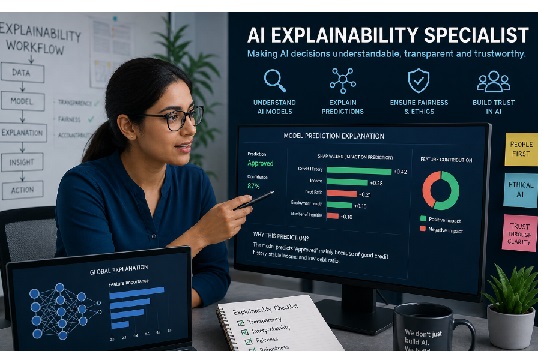
AI Explainability Specialist
An AI explainability specialist works at the intersection of complex technology and human understanding. Their primary mission is to peel back the "black box" of artificial intelligence, making sure that the reasons behind a machine's decision are clear, fair, and easy to communicate. In a world where AI influences everything from bank loan approvals to medical diagnoses, these specialists ensure that these systems are not just accurate but also accountable. They bridge the gap between high-level math and real-world impact, providing the transparency needed for people to trust the technology they use every day.
You will find AI explainability specialists in a wide range of high-stakes industries, including finance, healthcare, government, and autonomous transportation. They typically work within tech companies, research labs, or regulatory bodies, often collaborating with data scientists and legal teams. To thrive in this role, you need a strong foundation in machine learning and statistics, paired with the ability to translate technical jargon into plain English. It is a career that rewards those who are naturally curious, ethically minded, and skilled at solving puzzles that have significant social consequences.
Duties and Responsibilities
AI explainability specialists handle a mix of technical auditing, model development, and communication tasks to ensure that artificial intelligence remains transparent and aligned with human values. Their duties and responsibilities include:
- Model Auditing: They regularly test AI models to identify why specific outputs or predictions were made. This process helps detect hidden biases or "hallucinations" that could lead to unfair or incorrect results.
- Technique Implementation: They apply specific tools like SHAP or LIME to visualize which data features are most influencing a model's decision. Using these frameworks allows them to provide a mathematical "receipt" for the AI's logic.
- Stakeholder Communication: They present findings to non-technical leaders, regulators, and customers to explain how a system works. Their goal is to build confidence and ensure the organization meets legal transparency requirements.
- Bias Mitigation: They work closely with data engineers to adjust training datasets if a model shows signs of unfairness. By refining the data, they help prevent the AI from repeating historical prejudices or errors.
- Reporting and Documentation: They create detailed records of a model’s decision-making process for compliance and internal review. These documents serve as a roadmap for future updates and a safeguard for regulatory audits.
- Policy Development: They help draft internal guidelines on how AI should be used and explained across the company. This ensures that every department follows a consistent and ethical approach to automated technology.
Workplace of an AI Explainability Specialist
The workplace of an AI explainability specialist is typically a modern, collaborative office environment within a technology hub or a large corporate headquarters. Most of their time is spent at a high-end workstation equipped with powerful computing resources for running complex simulations and audits. Because the work is primarily digital, many specialists enjoy flexible schedules or fully remote options, using tools like Slack, Zoom, and Jira to stay connected with their teams. They often work within "Center of Excellence" departments where ethics and innovation meet.
Collaboration is a huge part of the daily routine. A specialist might start the morning in a "deep work" session, using Python and Jupyter Notebooks to analyze a neural network's behavior. By the afternoon, they are likely in meetings with product managers or legal counsel to discuss how to present those technical findings to a government regulator. The atmosphere is generally intellectual and fast-paced, requiring constant learning as new AI models and government policies are released almost weekly. It is a space where being a "technical diplomat" is just as important as being a good programmer.
In high-stakes environments like healthcare or finance, the pressure can be significant, especially when a model's decision affects someone's livelihood or health. Specialists often participate in "red teaming" exercises where they intentionally try to break a system to find its weaknesses. Despite the technical demands, the work is highly rewarding for those who enjoy seeing their efforts result in safer, more equitable technology. The balance between heads-down coding and big-picture strategy keeps the day-to-day experience fresh and engaging.
How to become an AI Explainability Specialist
Aspiring AI explainability specialists follow a path of education, skill building, and practical experience to prepare for success in the field. Here are the key steps many professionals take to enter this career:
- Formal Education: Most specialists earn a Bachelor's or Master's Degree in Computer Science, Data Science, or Mathematics. These programs provide the essential training in algorithms and statistics needed to understand how AI thinks.
- Learn Core Programming: You must become proficient in Python, as it is the primary language used for AI development and auditing. Mastering libraries like PyTorch, TensorFlow, and Scikit-learn is essential for building and testing models.
- Study XAI Frameworks: It is crucial to learn specific explainability tools like SHAP (SHapley Additive exPlanations) and LIME (Local Interpretable Model-agnostic Explanations). These specialized techniques are what allow you to translate complex math into understandable insights.
- Gain Practical Experience: Participate in internships or contribute to open-source projects on platforms like GitHub to show you can handle real data. Building a portfolio of "audited" projects demonstrates your ability to find and fix biases in a model.
- Develop Communication Skills: Practice explaining technical concepts to friends or family who don't work in tech. Being able to simplify complex ideas is a core part of the job, especially when dealing with legal teams or executives.
- Pursue Certifications: Earning industry-recognized credentials can validate your expertise to potential employers. These certifications show you are up to date with the latest safety standards and regulatory requirements.
- Network and Stay Current: Join professional groups like the Association for Computing Machinery (ACM) and follow AI ethics researchers on social media. The field moves quickly, so staying connected helps you learn about new laws and technical breakthroughs as they happen.
Skills
1. Strong Foundations in AI & Machine Learning
You must understand how models work before explaining them.
- Supervised & unsupervised learning
- Model types (decision trees, neural networks, ensemble models)
- Model evaluation (accuracy, precision, recall)
2. Knowledge of Explainability Techniques (Core Skill)
This is the heart of the role.
- SHAP (SHapley Additive Explanations)
- LIME (Local Interpretable Model-agnostic Explanations)
- Feature importance analysis
- Partial dependence plots
- Model interpretability vs. explainability concepts
3. Programming Skills
- Python (essential)
- Libraries:
- NumPy, Pandas
- Scikit-learn
- TensorFlow / PyTorch
- SHAP, LIME packages
4. Data Analysis & Visualization
Ability to translate complex outputs into clear visuals.
- Matplotlib, Seaborn, Plotly
- Dashboard tools (Tableau / Power BI)
- Storytelling with data
5. AI Ethics & Responsible AI
A big part of explainability is fairness and accountability.
- Bias detection and mitigation
- Fairness metrics
- Transparency principles
- Regulatory awareness (GDPR, AI governance)
6. Communication & Storytelling
This skill is what separates average from great specialists.
- Explain technical concepts to non-technical stakeholders
- Write clear reports and documentation
- Present insights effectively
7. Critical Thinking & Problem-Solving
- Analyze why a model made a decision
- Identify hidden biases or errors
- Improve model transparency
8. Domain Knowledge (Bonus but Powerful)
Understanding the industry helps a lot:
- Healthcare, finance, legal, or marketing
- Example: explaining credit risk models in banking
9. Understanding of Model Governance & Compliance
- Model auditing
- Documentation standards
- Risk management frameworks
10. Familiarity with XAI Tools & Platforms
- Google What-If Tool
- IBM AI Explainability 360
- Microsoft InterpretML
Salary
AI Explainability Specialist Salary (India – 2026)
Entry Level (0–2 years)
- ₹5 – ₹12 LPA
- Typical for freshers with ML + XAI skills
- Matches general AI fresher salaries in India
Mid-Level (3–5 years)
- ₹15 – ₹30 LPA
- If you specialize in explainability + ethics + real-world projects
- Comparable to Data Scientists & AI Specialists
Senior Level (6–10 years)
- ₹30 – ₹60+ LPA
- Experts in model transparency, governance, and responsible AI
- High demand in fintech, healthcare, and big tech
Top Tier / Experts / Lead Roles
- ₹60 LPA – ₹1 Cr+
- Seen in:
- Product companies
- Global AI firms
- Leadership roles (AI Ethics Lead, XAI Architect)
Average Benchmarks
- AI Specialist average: ₹7–20 LPA
- AI/Tech Specialist average: ~₹10 LPA
- AI Consultant average: ~₹25 LPA











User's Comments
No comments there.