


Stories you may like
The race to put AI in orbit
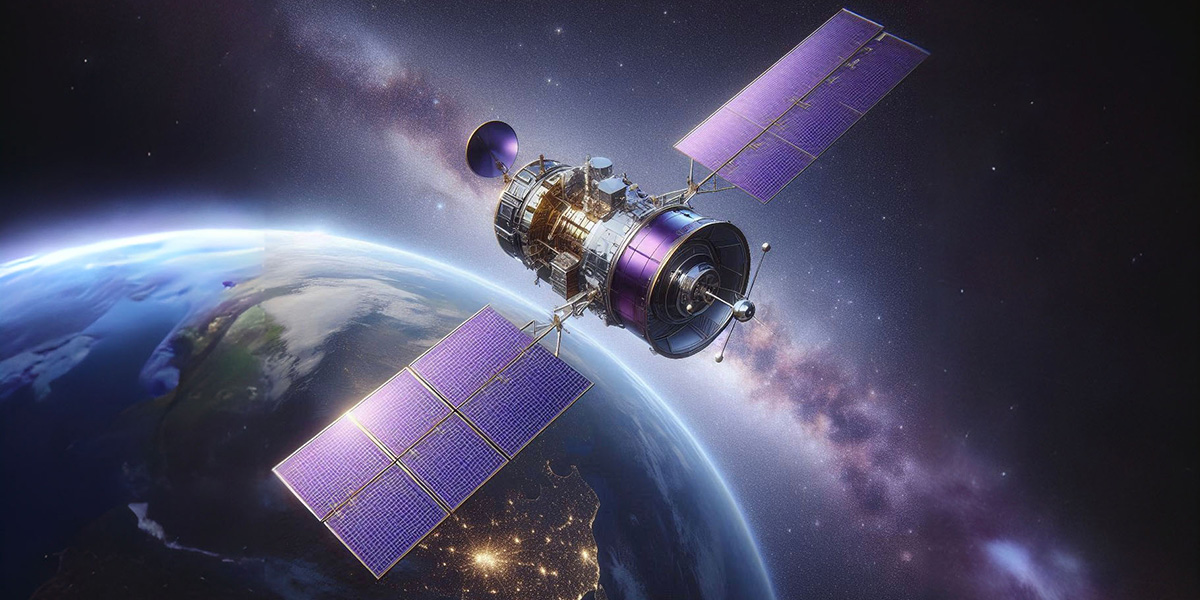
The race to move AI into space isn't exactly theoretical anymore. A small data center has already reached the moon. AWS is heading to orbit this year. And the companies betting on space are trying to solve Earth's biggest AI infrastructure constraints—energy demands that strain power grids, cooling costs that drain budgets, and capacity limits that aren’t keeping pace with AI’s growth.
The appeal is straightforward: space offers what Earth cannot. Satellites equipped with massive arrays could capture potentially limitless solar energy, without weather interruptions or nighttime gaps. The vacuum of space provides natural cooling through radiators that dissipate heat into an environment hovering around minus 270 degrees C (minus 454 degrees F). And space offers virtually unlimited room to meet the exploding demand for data center capacity, currently growing at 19-22% a year.
While the thought of space-based data centers still has a sci-fi sound to it, several companies are working to develop fast-advancing technology that could make it a reality. Still, the path from concept to execution remains uncertain, with timelines ranging from wildly optimistic to cautiously distant.
The pioneers who are moving fast
Some players are looking beyond the hurdles and betting on near-term deployment. Elon Musk has announced plans for one million orbital data centers, claiming that “it’s always sunny in space!” and that within three years space could become "the most economically compelling place to put AI." Other companies such as Aetherflux plan to launch as early as the first quarter of 2027. China's state-owned CASC will develop space-based data centers as part of the country’s five-year outer space development plan.
Some experimental deployment is already underway. Starcloud trained its first AI model in orbit and plans to deploy AWS Outposts to space in its second satellite launch later this year. Google's Project Suncatcher aims to launch prototype satellites carrying custom AI chips by 2027. Lonestar sent a small data center to the moon last year.
These initiatives share a common driver: the belief that AI's explosive computational demands will continue to grow and eventually outstrip what earth’s infrastructure can sustainably provide. For organizations processing massive AI workloads, the promise of limitless solar power and natural cooling represents a compelling economic equation—if the technology can deliver.
The skeptics who say “not yet”
Not everyone shares the urgency. OpenAI CEO Sam Altman called Musk's million-satellite vision "ridiculous." AWS CEO Matt Garman offered a more measured assessment at this year's Cisco AI Summit: "There's a lot of compelling ideas about a data center that's in space. Infinite amount of power that's always available—great. Easy cooling—that's great." But he quickly added a reality check: "There are not enough rockets to launch a million satellites yet, so we're pretty far from that. That is the bottleneck today—the cost and availability of just getting things into space."
Space-based data centers are unquestionably a costly proposition. One aerospace engineer, Andrew McCalip, has run the numbers and estimates that designing, building, launching, and operating an orbital data center over five years could cost around $51 billion—three times the $16 billion for an equivalent Earth-based facility. A recent Financial Times overview quoted experts who project that space transport costs need to drop sevenfold before the numbers make sense, and that orbital data centers are "many years, perhaps decades, away."
Even Nvidia CEO Jensen Huang acknowledges the challenge: "The economics are poor today, but it's going to improve over time."
Others see the promise but are moving forward cautiously. The EU, for example, is taking an exploratory approach through its ASCEND project, aiming to develop a feasibility roadmap by 2030.
And there are a few tech hurdles
Beyond the economics, significant technical hurdles remain. Replicating the high-bandwidth, low-latency connections of terrestrial data centers proves difficult in space. Even at the speed of light, signal delays can impact AI applications requiring real-time processing. Space radiation threatens AI chips with physical damage and computational errors, requiring protective measures like error-correcting software and radiation hardening.
There are other challenges. The low Earth orbit environment is getting crowded, and there could be collision risks with existing satellites or space debris. And hardware failures in space require either sophisticated robotics or human crews for repairs—both expensive and time-consuming.
Environmental considerations add another layer of complexity. While space-based data centers are sometimes seen as a more sustainable solution, the research is inconclusive and some believe the full orbital data center lifecycle could generate a larger carbon footprint than Earth-based alternatives.
It’s a matter of when, not if
Space-based AI data centers represent an ambitious vision with genuine potential. The physics of space work: solar power is abundant, cooling is natural, and there is unlimited room to grow. But the path from vision to reality requires solving formidable challenges in launch economics, radiation protection, network latency, and operational sustainability.
Beyond the zeal of the pioneers and the caution of the skeptics, the question isn't whether space will eventually host AI workloads. It will. The question is at what point do the technology and the economics of space-based data centers align to make them practical at scale.









User's Comments
No comments there.