


Stories you may like
CT Technologist
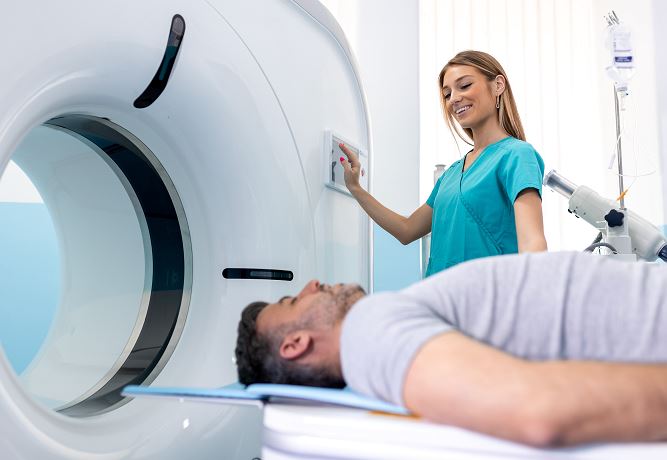
A CT technologist is a medical imaging professional who operates computed tomography (CT) scanners to take detailed images of the body. These cross-sectional scans help doctors diagnose and treat a variety of conditions, such as internal injuries, infections, tumors, and diseases affecting the organs. CT technologists are trained to position patients accurately, operate complex imaging equipment, and follow strict safety guidelines, especially when using radiation and contrast materials.
They work in hospitals, diagnostic imaging centers, and outpatient clinics, often as part of a larger radiology or emergency care team. CT technologists must communicate clearly with patients, maintain accurate records, and ensure high-quality images for review by radiologists. Their work plays a key role in helping physicians make quick and accurate diagnoses, often in critical situations.
Duties and Responsibilities
Here are the common duties and responsibilities of a CT technologist:
- Preparing Patients for Scans: Explain the CT procedure, review medical history, answer questions, and ensure the patient is comfortable and properly positioned.
- Operating CT Equipment: Use computed tomography scanners to capture high-resolution images of internal body structures while following safety protocols for radiation exposure.
- Administering Contrast Materials: Inject or orally administer contrast agents when required, while monitoring the patient for any adverse reactions.
- Image Quality Assurance: Ensure the clarity, accuracy, and completeness of images before submitting them for radiologist interpretation.
- Maintaining Equipment: Perform regular maintenance checks, calibrate machines, and report any technical issues to ensure optimal scanner performance.
- Collaborating with Medical Teams: Work closely with radiologists, physicians, and nurses to share findings and assist in patient diagnosis and care plans.
- Documenting Procedures: Accurately record patient information, scan details, and observations in medical records or imaging systems.
Types of CT Technologists
Here are common types of CT technologists, based on their work settings or areas of specialization:
- Hospital-Based CT Technologist: Works in large hospitals performing a wide range of scans for emergency, inpatient, and outpatient needs, often in fast-paced, high-volume environments.
- Outpatient Imaging Center Technologist: Performs scheduled CT scans in clinics or standalone imaging facilities, typically dealing with non-emergency cases and a more predictable workflow.
- Trauma CT Technologist: Specializes in imaging for trauma patients, often in emergency departments, where rapid and accurate imaging is critical for urgent diagnosis and treatment.
- Mobile CT Technologist: Operates CT units in mobile settings, traveling to various locations like rural hospitals or underserved areas to provide access to diagnostic imaging.
- Pediatric CT Technologist: Focuses on scanning infants and children, requiring additional care in positioning, dose management, and communication to ensure safety and comfort.
- Special Procedure CT Technologist: Works closely with interventional radiology teams, performing CT scans that guide biopsies, drain placements, or other image-assisted procedures.
What is the workplace of a CT Technologist like?
CT technologists typically work in hospitals, outpatient clinics, and imaging centers where they operate computed tomography (CT) scanners to help doctors diagnose medical conditions. In hospitals, they are often part of a fast-paced team handling a variety of cases, including emergencies, surgical planning, and inpatient evaluations. These environments require quick decision-making and strong collaboration with radiologists, nurses, and physicians.
Outpatient clinics and imaging centers offer a more predictable schedule and typically handle non-urgent diagnostic scans. CT technologists in these settings work with patients who are referred by their doctors for specific tests, such as scans of the brain, chest, or abdomen. These environments tend to be quieter than hospitals and allow more time for patient interaction and preparation.
Some CT technologists work in mobile units or travel between locations, especially in rural or underserved areas where access to imaging technology is limited. Others may specialize in pediatric care or trauma imaging, which can influence the work environment and required skill set. Regardless of location, their workplace is highly technical and safety-focused, with strict protocols to ensure accurate imaging and minimal radiation exposure.
How to become a CT Technologist
Becoming a CT technologist involves a mix of education, clinical training, certification, and attention to patient care. Here are the general steps you can take to pursue this career:
- Complete High School or Equivalent: Start by earning a high school diploma or GED, with coursework in math, science, and health-related subjects.
- Enroll in an Accredited Program: Apply to an accredited Radiologic Science and Technology or CT-specific program. These programs typically include classroom instruction in anatomy, radiation safety, and image evaluation, along with hands-on clinical training.
- Gain Certification in Radiologic Technology: Most CT technologists begin as radiologic technologists. After completing your education, pass the American Registry of Radiologic Technologists (ARRT) certification exam to become a registered radiologic technologist.
- Obtain Specialized CT Training: Pursue additional training in computed tomography. This may be part of your initial program or through a separate post-primary pathway. Training focuses on cross-sectional anatomy, CT physics, and scan protocols.
- Earn CT Certification: After completing the necessary clinical experience and education in CT, apply for ARRT certification in computed tomography. This credential demonstrates your expertise and is often required by employers.
- Maintain Certification and Continue Education: Stay current with continuing education requirements to maintain certification and stay updated on the latest imaging technology and patient care techniques.










User's Comments
No comments there.