


Stories you may like
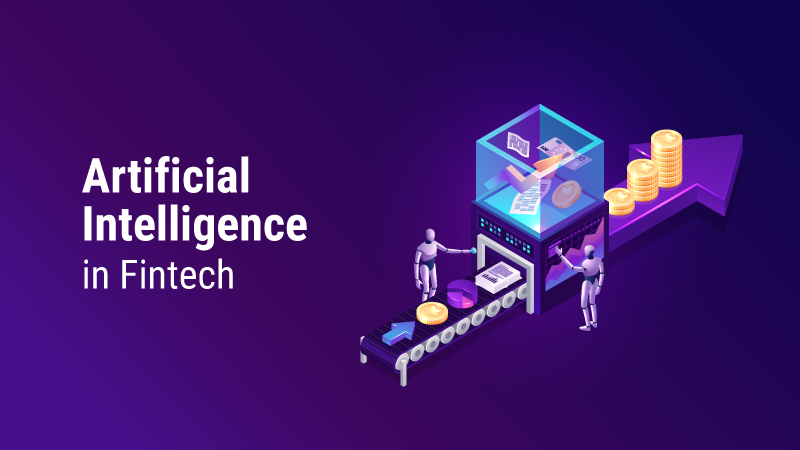
Artificial Intelligence in Fintech
AI in fintech transforms financial services by automating processes, analyzing vast datasets, and personalizing user experiences. It is a foundational tool used to instantly detect fraud, broaden credit access through alternative underwriting, and optimize investment strategies using algorithmic trading and robo-advisors
With technological advancements, FinTech companies (Financial Technology) have witnessed revolutionary changes during the last two decades. AI is on track to become a key player in financial services in the short term. Banks and financial institutions are implementing AI solutions to utilize information and statistics stored in unstructured documents and to automate and speed up conventional banking processes at a faster pace. AI and machine learning have always been a great advantage to banks and FinTech because they can process large amounts of customer data, which are then used to gain insights about the preferences of choices of goods and services the customers would want. This helps in building effective customer relationships.
The evolution of fintech
Banks and financial institutions have been automating and digitizing processes gradually since the late 20th century. From the first ATM in 1967 to digital deposits and apps such as Venmo and Zelle in the 2000s, technology has dramatically changed the way people transact financially. It transformed how they transfer money, buy insurance, get loans and make investments.
Fintech has expanded access to banking products and services, and it has streamlined many mundane business processes. Existing fintech is delivered in the form of software that uses a combination of application programming interfaces (APIs), mobile applications and web-based services. These components enable banks to share sensitive customer data securely while offering customers a seamless and engaging user experience.
In the fintech industry, many startup fintech companies focus on software development, and then they collaborate with large banks, investment firms and payment companies in the financial sector.
How AI is transforming fintech and finance
As the financial sector became more digital, the amount of data produced by transactions and other services also grew. AI can help streamline financial processes and enhance business partnerships by surfacing and presenting relevant information. It can help calculate risk, forecast future conditions and optimize financial analyses, planning and organization.
There are several top-line categories that fintech offerings fall into: digital banks and wallets, digital payments, personal finance, investing and lending. As AI becomes more commonplace in finance, AI-powered apps and machine learning algorithms make it easier to analyze datasets, automate tasks and improve data-driven decision-making.
Benefits of AI in fintech
The future of AI in fintech holds immense potential for transforming the financial services industry. AI can have greater impact in various aspects of fintech, including risk management, fraud detection, customer service and personalized financial advice.
As AI agents and AI assistants improve, they'll offer more powerful ways for fintech companies to integrate them into their business models, stay competitive, work at market speed and provide better services to their customers.
Integrating AI in the fintech sector might lead to cost saving5 by decreasing operational costs spent on customer service, fraud prevention, clerical tasks and more. It can also improve customer experience by performing in-depth analysis on their individual data points to arrive at solutions or suggestions. AI-powered financial advisors are also more accessible and more affordable for consumers to access compared to human advisors.
AI might also reduce the rate of human error6 and bias in interpreting data, which can enhance financial strategies. However, to accomplish this, AI models must have good data governance and transparency so human managers can see how the AI worked through the problem to arrive at a certain decision or solution. The adaptability of AI means that it can be used to bolster a wide range of fintech tools.
Who needs AI in fintech
AI-enhanced fintech can be useful for all kinds of users that interact with the financial organizations in some way. These users include everyday customers, developers, industry analysts, strategists and risk managers for financial organizations such retail banks, commercial banks, investment banks, trading platforms, e-commerce platforms and businesses with a digital presence.
Artificial Intelligence in Fintech
Here are some of the major applications of artificial intelligence in fintech that show what makes AI so relevant in financial technology.
Digital finance advisor
Automated or digital assistants are used in finance to provide advisory services to customers and to assist customers in making financial decisions. AI can transform fintech with Robo and Bionic advisory often referred to as “robot advisors”, that allow customers to track changes in price trends, and events, and manage their expenses and savings. Robo is a part of financial services that provide relevant advice or assistance in e-investment management without human intervention. Meanwhile, Bionic Advisory offers customized services to companies and organizations in the financial world and promises in-depth investment research and methods to use cutting-edge investment technology. This way such digital finance assistants help users to make financial decisions based on suggestions given by the assistant. Transactional bots are the best example of automated financial advisors because the use of transactional bots has grown rapidly and has become one of the most popular use cases of AI in all industries.
Insurance management
Implementation of AI in fintech helps in automating the process of insurance management and giving more precise or relevant data. Automated chatbots in the insurance sector can accelerate the process and help customers in pointing out the insurance requirements by linking multiple data sets. Additionally, this technology also explains levels of risk depending on user activity. Thus, the application of artificial intelligence in Insurance Management helps in identifying any type of risks or problems. It also helps to minimize functional costs and drive the process of decision-making faster.
Customer support
Every business and financial institution gives special attention to customer experience and providing services online is one way of making the process smooth and efficient. The application of AI allows you to have direct communication with the customers and to gain real-time access to in-depth customer information within no time. Financial institutions can make use of AI-driven chatbots to provide customers with information about their transaction history, current balance, and other related data. This way AI not only reduces costs but also improves customer satisfaction as well. Moreover, AI-driven automated chatbots can deliver a more positive or interactive communication experience with customers than ‘artificial’ conversations.
Asset management
Investment funds leaned on intricate algorithms for a long time to generate predictions and simulations. Due to this, the asset and wealth management industry has to reorganize a number of processes and provide pristine services like wealth management tools. Fintech companies paid attention to this and are integrating these solutions within their applications so that customers can take advantage of them. They started using AI algorithms to forecast future Fintech trends. With AI algorithms, fund managers became capable of successfully monitoring the market, which is a breakthrough development. AI not only automates the process but also helps to perform intelligent operations. App users can now access their bank statements and make critical transactions from any device, which in turn eliminated the need for intermediaries.
Predictions
Disruptive technologies like Artificial Intelligence and Machine Learning (ML) are capable of processing a large volume of data and translating it into simple results in their own way. They also can do the work at a low cost while maintaining the quality of the data, which in turn allows the customers to monitor their expenses and gain personalized financial insights. Data extraction and data mining can be used by companies to detect patterns and forecast the future using this big data and with proper assistance from analysts. Finally, it can lead us to predict the trends and choices of customers during the purchase.
Underwriting
Insurance companies offer underwriting services mainly for loans and investments. An AI-driven model can assess or evaluate the credit risk of a client in real-time, thus enabling advisors to build the best deal possible. The application of Artificial Intelligence (AI) in underwriting services enhances the efficacy of proposals and customer experience by fast-tracking the process and time taken to perform such operations.
Security and fraud detection
The fintech industry needs a lot of security to protect crucial data and other information from fraud. Studies have proven that financial institutions are highly vulnerable to cybercrimes and fraud. AI algorithms are capable of detecting suspicious behavior and informing customers about any unusual activity that takes place in the network. As these technologies can constantly monitor abnormal patterns 24/7, there is no need to stay alert all the time. This helps companies to keep an eye on what is happening behind their backs while being calm that their assets are safe. AI algorithms can also detect other illegal activities such as money laundering.
Wrap Up
Artificial Intelligence (AI) solutions in FinTech has the potential to assist businesses in attaining their development goals, achieving competitive advantages, minimizing operating expenses, making internal processes more efficient, and becoming the best choice for their customers. It also benefits users to handle their personal finances. Moreover, artificial intelligence enables the creation of precise statistics related to customers and clients. Eventually, this reduces the time it takes to analyze a large volume of data. AI in Fintech is designed and programmed to manage day-to-day financial services. We have also discussed many other applications of AI in fintech which have proven to survive the times in many conditions.











User's Comments
No comments there.