



Stories you may like
Algorithmic Trader
An algorithmic trader, also known as an algo trader, is someone who uses computer algorithms to make trading decisions. These algorithms, which are essentially sets of predefined, pre-programmed rules or instructions, can process vast amounts of data in milliseconds, executing trades automatically based on market data, technical indicators, and other inputs.
Algorithmic trading has become prominent in financial markets due to its precision, ability to minimize human errors, biases, and emotional decisions, as well as its potential for profitability by exploiting patterns that may be invisible to human traders.
Duties and Responsibilities
Algorithmic traders perform a variety of tasks to ensure that trading strategies are robust, profitable, and aligned with the fast-paced and highly regulated nature of financial markets. Their work involves:
- Strategy Development – Design and develop trading strategies based on quantitative research, market analysis, and statistical modeling. Set up rules based on strategies like price movements, timing, volume, or other indicators. For example, an algorithm might buy a stock when its price drops to a certain level and then sell when it rises again.
- Backtesting – Test strategies using historical market data to evaluate their effectiveness and refine the algorithms before deployment.
- Coding and Implementation – Write code to program trading algorithms, often using programming languages like Python, C++, or R.
- Data Analysis – Analyze large datasets to identify trading opportunities, patterns, and inefficiencies in the market.
- Risk Management – Implement risk controls within algorithms to limit potential losses and ensure trades align with risk tolerance and regulatory requirements.
- Real-time Monitoring – Monitor algorithms and market conditions in real time, ensuring trades are executing as intended and intervening when necessary.
- Performance Optimization – Continuously evaluate and fine-tune algorithms to improve performance, increase profitability, and reduce execution costs.
- Market Research – Keep up with market trends, economic indicators, and emerging technologies to inform and enhance trading strategies.
- Documentation and Reporting – Document strategies, processes, and performance metrics, and report results to stakeholders or team members for transparency and strategy evaluation.
- Compliance and Regulatory Awareness – Ensure all algorithms comply with relevant financial regulations and monitor for adherence to regulatory requirements.
Types of Algorithmic Traders
Now that we have a sense of the algorithmic trader’s work, let’s look at some different types of these traders, each specializing in different strategies and market approaches:
- High-Frequency Traders (HFT) – These traders use algorithms to make a high volume of trades within milliseconds. They capitalize on very small price movements and rely on speed to gain an edge, often using cutting-edge technology and shared servers near exchanges for minimal latency (delay).
- Market Makers – Market-making algorithms provide liquidity to the market by continuously placing buy and sell orders at competitive prices. They profit from the spread (the difference between bid and ask prices) and keep markets fluid by ensuring there are always orders available.
- Statistical Arbitrage Traders – These traders identify inefficiencies or correlations between asset prices, aiming to exploit small, temporary mispricings between related assets. Common strategies include pairs trading or index arbitrage, where they buy and sell highly correlated assets to profit from reversion to the mean.
- Event-Driven Traders – These traders focus on opportunities arising from specific events, such as mergers and acquisitions, earnings announcements, or economic reports. Their algorithms analyze news and data feeds to make quick trading decisions based on these events.
- Trend Followers or Momentum Traders – These algorithms look for trends or momentum in price movements and enter trades based on established patterns. They often use technical indicators to detect trends and aim to profit by riding the momentum as prices continue in a particular direction.
- Quantitative Arbitrageurs – Quant arbitrageurs use mathematical and statistical models to detect patterns and inefficiencies across various markets and asset classes. They might combine several factors, such as historical data, market volume, and volatility, to make complex decisions and create hedging strategies.
- Execution Traders – Execution algorithms are not designed to generate profits directly from market movements but to minimize the impact of large trades on the market. They break up big trades into smaller orders to avoid ‘slippage’ (price changes due to their own trade volume) and achieve optimal trade prices.
- Machine Learning and Artificial Intelligence (AI) Trading – These traders leverage AI and machine learning models to analyze large datasets and optimize trading decisions. Their expertise lies in developing adaptive algorithms that learn from new data and adjust their strategies in real time.
- Risk and Compliance Specialists – Some algorithmic traders specialize in risk management, designing algorithms that monitor and limit risk exposure in real time. They ensure the trading strategy adheres to regulatory requirements and internal risk limits.
In addition to these broader roles, algorithmic traders may focus on particular asset classes. Here are a few examples:
- Equities Traders focus on stock markets, creating strategies around price movements, liquidity, and market depth in individual stocks or indices.
- Fixed Income Traders specialize in bonds and other fixed-income securities, often requiring a deep understanding of interest rates, economic indicators, and credit risks.
- Foreign Exchange (Forex) Traders create algorithms for currency pairs, where factors like global economic events and market sentiment play a big role.
- Commodities Traders focus on commodity markets like oil, metals, and agricultural products, with strategies often based on supply-demand dynamics and geopolitical events.
What is the workplace of an Algorithmic Trader like?
Algorithmic traders are employed by various types of financial institutions and organizations that benefit from automated trading and data-driven strategies. These are among their most common employers:
- Investment Banks – Major banks employ algo traders to execute trades on behalf of their clients, manage proprietary trading desks, and provide market-making services. They rely on algorithms to handle large volumes of trades with minimal impact on prices.
- Hedge Funds – Many hedge funds, especially quantitative funds (quant funds), use algorithmic traders to deploy sophisticated strategies, like statistical arbitrage, high-frequency trading, and trend following. Some well-known quant funds, like Renaissance Technologies and Two Sigma, focus almost exclusively on algorithmic trading.
- Asset Management Firms – These firms manage portfolios on behalf of clients and use algorithmic traders to improve trade execution, reduce transaction costs, and implement strategies that maximize returns while managing risk.
- Proprietary Trading Firms – Often called ‘prop shops,’ these firms trade their own capital for profit rather than trading on behalf of clients. They heavily rely on algorithmic trading, particularly in high-frequency trading, arbitrage, and other short-term strategies. Examples include Jump Trading, Citadel Securities, and DRW.
- Brokerage Firms – Brokerages employ algorithmic traders to provide optimal trade execution for their clients, using execution algorithms to minimize costs and slippage. Some large brokers also offer algorithmic trading platforms and tools to their clients.
- Market Makers and Liquidity Providers – These firms ensure there is always buying and selling activity in the market. They use algorithms to provide liquidity by constantly quoting buy and sell prices, profiting from the bid-ask spread. Examples include Virtu Financial and KCG Holdings.
- Quantitative Research Firms – Quant research firms focus on developing trading models and analytics rather than directly managing portfolios. They employ algorithmic traders and quants to research, design, and test new algorithms, which are often licensed to other financial institutions.
- Cryptocurrency Exchanges and Trading Firms – With the rise of digital assets, many firms and exchanges in the cryptocurrency space employ algorithmic traders to navigate the highly volatile and 24/7 nature of crypto markets. They use algorithms for market making, arbitrage, and trend trading in cryptocurrencies.
- Insurance Companies and Pension Funds – These institutions often employ algorithmic traders to improve execution efficiency for their large portfolios, particularly in managing equities, bonds, and other assets within complex portfolios.
- Technology Companies and Fintechs – Tech firms and fintech startups that offer trading platforms may employ algorithmic traders or developers with algorithmic trading expertise to create innovative trading products and services for retail or institutional clients.
-
The work environment of an algorithmic trader is typically fast-paced and technology-driven, combining elements of finance, data science, and programming:
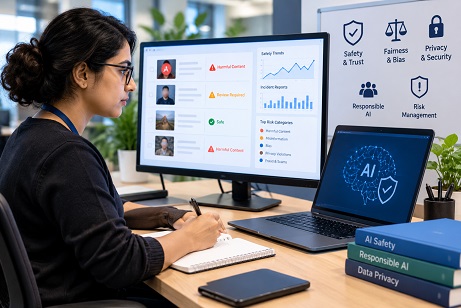
- Office Setup – Algo traders usually work in high-tech office spaces equipped with multiple monitors, allowing them to monitor real-time data, algorithm performance, and market conditions simultaneously. Their setup often includes advanced computers and software to process and analyze large data sets quickly.
- Trading Floor or Open Workspaces – Many algo traders work on trading floors, where teams of traders, quants, and analysts are seated together. However, some may work in quieter dedicated areas away from traditional trading floors, especially at tech-driven proprietary trading firms or quant funds. Open workspaces facilitate quick communication and collaboration with team members.
- Technology and Tools – Algo traders rely heavily on technology, including programming languages, trading platforms, data visualization tools, specialized software, and machine learning libraries.
- Team Collaboration – Algo traders work closely with other professionals, including quantitative analysts (quants), data scientists, software engineers, and risk managers. The team often collaborates to develop new strategies, improve existing algorithms, and refine risk management processes. Meetings are common, whether for brainstorming sessions, performance reviews, or strategy updates.
- Remote or Hybrid Work – As technology has advanced, more algo traders now have the flexibility to work remotely or in a hybrid setting. While many firms still require in-office presence due to the need for specialized hardware and collaborative work, remote setups are more common in firms that can securely facilitate trading from different locations.
- Regulated and Secure Environment – Given the sensitive nature of financial data and trading algorithms, workplaces are often highly secure and regulated. Algo traders operate within strict cybersecurity protocols and compliance guidelines to protect intellectual property and comply with regulatory standards.
- Continuous Learning Environment – Algo traders are typically immersed in a learning-focused culture, with resources available for staying updated on new technologies, financial theories, market trends, and regulatory changes. Many firms provide training and encourage self-study to keep traders at the forefront of the industry.
How to become an Algorithmic Trader
-
Becoming an algorithmic trader requires a blend of financial knowledge, quantitative skills, and programming expertise. Here’s a guide to pursuing the career:
Bachelor’s Degree
Start with a degree in a relevant field, such as finance, economics, computer science, computer software engineering, physics, applied mathematics, or statistics. This foundation will provide essential skills in quantitative analysis, programming, and financial markets.Advanced Degrees (Optional but Beneficial)
Many algo traders pursue a master’s degree or Ph.D. in quantitative finance, financial engineering, or applied mathematics to deepen their expertise in complex algorithms, statistical modeling, and risk management. Those in research-focused roles or positions with quantitative hedge funds are more likely to earn a doctorate, often in quantitative finance. This level of education can provide a significant competitive edge, especially for developing innovative trading strategies.Regardless of the formal education path you choose…
Learn Programming and Data Analysis
Proficiency in programming languages like Python, R, C++, or Java is crucial for coding trading algorithms. Python is particularly popular for its ease of use, extensive libraries, and machine learning capabilities.Learn data analysis and statistical software, like MATLAB, SQL, or Excel. Familiarity with data visualization and handling large datasets is important for backtesting and analyzing strategy performance.
Understand Financial Markets and Instruments
Gain knowledge of how financial markets operate, including trading mechanisms, market microstructure, and price formation. You’ll need a strong grasp of various asset classes (stocks, bonds, options, forex, etc.) and their behaviors.Study specific algorithmic trading strategies, such as arbitrage, trend following, market making, and high-frequency trading. Learning the theoretical basis of these strategies will help you design your algorithms.
Learn Quantitative and Statistical Methods
Master statistics, probability, linear algebra, and calculus, which are essential for developing and analyzing trading strategies. Knowledge of time-series analysis, regression, and statistical modeling is especially useful.Explore machine learning techniques, which are increasingly used in algorithmic trading for predictive analytics and pattern recognition.
Gain Experience through Internships or Projects
Internships at banks, hedge funds, or proprietary trading firms provide practical experience and exposure to real-world trading environments. Look for roles in trading, quantitative research, or financial engineering.Personal projects or competitions, such as building and backtesting trading strategies on platforms like QuantConnect or Interactive Brokers, can also be valuable. These projects help develop your portfolio and showcase your skills.
Develop and Backtest Trading Strategies
Use historical data to backtest your trading strategies and validate their effectiveness. Platforms like QuantConnect, NinjaTrader, or MetaTrader offer tools for designing and testing algorithms.Learning about transaction costs, market impact, and risk management is crucial at this stage, as real-world trading involves costs that can significantly affect profitability.
Build a Portfolio of Trading Strategies
A portfolio of successful strategies can demonstrate your skills and help you stand out to potential employers. Include backtested results, performance metrics, and documentation of each strategy.Employers look for proof of risk management and profitability, so document how each strategy handles various market conditions.
Network and Stay Updated
Attend industry events, conferences, and workshops to connect with professionals and stay informed about new developments in trading and technology.Join online communities, forums, or social networks like LinkedIn and quantitative finance groups, where you can exchange insights and learn from others in the field.
Apply for Entry-Level Roles
Look for roles like quantitative analyst, trading assistant, or junior algorithmic trader. These positions provide hands-on experience with data analysis, programming, and trading strategy development, preparing you for more advanced roles.Continuously Learn and Adapt
Algorithmic trading is a constantly evolving field. Keep updating your skills in programming, machine learning, and market knowledge.Learning about compliance and regulatory aspects of trading is also beneficial, as financial markets are highly regulated and algo traders need to operate within legal frameworks.
Certifications
While not always required, certain certifications can enhance an algorithmic trader’s credentials. These are some notable ones: - Chartered Financial Analyst (CFA) – The CFA designation, offered by the CFA Institute, is highly respected in the finance industry and covers a wide range of topics, including investment management, financial analysis, and ethics. While it doesn't focus exclusively on algorithmic trading, the knowledge gained is beneficial for understanding financial markets and investment strategies.
- Financial Risk Manager (FRM) – Offered by the Global Association of Risk Professionals (GARP), the FRM certification focuses on risk management in financial markets. It covers concepts such as market risk, credit risk, and operational risk, which are crucial for algorithmic trading.
- Certificate in Quantitative Finance (CQF) – The CQF is a practical, professional qualification that focuses on quantitative finance and is designed for practitioners in finance and risk management. It covers topics such as financial modeling, derivatives, and quantitative methods, making it highly relevant for algorithmic traders.
- Financial Modeling and Valuation Analyst (FMVA) – Offered by the Corporate Finance Institute (CFI), this certification focuses on financial modeling and valuation skills, which can be beneficial for algorithmic traders looking to develop quantitative strategies based on financial analysis.
- Professional Risk Manager (PRM) – The PRM certification is offered by the Professional Risk Managers' International Association (PRMIA) and focuses on risk management practices in finance. It covers quantitative analysis and risk modeling, making it relevant for those involved in algorithmic trading.
- Machine Learning and Data Science Certifications – As algorithmic trading increasingly incorporates machine learning and data science techniques, certifications in these areas can be beneficial. Many platforms, such as Coursera, edX, and Udacity, offer courses and certifications in machine learning, data analysis, and AI that are applicable to algorithmic trading.
- Algorithmic Trading Courses and Certifications – Some institutions offer specialized courses or certifications in algorithmic trading, covering topics like trading strategies, backtesting, and execution algorithms. These programs may be offered by universities, online education platforms, or trading organizations.
-
Professional Organizations
In addition to the certifying bodies referenced above in the Certifications section, there are other organizations and associations that cater to algorithmic traders, quantitative finance professionals, and traders in general. Here are a few of the most respected: - Quantitative Finance Society (QFS) – QFS is an organization for individuals involved in quantitative finance and algorithmic trading. It provides a platform for professionals to share knowledge, research, and best practices through events, webinars, and publications.
- Society for Industrial and Applied Mathematics (SIAM) – SIAM is dedicated to advancing applied and computational mathematics, which is highly relevant for algorithmic traders. It offers conferences, publications, and networking opportunities for professionals working in quantitative fields.
- International Association for Quantitative Finance (IAQF) – IAQF is a professional association that promotes the study and practice of quantitative finance. It organizes events, workshops, and networking opportunities for quants, traders, and finance professionals.









User's Comments
No comments there.