


Stories you may like
AI Agriculture Specialist
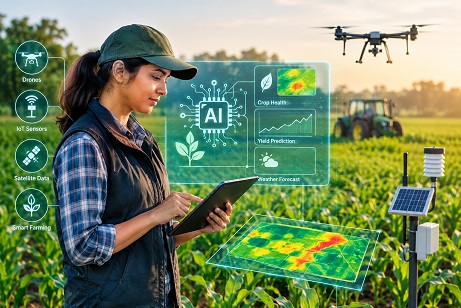
An AI agriculture specialist helps farmers and agricultural organizations use AI technologies to improve crop production, livestock management, and overall farm efficiency. They work with tools that analyze data from sensors, drones, cameras, satellites, and farm equipment to help make better decisions about planting, irrigation, fertilization, harvesting, and animal care.
AI agriculture specialists work in agriculture companies, technology firms, research organizations, government agencies, and farming operations. They collaborate with farmers, agronomists, data scientists, engineers, and equipment manufacturers to develop and apply AI-powered solutions. Strong analytical, problem-solving, and communication skills are important, along with an understanding of both agricultural practices and AI technologies.
Duties and Responsibilities
AI agriculture specialists combine agricultural knowledge with AI technologies to help improve productivity, sustainability, and decision-making across farming operations.
- Analyze Agricultural Data: Collect and analyze data from sensors, drones, satellites, weather systems, and farm equipment. Use the insights gained from this data to identify trends and support better farming decisions.
- Develop AI-Powered Solutions: Design, implement, or support AI tools that help improve crop production and livestock management. These solutions can automate tasks, increase efficiency, and reduce operational costs.
- Monitor Crop and Livestock Performance: Use AI systems to track crop growth, animal health, and environmental conditions. Early detection of problems helps farmers respond quickly and reduce losses.
- Support Precision Agriculture Initiatives: Apply AI technologies to optimize the use of water, fertilizers, pesticides, and other resources. This helps improve yields while reducing waste and environmental impact.
- Collaborate with Agricultural Stakeholders: Work closely with farmers, agronomists, researchers, engineers, and technology providers. Effective collaboration ensures AI solutions address real-world agricultural challenges.
- Evaluate and Improve AI Models: Test AI systems to verify that predictions and recommendations are accurate and reliable. Continuously refine models using new data and feedback from agricultural operations.
Types of AI Agriculture Specialists
AI agriculture specialists can focus on different areas of farming and agricultural technology depending on the type of AI solutions they develop and support.
- Precision Agriculture Specialist: Uses AI to optimize planting, irrigation, fertilization, and harvesting activities. Their goal is to help farmers maximize yields while reducing waste and costs.
- Crop Analytics Specialist: Focuses on analyzing crop data collected from sensors, drones, and satellite imagery. They use AI models to predict yields, identify diseases, and improve crop health.
- Livestock AI Specialist: Develops and manages AI systems that monitor animal health, behavior, and productivity. These specialists help farmers improve animal welfare and operational efficiency.
- Agricultural Robotics Specialist: Works with AI-powered machines and autonomous equipment used in farming operations. They help automate tasks such as planting, harvesting, spraying, and field monitoring.
- Agricultural Data Scientist: Uses advanced analytics and machine learning to uncover insights from large agricultural datasets. Their findings support better decision-making across farming operations and agribusinesses.
- Sustainable Agriculture AI Specialist: Applies AI technologies to improve environmental sustainability and resource management. They focus on reducing water usage, minimizing chemical inputs, and promoting more efficient farming practices.
Workplace of an AI Agriculture Specialist
AI agriculture specialists work in a variety of environments, including farms, agricultural technology companies, research institutions, government agencies, and agribusiness organizations. Their work often combines time in the field with time in offices or laboratories, where they use computers, AI software, sensors, drones, and data analysis tools to monitor and improve agricultural operations.
They regularly collaborate with farmers, agronomists, engineers, data scientists, equipment manufacturers, and technology providers. Meetings, field visits, and project discussions are common as they work together to develop and implement AI solutions that address real-world agricultural challenges.
The work is focused on solving problems, improving efficiency, and supporting sustainable farming practices. AI agriculture specialists often analyze large amounts of data, test new technologies, and evaluate the performance of AI systems in real-world conditions. Because both agriculture and AI continue to evolve, ongoing learning and adaptation are important parts of the job.
How to become an AI Agriculture Specialist
Becoming an AI agriculture specialist requires a combination of agricultural knowledge, technical skills, and an understanding of how AI can be used to improve farming operations.
- Earn a Relevant Degree: Start with a Bachelor's Degree in Agriculture, Agricultural Engineering, Computer Science, Data Science, Environmental Science, or a related field. This provides the foundational knowledge needed to understand both farming systems and technology.
- Build Agricultural Knowledge: Learn about crop production, livestock management, soil science, irrigation, and agricultural operations. Understanding how farms function is essential for developing effective AI solutions.
- Develop AI and Data Skills: Gain experience with data analysis, machine learning, programming, and AI tools. Skills in languages such as Python and familiarity with data visualization platforms are especially valuable.
- Learn Agricultural Technology Systems: Become familiar with precision agriculture tools, drones, sensors, satellite imagery, and smart farming equipment. These technologies generate the data that AI systems use to make predictions and recommendations.
- Gain Hands-On Experience: Seek internships, research projects, or entry-level positions in agriculture, agritech companies, or agricultural research organizations. Real-world experience helps bridge the gap between theory and practical application.
- Build a Portfolio of Projects: Create projects that demonstrate your ability to use AI and data to solve agricultural challenges. Examples might include crop yield prediction models, disease detection systems, or precision irrigation solutions.
Certifications
Professional certifications can help AI agriculture specialists develop expertise in AI, machine learning, geospatial analysis, and data-driven agricultural technologies.
- Microsoft Certified: Azure AI Engineer Associate: Validates skills in designing, building, and deploying AI solutions using Microsoft Azure services.
- Google Cloud Professional Machine Learning Engineer: Demonstrates the ability to build, deploy, and manage machine learning and AI solutions using Google Cloud technologies.
- AWS Certified Machine Learning Engineer – Associate: Validates expertise in developing, deploying, operationalizing, and maintaining machine learning solutions on AWS.
- Esri ArcGIS Pro Associate Certification: Demonstrates proficiency in geographic information systems (GIS), spatial analysis, and mapping technologies that are widely used in precision agriculture and agricultural data analysis.
Skills Needed for an AI Agriculture Specialist
An AI Agriculture Specialist is a professional who uses artificial intelligence, machine learning, data analytics, and smart farming technologies to improve agricultural productivity, crop health, soil quality, and resource management. This role combines agricultural knowledge with technical expertise to help farmers make data-driven decisions and develop sustainable farming practices.
1. Technical Skills (Hard Skills)
1. Artificial Intelligence and Machine Learning: Understanding AI algorithms, predictive models, and machine learning techniques to forecast crop yields, identify plant diseases, and optimize farming operations.
2. Data Analysis and Interpretation: Ability to collect, process, and analyze agricultural data, including crop performance, soil conditions, weather patterns, and irrigation requirements.
3. Programming Skills: Knowledge of programming languages such as Python and R for developing AI models, automating agricultural tasks, and analyzing large datasets.
4. Agricultural Knowledge: Understanding crop science, soil management, plant diseases, pest control, fertilizers, and modern farming techniques.
5. Remote Sensing and GIS: Ability to use satellite imagery, geographic information systems (GIS), and aerial data to monitor crop health, assess land conditions, and identify agricultural problems.
6. Computer Vision: Knowledge of image-processing techniques to detect plant diseases, weeds, pests, and crop growth conditions using photographs, drones, and cameras.
7. Internet of Things (IoT): Understanding smart sensors and connected devices that monitor soil moisture, temperature, humidity, water usage, and other agricultural conditions.
8. Robotics and Automation: Familiarity with automated irrigation systems, agricultural robots, autonomous machinery, and precision-farming equipment.
9. Predictive Analytics: Ability to develop models that estimate crop yields, forecast pest outbreaks, predict weather-related risks, and support agricultural planning.
10. Database Management: Skills in collecting, storing, organizing, and managing agricultural data using databases and cloud-based platforms.
2. Soft Skills
- Problem-Solving: Identifying agricultural challenges and developing practical AI-based solutions.
- Critical Thinking: Evaluating data and determining whether AI-generated recommendations are accurate and useful.
- Communication: Explaining technical concepts and AI-generated insights clearly to farmers, agricultural researchers, and other stakeholders.
- Teamwork and Collaboration: Working with agronomists, software developers, data scientists, agricultural engineers, and farmers.
- Adaptability: Learning new AI technologies, farming methods, and digital tools as the agricultural sector evolves.
- Decision-Making: Using agricultural data and predictive insights to support informed farming decisions.
- Creativity and Innovation: Developing new approaches to crop monitoring, pest management, irrigation, and farm automation.
- Time Management: Managing agricultural technology projects and meeting deadlines, especially during critical planting and harvesting periods.
3. Specialized Skills
- Precision Agriculture: Using GPS, sensors, drones, and AI systems to manage crops and resources efficiently.
- Crop Disease Detection: Applying AI models to recognize symptoms of plant diseases and identify potential pest infestations.
- Smart Irrigation Management: Using sensor data and predictive models to determine when and how much crops should be watered.
- Yield Prediction: Estimating crop production using historical records, weather information, soil data, and satellite imagery.
- Sustainable Agriculture: Applying technology to reduce water consumption, fertilizer waste, pesticide use, and environmental impact.
- Agricultural Data Visualization: Presenting farm data through charts, maps, dashboards, and reports that support decision-making.
- AI Model Evaluation: Testing the accuracy, reliability, and practical usefulness of AI systems under different farming conditions.
- Ethical and Responsible AI: Protecting farmers' data privacy and ensuring that AI recommendations are suitable for local crops, climates, and farming practices.
4. Educational and Professional Skills
An AI Agriculture Specialist may benefit from qualifications in agricultural science, agricultural engineering, computer science, data science, AI, or a related field.
Additional useful skills include:
- Knowledge of machine learning frameworks such as TensorFlow or PyTorch.
- Experience with agricultural datasets and open-source farming tools.
- Familiarity with cloud computing and data platforms.
- Practical experience with drones, agricultural sensors, and smart-farming equipment.
- Understanding of agricultural economics and farm management.
- Research skills for testing new technologies and evaluating their effectiveness in real farming environments.
Salary of an AI Agriculture Specialist
The salary of an AI Agriculture Specialist depends on educational qualifications, technical skills, work experience, employer, and location. Professionals with expertise in artificial intelligence, machine learning, precision agriculture, and agricultural data analysis may find opportunities in agritech companies, agricultural research institutions, technology firms, and smart-farming projects.
Estimated Salary by Experience
In India, salary estimates for this specialized role vary because employers may advertise similar positions under titles such as agricultural data scientist, precision agriculture specialist, or AI/ML engineer.
- Entry-level: ₹3–6 lakh per year
- Mid-level (3–5 years): ₹6–12 lakh per year
- Experienced specialist: ₹12–20 lakh or more per year
Salary in Other Countries
- United States: Precision agriculture specialist salaries average around US$111,799 per year, according to Salary.com data dated September 2026. This is a related occupation, not an exact AI Agriculture Specialist salary.
- Other countries: Salaries vary by country, employer, qualifications, and demand for agricultural AI expertise.










User's Comments
No comments there.