

Stories you may like
Bridal Seamstress
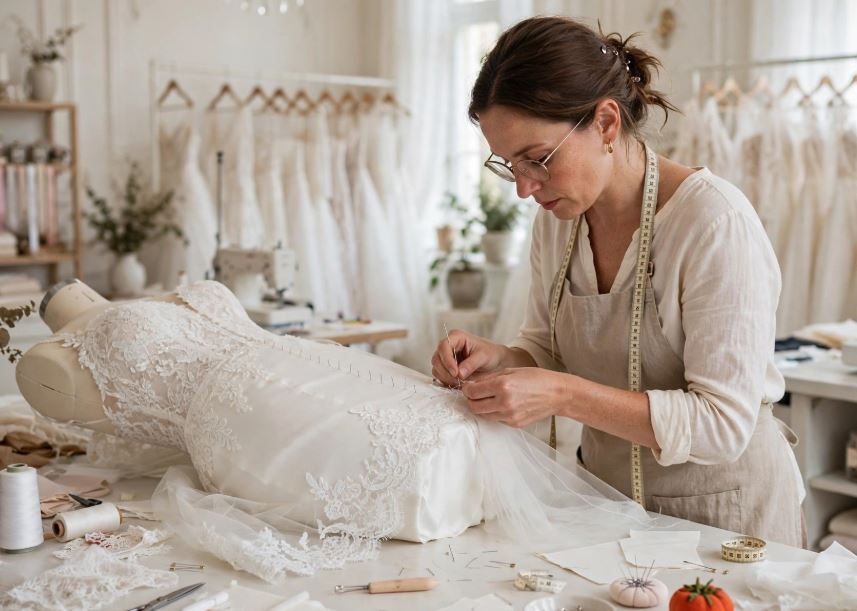
A bridal seamstress specializes in working with wedding attire, especially wedding gowns and other formal pieces worn by the bridal party. They understand how to handle delicate fabrics such as lace, silk, tulle, and satin, which are common in wedding dresses.
Bridal seamstresses can work in places like bridal boutiques, dressmaking studios, or tailoring shops that focus on formal wear. Some are self-employed, running their own small business from a studio or home workspace. Many work closely with clients throughout the process, from initial fittings to final touches. Succeeding in the field calls for strong sewing and tailoring abilities, attention to detail, patience, and communication skills to understand each client’s vision.
What does a Bridal Seamstress do?
Duties and Responsibilities
The ultimate responsibility of the bridal seamstress is to ensure that wedding gowns and related garments are completed on time for important events. Their job involves:
- Client Consultations: A bridal seamstress meets with brides to discuss fit concerns, style preferences, and planned changes. These conversations help set clear expectations and guide the alteration plan before any sewing begins.
- Measuring and Fitting: Accurate body measurements are taken during scheduled fittings. These measurements guide adjustments and help ensure the gown is comfortable and secure for long wedding days.
- Alterations and Sewing: The seamstress alters gowns by hemming, taking in seams, adjusting bodices, or adding details. This work requires tools such as sewing machines, hand needles, pins, scissors, measuring tapes, and dress forms.
- Fabric and Garment Care: Bridal fabrics like lace, satin, silk, and tulle must be handled with particular care during pressing and sewing. Proper use of irons, steamers, and protective materials helps prevent damage to delicate gowns.
- Time and Deadline Management: Work is planned around wedding dates, fitting schedules, and promised pickup times. Staying organized is essential since missed deadlines can affect major life events.
- Collaboration with Bridal Staff: In bridal shops, the seamstress often works with stylists, managers, and front desk staff. Clear communication helps coordinate fittings, changes, and client updates.
- Quality Checks and Final Prep: Finished gowns are inspected for fit, comfort, and clean stitching. Final pressing and packaging ensure the dress is ready for pickup or delivery.
- Professional Development: Bridal seamstresses stay current with sewing techniques, fashion trends, and best practices. Ongoing learning helps maintain quality standards and keeps skills up to date.
Types of Bridal Seamstresses
There are several types of bridal seamstresses, each focusing on a specific area of wedding and formal wear:
- Bridal Alteration Seamstress: This professional focuses on altering ready-made wedding gowns. The main goal is achieving a perfect fit without changing the original design.
- Custom Bridal Seamstress: This seamstress creates wedding gowns from scratch based on a bride’s vision. The role centers on custom design, pattern making, and detailed construction.
- Bridal Boutique Seamstress: This type works directly within a bridal shop. The focus is on high volume alterations and close coordination with store staff and clients.
- Freelance Bridal Seamstress: This professional works independently, often from a home or private studio. Flexibility and direct client relationships are a key part of this role.
- Formalwear Seamstress: This seamstress alters gowns for bridesmaids, mothers of the couple, and other formal events. The focus extends beyond wedding dresses to evening and special occasion wear.
- Bridal Couture Seamstress: This specialist works on high-end or designer gowns with complex construction. The work emphasizes fine hand sewing, luxury fabrics, and advanced techniques.
What is the workplace of a Bridal Seamstress like?
A bridal seamstress typically works in a bridal shop or alterations studio, where the space is set up for fitting and adjusting wedding gowns and formal attire. These workplaces often include sewing tables, industrial strength sewing machines, dress forms or mannequins, irons or steamers for pressing fabric, and neatly organized shelves of threads, needles, pins, and other supplies. In larger bridal boutiques, there may be a dedicated alterations room where several seamstresses work side by side and brides come in for multiple fitting appointments scheduled weeks or months before their wedding date. Many shops also maintain fitting areas with mirrors and private spaces so clients feel comfortable trying on dresses during each step of the alteration process.
Some bridal seamstresses have remote or flexible work options, especially if they run their own business or work as independent contractors. These seamstresses might set up a home studio with essential tools such as sewing machines, specialized needles, measuring tools, and dress forms, and communicate with clients by phone, email, or video calls to arrange fittings or clarify preferences. Flexible schedules are common, and work often increases during peak wedding seasons, so communication tools help seamstresses manage client expectations and workflow without missing deadlines.
Much of the bridal seamstress’s day is spent measuring clients, pinning fabric, sewing, and making adjustments by hand or machine to ensure each gown fits beautifully and functions well. There are often scheduled fittings where the seamstress works with clients and, at times, with bridal stylists or shop staff to talk through design choices and timing. Between appointments, the seamstress might organize garments, update project notes, press dresses so they look crisp and smooth, and prepare for upcoming fittings. The atmosphere can be calm and concentrated, but it also includes friendly conversations with clients who are excited or sometimes nervous about their wedding plans.
How to become a Bridal Seamstress
The path to becoming a bridal seamstress includes gaining the right mix of sewing skills, practical experience, and professional development.
- Complete Secondary Education: A high school diploma or equivalent is often the first formal step for someone interested in this field. This level of education provides a foundation and is commonly expected by employers in the sewing and tailoring field.
- Learn Basic Sewing Skills: Early training in sewing through classes at school, community programs, or local workshops helps build essential skills. These basics include how to use a sewing machine, handle different fabrics, and follow simple patterns.
- Pursue Formal Training (Optional): Enrolling in vocational courses or programs in fashion design, tailoring, or garment construction can deepen technical knowledge. Such training offers structured learning in pattern making, fit techniques, and textile understanding that is valuable in bridal work.
- Gain Hands On Experience: Practical experience through part time jobs, apprenticeships, or internships in bridal shops or tailoring studios helps bridge classroom skills to real-world tasks. Working with experienced seamstresses allows learners to practice fittings, alterations, and client communication.
- Build a Portfolio: Creating a portfolio with photos or descriptions of completed sewing and alteration projects helps demonstrate capability to clients or employers. A well-organized portfolio highlights quality work and shows range, from simple hems to more complex bridal alteration.
- Seek Certification (Optional): Some bridal seamstresses choose to earn certifications related to sewing or tailoring to enhance credibility. While not always required, certification programs can show commitment to the craft and help in competitive job markets.
- Develop Communication and Business Skills: Working with clients and managing fittings involves good communication, time management, and basic business understanding. These skills help ensure seamless appointments and can support success whether working for a shop or running a freelance business.
- Continue Learning: Even after starting in the field, staying updated by learning new techniques, following bridal fashion trends, and practising advanced sewing keeps skills fresh. Ongoing learning helps a bridal seamstress offer high quality services and adapt to changing styles.
Certifications
Certifications can help bridal seamstresses show proven skill, professionalism, and commitment to quality work. These are credentials which are widely respected in the industry:
- Master Sewing and Design Professional (MSDP) Certification: This credential, offered by the Association of Sewing & Design Professionals (ASDP), evaluates advanced sewing, garment construction, and pattern knowledge. It benefits bridal seamstresses who work on complex dresses and want formal recognition of broad technical ability.
- Master Alteration Specialist Certification: Also offered by the ASDP, this certification focuses on garment alterations, fit, fabrics, and professional sewing standards. It is valuable for bridal seamstresses because it confirms strong alteration skills that are essential for wedding gowns.
- Red Seal Endorsement in Apparel Manufacturing or Tailoring: In Canada, the Red Seal Program provides national trade certification through government recognized standards. This endorsement helps bridal seamstresses demonstrate industry level competence and credibility across provinces.
- City and Guilds Diploma in Fashion or Garment Construction: City and Guilds is a UK-based, internationally recognized vocational awarding body that offers structured sewing and garment credentials. These diplomas support bridal seamstresses by confirming formal training in construction and finishing techniques.
- Certified Professional Seamstress Credential: Some professional sewing associations offer certification programs that assess practical sewing and alteration skills. These credentials help bridal seamstresses build trust with employers and clients by showing verified experience.
- Fashion Sewing or Alterations Certificate from an Accredited College: Many accredited colleges and technical schools offer certificate programs in sewing, tailoring, or garment alterations. These certificates provide structured learning and documented training that support entry into bridal alteration work.










User's Comments
No comments there.