


Stories you may like
Seismologist
A seismologist studies earthquakes, seismic waves, and the movement of the Earth’s crust. They use instruments called seismometers to detect and measure vibrations caused by earthquakes, volcanic activity, and other underground movements. By analyzing seismic data, seismologists help scientists understand how the Earth works, identify earthquake patterns, and improve our ability to monitor and prepare for natural hazards.
This career is a good fit for people who enjoy science, mathematics, technology, and solving complex problems. Seismologists are curious about what happens beneath the Earth’s surface and enjoy analyzing data to answer important questions. They may work for universities, government agencies, research organizations, or private companies, helping improve earthquake forecasting, hazard assessments, and our understanding of the planet’s structure.
What does a Seismologist do?
Duties and Responsibilities
Seismologists study earthquakes and the movement of the Earth to better understand how and why seismic activity occurs. Their duties often involve collecting data, conducting research, and using technology to monitor and analyze the forces beneath the Earth's surface.
- Monitor Earthquake Activity: Use seismometers and other instruments to detect and measure earthquakes and ground movement. Analyze seismic signals to determine the location, strength, and characteristics of an earthquake.
- Analyze Seismic Data: Study earthquake records and patterns using computer software and scientific methods. Interpret data to learn more about Earth’s structure and how energy moves through the planet.
- Conduct Research: Investigate how earthquakes happen and how tectonic plates interact beneath the Earth’s surface. Use research findings to improve scientific knowledge and understanding of natural hazards.
- Develop Earthquake Models: Create computer models and simulations to study seismic activity and potential earthquake impacts. Use these models to help predict risks and improve hazard assessments.
- Install and Maintain Equipment: Set up and monitor seismometers and other scientific instruments used to collect earthquake data. Ensure equipment is working properly and producing accurate measurements.
- Study Earth’s Interior: Use seismic waves to learn about layers deep inside the Earth that cannot be directly observed. Analyze how waves travel through different materials to understand underground structures.
- Share Scientific Findings: Prepare reports, research papers, and presentations explaining seismic data and discoveries. Communicate findings with scientists, government agencies, emergency planners, and the public.
Types of Seismologists
Seismologists can specialize in different areas depending on the type of seismic activity they study and the goals of their research. Common types of seismologists include:
- Earthquake Seismologist: Studies earthquakes, including how they begin, how they spread, and how they affect the Earth’s surface. Analyze seismic data to better understand earthquake behavior and improve hazard assessments.
- Volcanic Seismologist: Studies earthquakes and ground vibrations associated with volcanic activity. Monitor seismic changes near volcanoes to help scientists understand volcanic processes and potential eruptions.
- Exploration Seismologist: Uses seismic waves to study underground structures and locate natural resources such as oil, natural gas, and minerals. Works with geophysical data to create images of what lies beneath the Earth’s surface.
- Engineering Seismologist: Studies how earthquakes affect buildings, bridges, and other structures. Provides information that helps engineers design safer infrastructure and reduce earthquake damage.
- Computational Seismologist: Uses computer models, simulations, and advanced data analysis techniques to study seismic activity. Develops tools and methods to process large amounts of earthquake data.
- Planetary Seismologist: Studies seismic activity on other planets, moons, and celestial bodies. Uses data from space missions to learn about the internal structure and geological activity of other worlds.
What is the workplace of a Seismologist like?
The workplace of a seismologist is usually a combination of office work, research environments, and occasional fieldwork. Much of their time is spent analyzing earthquake data using computers, specialized software, and scientific models. They may study information collected from seismometers, create reports, and work with other scientists to better understand earthquake activity.
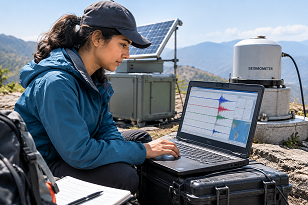
Some seismologists spend time in the field installing, maintaining, and checking earthquake monitoring equipment. Fieldwork may take them to areas with active faults, volcanoes, or other locations where seismic activity is being studied. Depending on their role, they may work outdoors in remote areas and need to adapt to different weather and terrain conditions.
Seismologists often work as part of a team with geologists, geophysicists, engineers, and emergency management professionals. They may be employed by universities, government agencies, research institutions, or private companies. While many have regular work schedules, they may occasionally work longer hours when major earthquakes occur or when urgent seismic information is needed.
How to become a Seismologist
Becoming a seismologist requires a strong background in physics, mathematics, Earth science, and data analysis. The following steps can help prepare you for a career studying earthquakes and seismic activity:
- Complete a Bachelor's Degree: Earn a Bachelor's Degree in Geophysics, Geology, Physics, Earth Science, or a related field. Coursework typically includes mathematics, physics, geology, computer science, and introductory seismology.
- Develop Technical Skills: Learn how to analyze seismic data, use computer modeling software, and work with scientific instruments such as seismometers. Programming and data analysis skills are also valuable because modern seismology relies heavily on technology.
- Gain Research Experience: Participate in internships, research projects, field studies, or laboratory work to gain hands-on experience. Working with seismic data and scientific equipment helps build practical skills needed for the profession.
- Consider a Graduate Degree: Earn a Master's Degree or Ph.D. in Seismology, Geophysics, Geology, or a related field for advanced research positions. Graduate programs allow students to specialize in areas such as earthquake science, volcanic activity, or computational seismology.
- Build Field and Laboratory Experience: Learn how to install and maintain monitoring equipment, collect seismic measurements, and interpret Earth movement data. Practical experience helps prepare you for work in research, government, or industry settings.
- Continue Professional Development: Stay current with advances in earthquake science, technology, and research methods by attending conferences, joining professional organizations, and participating in continuing education opportunities.
Helpful Resources
Aspiring and experienced seismologists can benefit from professional organizations, scientific agencies, and research resources that provide earthquake data, educational materials, career information, and opportunities to connect with other Earth scientists. Helpful resources include:
- American Geophysical Union (AGU): A leading Earth and space science organization that provides scientific publications, conferences, webinars, networking opportunities, and career resources for seismologists and other Earth science professionals.
- Incorporated Research Institutions for Seismology (IRIS): Provides access to seismic data, educational resources, research tools, and information about earthquakes and Earth structure. It is widely used by students, educators, and researchers studying seismology.
- U.S. Geological Survey (USGS): Offers earthquake monitoring, seismic data, maps, research, educational materials, and information about earthquake hazards. The USGS is one of the primary sources for earthquake information and research in the United States.
- Seismological Society of America (SSA): A professional organization dedicated to advancing earthquake science. Provides journals, conferences, educational resources, and networking opportunities for seismologists and students interested in the field.









User's Comments
No comments there.