

Stories you may like
Line cook
A line cook works in a restaurant kitchen, helping prepare and cook food based on the restaurant’s recipes and standards. They usually focus on one part of the kitchen, like the grill, sauté, fryer, or salad station, and play an important role in making sure everything runs smoothly.
Line cooks are key team players who keep their station organized, work quickly, and help meals get out on time. By doing their part with care and attention, they help bring the head chef’s ideas to life and make sure customers enjoy their meals. Many chefs begin their careers as line cooks before moving into more senior culinary roles.
Duties and Responsibilities
Line cooks must be fast, precise, and organized to keep up with the demands of a busy kitchen while ensuring high-quality food. Here’s a look at what their workday entails:
- Food Preparation – Chop, slice, and prepare ingredients before and during service. Measure and mix ingredients according to recipes. Marinate, portion, and season food as needed.
- Cooking – Cook food items on a specific station (e.g., grill, sauté, fry). Follow recipes and plating guidelines. Monitor cooking times and temperatures for quality and safety.
- Plating and Presentation – Assemble dishes in an appealing and consistent manner. Ensure portions and presentation meet restaurant standards.
- Station Setup and Maintenance – Set up and stock station with necessary supplies. Keep workstation clean, organized, and properly sanitized.
- Coordination and Communication – Work with other cooks and kitchen staff to time orders. Communicate with the head chef or sous chef about any issues or special orders.
- Food Safety and Sanitation – Follow proper food handling procedures and hygiene practices. Comply with health and safety regulations.
- Inventory and Stock Management – Report low stock or spoiled items to kitchen management. Help with receiving and storing deliveries.
- Cleaning and Closing Duties – Clean equipment and workstations at the end of shifts. Assist in closing down the kitchen and preparing for the next day.
Different Types of Line Cooks
Specializations for line cooks typically align with specific stations or types of cuisine within the kitchen. These specializations allow line cooks to develop expertise in particular techniques, ingredients, or styles of cooking, making them more valuable in high-end or specialized kitchens:
Station-Based Specializations (based on the brigade system developed in classical French kitchens)
- Grill Cook (Grillardin) – specializes in grilling meats, poultry, and seafood to the desired temperature and texture
- Sauté Cook (Saucier) – expert in sautéing techniques, sauces, and often the most skilled cook on the line after the head chef
- Fry Cook (Friturier) – focuses on deep-fried foods, maintaining oil quality and precise timing for crispy results
- Pantry Cook (Garde-manger) – handles cold dishes like salads, charcuterie, dressings, and cold desserts
- Broiler Cook – operates the broiler and handles broiled meat and seafood, often in steakhouses
- Roast Cook (Rôtisseur) – specializes in roasting and braising meats, often responsible for large cuts and gravies
- Vegetable Cook (Entremetier) – prepares vegetable sides, starches (like rice and pasta), and soups
- Pastry Cook (Pâtissier) – focuses on baked goods, desserts, and pastries; requires knowledge of baking science
In smaller kitchens, one line cook may cover multiple stations, but in larger or more specialized restaurants, each role may be filled by a different person to ensure efficiency and quality.
Cuisine or Concept-Based Specializations
- Sushi Line Cook – trained in precise knife skills and handling raw fish and sushi rice
- Tandoor Cook – specializes in using a tandoor oven for Indian dishes like naan, kebabs, and tandoori meats
- Wok Cook – skilled in high-heat, fast-paced wok cooking; common in Chinese and Southeast Asian cuisines
- Wood-Fire or Pizza Oven Cook – operates wood-fired ovens, often in artisanal pizzerias or rustic kitchens
- Breakfast or Brunch Cook – specializes in eggs, pancakes, and fast-turnover breakfast items, often working early hours
What is the workplace of a Line Cook like?
Line cooks can work for a wide range of foodservice establishments that require consistent, high-quality meal preparation. These are among their most common employers:
- Restaurants – Fine dining, casual, fast-casual, and fast-food restaurants all rely on line cooks to prepare meals efficiently and to standard.
- Hotels and Resorts – Hotel kitchens often have multiple dining venues (buffets, room service, restaurants) that require skilled line cooks.
- Catering Companies – Here, cooks help prepare large quantities of food for events such as weddings, banquets, and corporate gatherings.
- Cafés and Bistros – In smaller kitchens line cooks often multitask across stations.
- Hospitals and Healthcare Facilities – In these settings, line cooks serve meals to patients and staff, often with dietary restrictions.
- Schools and Universities – Campus dining services employ line cooks to feed students and staff.
- Cruise Lines and Airlines – Line cooks in these environments prepare food in high-volume, specialized kitchens with strict timing and safety standards.
- Corporate Cafeterias – In-house foodservices for large companies often include trained line cooks.
- Theme Parks and Entertainment Venues – High-volume kitchens that serve large crowds quickly and efficiently need line cooks.
- Military and Government Facilities – These facilities provide meals for personnel and often require consistency, nutrition, and adherence to protocol.
Essentially, any organization that provides cooked meals at scale may employ line cooks as part of their culinary team.
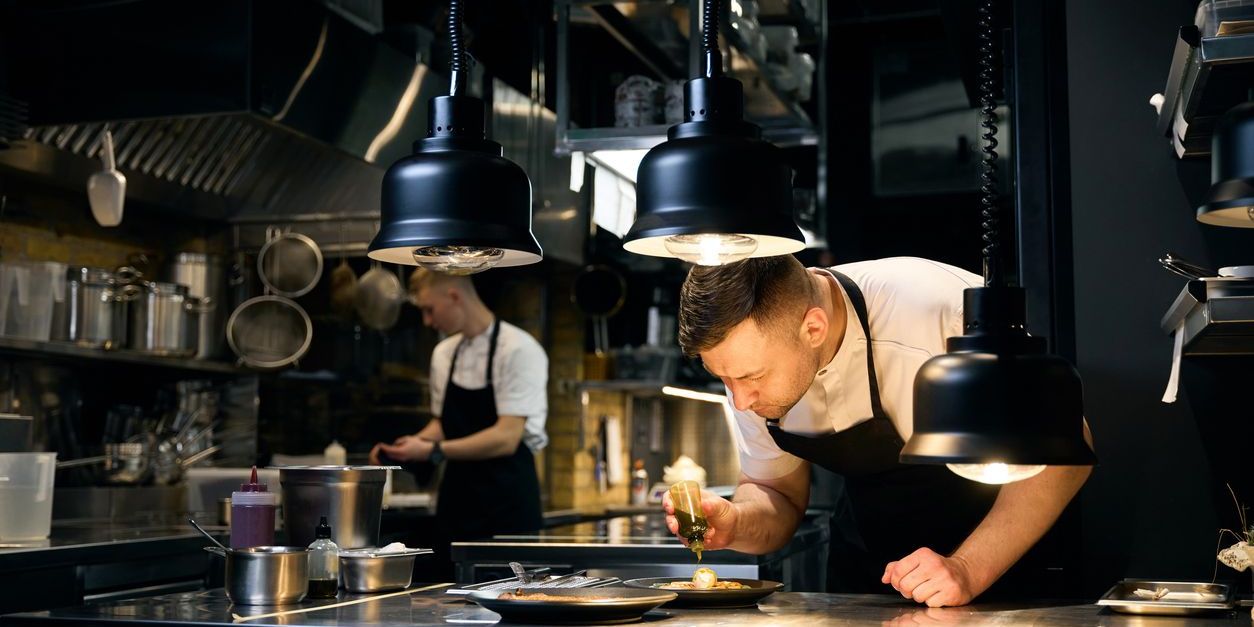
The workplace of a line cook is a fast-paced, high-pressure environment where efficiency, coordination, and precision are critical. During peak service times, the kitchen becomes a synchronized, high-energy space where line cooks must stay focused, manage multiple orders at once, and communicate constantly with teammates to ensure dishes are prepared quickly, accurately, and to standard.
Conditions in the kitchen can be physically demanding and intense. Line cooks often spend long hours on their feet, working in hot, noisy environments with sharp tools and heavy equipment. Cleanliness and organization are essential, as is adherence to food safety and sanitation rules. Despite the challenges, many line cooks find the work rewarding due to the camaraderie of the kitchen team, the satisfaction of crafting quality dishes, and the opportunity to grow their culinary skills in a dynamic setting.
How to become a Line Cook
To become a line cook, you typically don't need formal education, but you do need a combination of basic kitchen skills, hands-on experience, a strong work ethic, and the ability to perform well under pressure. Here’s a guide to the role, which is a great stepping stone for a long-term culinary career:
Basic Cooking Skills
Learn essential techniques like chopping, sautéing, grilling, as well as food safety standards. Practise cooking at home or take introductory cooking classes.
High School Diploma or Equivalent (GED)
While not always required, many employers prefer to hire high school graduates, especially for jobs in hotels or larger institutions.
Culinary Training (Optional but Beneficial)
Consider enrolling in a culinary arts diploma or associate degree program at a culinary institute, technical school, or community college to learn professional techniques, kitchen safety and management, and restaurant operations. Some individuals choose to take standalone courses instead of completing an entire curriculum.
These kinds of structured training are not required, but they can provide a competitive edge and lead to faster career growth.
Entry-Level Kitchen Job / On-the-Job Training
Apply for positions like dishwasher, prep cook, or kitchen assistant. Use this opportunity to learn from chefs, observe the kitchen flow, and prove your reliability. Develop soft skills including time management, attention to detail, and teamwork and communication.
Work Your Way Up
With experience and strong performance, you can move into a line cook role. Be eager to learn, take feedback well, and master your station.
Continue Learning and Specializing
Learn different stations (grill, sauté, fry, etc.) to increase your versatility. Consider specializing in a cuisine (Italian, Japanese, vegan, etc.) to advance further.
Certifications
There are several certifications that can benefit line cooks by improving their skills, boosting their credibility, and helping them stand out to employers. While not always required, they are often preferred – especially in professional or high-volume kitchens:
- ServSafe Food Handler – Developed by the National Restaurant Association (NRA) and approved by the American National Standards Institute (ANSI) and the Conference for Food Protection, this ServSafe course/assessment does not have an official prerequisite. It may be completed by any individual seeking knowledge of basic safe food handling procedures.
- Hazard Analysis and Critical Control Points (HACCP) Certification – Offered by various food safety organizations (e.g., American Institute of Baking), the HACCP credential demonstrates knowledge of this globally recognized food safety management system that ensures food safety throughout the food supply chain.
- Allergen Awareness Certification – In the USA, food allergen awareness training is increasingly common, with some states requiring it for certain food service businesses and schools. Several organizations, like ServSafe, SafeCheck Learning, and Trust20, offer online allergen awareness courses and certifications. These courses often cover the basics of food allergies, how to prevent cross-contamination, and how to handle situations involving allergic reactions.
- ACF Certifications – The American Culinary Federation offers a variety of industry-recognized credentials for culinary professionals: Certified Fundamentals Cook (CFC), Certified Culinarian (CC), Certified Fundamentals Pastry Cook (CFPC), Certified Pastry Culinarian (CPC). Requirements include a specified level of knowledge and passing a practical exam.
- Worldchefs Global Culinary Certifications – The Worldchefs certification program is a prestigious skills recognition framework designed for culinary professionals around the world. Created with leading employers, this framework provides validation of individuals’ culinary skills, knowledge, and experience against a global benchmark. Of the nine credentials offered by the organization, these are the two which are most relevant for line cooks: Worldchefs Certified Commis Chef, Worldchefs Certified Chef de Partie.
Professional Organizations
In addition to the certifying bodies referenced above in the Certifications section, the following organizations also support the community of cooks and chefs and the restaurant industry at large:
- James Beard Foundation – This is an American non-profit culinary arts organization based in New York City. Named after James Beard, a food writer, teacher, and cookbook author, its programs include guest-chef dinners, scholarships for aspiring culinary students, educational conferences, and industry awards.
- International Association of Culinary Professionals (IACP) – This global network of culinary professionals, including chefs, food writers, and kitchen managers, provides access to professional development resources, conferences, and networking events.
- Regional and Local Chef Societies – These organizations, based throughout the world, offer regional and local networking and educational opportunities, supporting both culinary professionals and students.









User's Comments
No comments there.