


Stories you may like
Robotic Dairy Farmer
A robotic dairy farmer refers to a modern farming approach where automated technologies are employed to manage various aspects of dairy farming operations. These systems utilize sensors, actuators, and artificial intelligence to autonomously perform tasks like milking cows, dispensing feed based on cows’ nutritional needs, monitoring the health of cows, and cleaning barns with minimal human intervention.
By leveraging robotics, farmers can increase efficiency, reduce labor costs, and improve animal welfare by providing more consistent care and monitoring. Additionally, these systems enable farmers to collect and analyze data on each individual cow’s milk production, feed consumption, and health metrics, facilitating better decision-making and optimization of farm operations.
Duties and Responsibilities
Here's a list of tasks and responsibilities commonly associated with a robotic dairy farmer:
- Overall Farm Management – overseeing day-to-day operations of the dairy farm; developing and implementing farm policies, procedures, and protocols; ensuring compliance with regulations and industry standards
- Robotic System Management – monitoring and maintaining robotic milking systems, feeding systems, and other automated equipment; conducting routine maintenance and troubleshooting technical issues; ensuring proper calibration and operation of robotic systems for optimal performance
- Animal Care and Health Monitoring – monitoring the health and well-being of dairy cows; conducting regular health checks and inspections; administering medications and treatments as needed; utilizing sensors and data analytics to track animal health parameters
- Milking and Milk Quality Control – overseeing the milking process using robotic milking systems; ensuring proper hygiene and sanitation during milking; monitoring milk quality and conducting regular tests for bacterial content and somatic cell count; maintaining records of milk production and quality data
- Feeding and Nutrition Management – managing automated feeding systems to ensure cows receive proper nutrition; developing and adjusting feed rations based on nutritional needs and production goals; monitoring feed inventory and ordering supplies as needed
- Barn and Facility Management – maintaining clean and sanitary conditions in barns and milking parlors; managing waste disposal and manure handling systems; monitoring environmental conditions such as temperature and ventilation; conducting routine inspections and repairs of facilities and equipment
- Data Analysis and Decision-Making – analyzing data collected from sensors, monitoring systems, and robotic equipment; using data insights to optimize herd management practices, improve efficiency, and maximize productivity; making informed decisions regarding breeding, health care, and resource allocation
- Record Keeping and Documentation – maintaining accurate records of herd health, production, and management activities; recording data related to milking times, feed consumption, health treatments, and other farm operations; ensuring compliance with record-keeping requirements for regulatory purposes
- Financial Management and Budgeting – managing financial aspects of the dairy farm, including budgeting, expense tracking, and revenue forecasting; monitoring production costs and profitability; making strategic decisions to optimize financial performance and long-term sustainability
- Continuous Learning and Professional Development – staying updated on industry trends, advancements in technology, and best practices; participating in training programs, workshops, and educational events; networking with other dairy farmers, agricultural professionals, and industry experts
Types of Robotic Dairy Farmers
Now that we have a sense of the general scope of the robotic dairy farmer’s work, let’s look at some different types of these farmers, each with their own unique approach to integrating technology into their operations:
- Early Adopters and Innovators – These farmers are often at the forefront of adopting the latest robotic technologies and innovations in dairy farming. They eagerly experiment with new systems and are willing to take risks to optimize their operations.
- Traditional Farmers Transitioning to Automation – Some traditional dairy farmers are gradually transitioning to robotic systems as they recognize the potential benefits in terms of labor savings, efficiency, and improved herd management. They may start with one or two robotic systems and gradually expand their use over time.
- Specialized Robotic Dairy Farmers – Farmers may choose to implement one or a combination of robotic dairy farming systems based on their specific needs and preferences. Possibilities include robotic milking systems, automated feeding systems, robotic cleaning systems, health monitoring systems, or automated herd management systems.
- Small-scale Robotic Dairy Farmers – These farmers operate smaller-scale dairy operations and utilize robotic systems to manage their herds more efficiently with limited manpower. They may prioritize tasks such as milking or health monitoring to streamline their operations.
- Large-scale Commercial Robotic Dairy Farmers – On the other end of the spectrum, there are large-scale commercial dairy farmers who manage extensive operations with hundreds or even thousands of cows. They heavily invest in advanced robotic systems and data analytics to optimize productivity and maximize profits.
- Sustainable and Organic Robotic Dairy Farmers – Some farmers prioritize sustainability and organic practices in their dairy operations. They may use robotic technology to enhance animal welfare, minimize environmental impact, and meet the growing demand for ethically produced dairy products.
- Research and Development Specialists – Some farmers may specialize in testing and evaluating new robotic technologies and innovations in partnership with agricultural researchers and technology developers. They contribute to the advancement of robotic dairy farming by providing feedback, insights, and real-world validation of emerging technologies.
What is the workplace of a Robotic Dairy Farmer like?
The potential employers of robotic dairy farmers encompass a range of organizations and institutions involved in dairy farming, agricultural technology development, research, and consulting:
- Individual Farmers and Farm Owners – Many robotic dairy farmers are independent entrepreneurs who own and operate their dairy farms.
- Agricultural Corporations and Cooperatives – Larger agricultural corporations or cooperatives may own and operate multiple dairy farms. These organizations may employ robotic dairy farmers to manage individual farms or regions and oversee the implementation and operation of robotic systems across their operations.
- Research Institutions and Universities – Research institutions and universities may employ robotic dairy farmers as part of agricultural research projects or educational programs focused on robotic dairy farming practices.
- Agricultural Technology Companies – Companies that develop and manufacture robotic systems for dairy farming may employ specialists and technicians to provide support, maintenance, and training services to robotic dairy farmers. These professionals help farmers optimize the performance and functionality of their robotic systems and ensure smooth operation of their dairy operations.
- Consulting Firms – Consulting firms specializing in agricultural technology and automation may employ robotic dairy farmers as consultants or advisors. These professionals provide expertise and guidance to dairy farmers looking to implement robotic systems or improve their existing operations through automation.
The workplace of a robotic dairy farmer primarily revolves around the dairy farm itself. Here's what the workplace environment typically looks like:
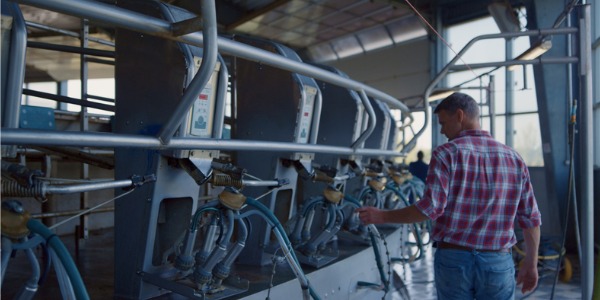
- Barns and Milking Parlors – Much of the work takes place in barns or milking parlors where the cows are housed and milked. These facilities are equipped with robotic milking systems, feeding stations, and other automated equipment.
- Pastures and Grazing Areas – Depending on the farming practices, the workplace may also include pastures and grazing areas where the cows are allowed to graze and exercise. The farmer may spend time moving cows between pastures, monitoring their behavior, and ensuring they have access to adequate food and water.
- Control Rooms or Monitoring Centers – Some robotic dairy farms have control rooms or monitoring centers where farmers can oversee the operation of the robotic systems and analyze data collected from sensors and monitoring devices. These spaces are often equipped with computer systems, displays, and software for managing and optimizing farm operations.
- Office or Administrative Areas – In addition to the farm facilities, the workplace may include office or administrative areas where the farmer handles paperwork, communicates with suppliers and customers, and manages financial aspects of the business.
- Outdoor Areas and Equipment Storage – The workplace may also include outdoor areas where equipment such as tractors, feed storage bins, and manure spreaders are stored. The farmer may spend time operating this equipment as needed for tasks such as fieldwork, feed delivery, or manure management.
How to become a Robotic Dairy Farmer
There are generally no strict educational requirements for robotic dairy farmers, as a passion for agriculture, hands-on experience, and practical skills are often considered more important in this field. However, obtaining education in relevant areas can be beneficial for aspiring dairy farmers. Here’s an overview of the pathway to the career:
High School Diploma or Equivalent
Earn a high school diploma or equivalent. High school education provides a foundation in basic communication and math and organizational skills, and it lays the groundwork for further learning. Key courses for students considering a career in robotic dairy farming include biology, chemistry, mathematics, computer science, and business.
Experience
Start by gaining hands-on experience. Look for opportunities to work as a farmhand, intern, or apprentice on a dairy farm, ideally a farm which utilizes robotic systems, to learn about the daily operations and responsibilities involved in dairy farming. Develop practical skills related to animal care, crop management, and equipment operation and maintenance. Familiarize yourself with milking procedures, feeding practices, breeding techniques, and basic veterinary care for dairy cattle.
Formal Education
Consider earning a degree or certificate in dairy science, agriculture, agricultural engineering, animal sciences, or agribusiness.
Certificate and associate degree programs tend to cover topics such as livestock management, forage production, farm equipment operation, and basic business principles.
At the bachelor’s level, students gain a more comprehensive understanding of dairy farming principles, practices, and management strategies. Coursework encompasses dairy nutrition, reproduction, genetics, farm management, and agricultural economics.
Some vocational schools may offer training programs that focus on agricultural machinery and robotic dairy farming technologies and practices.
Secure Financing
Dairy farming requires significant upfront investment in land, equipment, livestock, and infrastructure. Explore financing options such as loans, grants, or government agricultural programs to help fund your startup costs. Consider leasing land or partnering with established farmers to reduce initial costs.
Start Small and Scale Up
Consider starting small and expanding your operation as you gain experience and confidence as a robotic dairy farmer. Begin with a manageable herd size and focus on building a strong foundation for your farm before taking on additional challenges. Start by investing in one or two robotic systems and gradually add more as your operation grows.
Networking and Mentorship
Connect with other dairy farmers, agricultural organizations, extension services, and industry professionals for advice, guidance, and support as you embark on establishing yourself in the robotic dairy farming business.
Continuing Education
Even after starting their careers, it’s important for robotic dairy farmers to continue learning and to stay informed about new technologies, research findings, industry trends, and regulations. This can be achieved by attending workshops, seminars, conferences, and extension programs, and taking online courses offered by agricultural organizations, universities, and industry associations.
Certifications and Professional Organizations
There are several certifications and credentials that robotic dairy farmers can earn to demonstrate their expertise, commitment to best practices, and adherence to industry standards. Here’s a sampling:
- Manufacturer Training Programs – Companies that produce agricultural machinery and equipment and robotic dairy farming systems often offer training programs and certifications for farmers and technicians. These programs typically cover topics such as installation, operation, maintenance, and troubleshooting of the specific robotic systems.
- Dairy Quality Assurance Programs – Many dairy farmers participate in dairy quality assurance programs offered by industry organizations and dairy cooperatives. These programs focus on animal welfare and nutrition, selective breeding, and environmental stewardship, providing farmers with guidelines and best practices to ensure the production of high-quality, safe dairy products. Examples include the National Dairy FARM Program (Farmers Assuring Responsible Management) in the United States and the Canadian Quality Milk Program (CQM) in Canada.
- Organic Certifications – Robotic dairy farmers who adhere to organic farming practices can obtain organic certification for their operations. Organic certification verifies that farmers comply with organic standards related to soil health, pest management, livestock management, and use of synthetic inputs. Certification is typically administered by accredited certification agencies.
- Animal Welfare Certifications – Some dairy farmers choose to pursue animal welfare certifications to demonstrate their commitment to providing humane and ethical care for their livestock. Certifications such as the American Humane Certified or Certified Humane enforce specific standards and criteria related to animal housing, handling, nutrition, healthcare, and overall wellbeing.
- Grass-fed Certifications – Dairy farmers who specialize in grass-fed dairy production can pursue grass-fed certification for their products. Grass-fed certification verifies that cattle are raised on pasture and receive a significant portion of their nutrition from grass and forage. Certification standards may vary depending on the certifying organization or program.
- Environmental Certifications – Robotic dairy farmers committed to sustainable farming practices and environmental stewardship may seek certification or recognition from government agencies or environmental organizations such as the Rainforest Alliance or the Sustainable Agriculture Network. These certifications may focus on criteria such as soil conservation, water management, biodiversity, and energy efficiency.
- Food Safety Certifications – Robotic dairy farmers may also pursue food safety certifications, such as Hazard Analysis and Critical Control Points (HACCP) certification or Safe Quality Food (SQF) certification, to ensure the safety and quality of their dairy products. These certifications typically involve implementing food safety management systems and undergoing audits by accredited certifying bodies.
- Specialty Cheese Certifications – Dairy farmers who produce artisanal or specialty cheeses may seek certifications such as Protected Designation of Origin (PDO), Protected Geographical Indication (PGI), or Traditional Speciality Guaranteed (TSG) to protect the authenticity and quality of their products and promote regional food traditions.
In addition to these certifying bodies, the following organizations support dairy farm sustainability and profitability. They advocate for dairy policy and provide farmers with access to research, resources for dairy promotion and marketing, supply chain services, and platforms for networking, information exchange, and continuing education.
- National Milk Producers Federation (NMPF)
- Dairy Farmers of America (DFA)
- American Dairy Goat Association (ADGA)
- Holstein Association USA, Inc.
- American Dairy Association
- American Dairy Science Association (ADSA)
- National Sustainable Agriculture Coalition (NSAC)
- Organic Trade Association (OTA)
- National Farmers Union (NFU)
- Dairy Grazing Apprenticeship (DGA)
- Professional Dairy Producers of Wisconsin (PDPW)
- Dairy Farmers of Canada
- Slow Food
- International Dairy Federation (IDF)









User's Comments
No comments there.