


Stories you may like
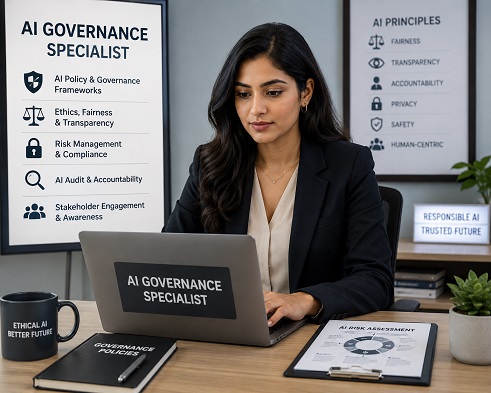
AI Governance Specialist
An AI governance specialist develops and manages the policies, processes, and frameworks that guide how artificial intelligence is used within an organization. They help ensure that AI systems are ethical, transparent, secure, and aligned with business goals and regulatory requirements. Their work may include assessing AI risks, creating governance policies, monitoring AI initiatives, and supporting responsible AI practices throughout the organization.
AI governance specialists work in technology companies, financial institutions, healthcare organizations, government agencies, consulting firms, and other industries that use AI. They collaborate with AI engineers, data scientists, legal teams, compliance professionals, cybersecurity specialists, and business leaders to oversee AI governance efforts. Strong analytical thinking, communication skills, attention to detail, and an understanding of AI technologies and risk management are important qualities for success in this role.
Duties and Responsibilities
AI governance specialists are responsible for helping organizations develop, implement, and maintain policies and processes that ensure the responsible use of artificial intelligence.
- AI Governance Framework Development: Develop governance frameworks, policies, and guidelines that support the ethical and responsible use of AI. Help establish standards for how AI systems are designed, deployed, and monitored.
- Risk Assessment and Management: Identify potential risks associated with AI systems, including bias, privacy, security, and compliance concerns. Recommend strategies to reduce risks and improve AI oversight.
- Policy Implementation and Compliance: Support the implementation of AI governance policies across the organization. Ensure AI initiatives align with internal standards, regulations, and industry best practices.
- AI Monitoring and Oversight: Monitor AI systems and governance processes to ensure they continue to operate as intended. Review AI activities and identify areas where improvements may be needed.
- Stakeholder Collaboration: Work with AI engineers, data scientists, legal teams, compliance professionals, and business leaders on governance initiatives. Help teams understand and follow AI governance requirements.
- Documentation and Reporting: Maintain records of governance policies, risk assessments, audits, and compliance activities. Prepare reports and recommendations for leadership and other stakeholders.
Types of AI Governance Specialists
AI governance specialists can focus on different areas of governance, risk management, ethics, and regulatory oversight depending on the needs of their organization and industry.
- AI Risk Governance Specialist: Focuses on identifying, assessing, and mitigating risks associated with AI systems. They help organizations manage issues related to reliability, security, fairness, and operational performance.
- AI Ethics Governance Specialist: Develops policies and practices that promote ethical AI use. They work to ensure AI systems are fair, transparent, accountable, and aligned with organizational values.
- AI Policy Governance Specialist: Creates and maintains governance policies, standards, and procedures for AI initiatives. They help establish clear rules for how AI systems should be developed and used.
- AI Data Governance Specialist: Oversees the management, quality, privacy, and security of data used in AI systems. They help ensure data practices comply with regulations and organizational requirements.
- AI Regulatory Governance Specialist: Focuses on helping organizations comply with AI-related laws, regulations, and industry standards. They monitor regulatory developments and support compliance efforts.
- Enterprise AI Governance Specialist: Manages governance programs across an entire organization. They coordinate governance activities among technical, legal, compliance, and business teams to support responsible AI adoption.
Workplace of an AI Governance Specialist
The workplace of an AI governance specialist is typically a professional office or remote environment where they help organizations manage the responsible use of artificial intelligence. Their work involves developing policies, reviewing AI projects, assessing risks, monitoring governance processes, and ensuring AI systems align with organizational standards and regulations. They often use reporting, documentation, and risk management tools to support governance activities.
AI governance specialists work closely with a wide range of professionals, including AI engineers, data scientists, legal teams, compliance specialists, cybersecurity professionals, and business leaders. They participate in meetings, review AI initiatives, and help teams understand governance requirements. Strong communication and collaboration skills are important because they frequently work across both technical and non-technical departments.
The work is analytical, strategic, and focused on oversight. AI governance specialists spend much of their time evaluating risks, improving governance frameworks, monitoring compliance, and recommending best practices for responsible AI use. Because AI technologies and regulations continue to evolve, they also stay informed about new developments, industry standards, and emerging governance challenges.
How to become an AI Governance Specialist
Becoming an AI governance specialist involves building knowledge of artificial intelligence, governance, risk management, and organizational policies. The following steps can help prepare you for a career in this growing field.
- Earn a Relevant Degree: Obtain a Bachelor's Degree in Business, Computer Science, Information Technology, Data Science, Law, Public Policy, or a related field. This provides a strong foundation in technology, governance, and organizational operations.
- Learn AI and Data Fundamentals: Develop an understanding of artificial intelligence, machine learning, data management, and how AI systems are designed and used. This knowledge helps you evaluate AI-related opportunities and risks.
- Study Governance, Risk, and Compliance: Learn about governance frameworks, risk assessment, data privacy, cybersecurity, and regulatory requirements. Understanding these areas is essential for managing AI responsibly.
- Develop Analytical and Communication Skills: Build skills in critical thinking, research, problem-solving, policy analysis, and report writing. AI governance specialists must communicate complex topics clearly to both technical and non-technical audiences.
- Gain Practical Experience: Seek internships, projects, or entry-level roles related to governance, compliance, risk management, cybersecurity, data governance, or AI. Hands-on experience helps you understand how governance programs operate in real organizations.
- Stay Current with AI and Regulatory Developments: AI technologies and regulations are constantly evolving. Regularly follow industry trends, governance frameworks, and emerging best practices to keep your knowledge up to date.
Certifications
Several professional certifications can help aspiring AI governance specialists build expertise in governance, risk management, compliance, privacy, and responsible AI oversight.
- Certified in Governance, Risk and Compliance (CGRC): An ISC2 certification that focuses on governance, risk management, compliance processes, and security controls within organizations.
- Certified in the Governance of Enterprise IT (CGEIT): An ISACA certification that validates expertise in enterprise governance, strategic alignment, risk management, and technology oversight.
- Certified Information Privacy Manager (CIPM): An IAPP certification that demonstrates knowledge of privacy program governance, policy development, and privacy management practices.
- Certified Information Systems Auditor (CISA): An ISACA certification that focuses on auditing, monitoring, assessing, and managing information systems, risks, and controls.
Skills Needed for an AI Governance Specialist
An AI Governance Specialist typically needs a blend of technical, legal, risk-management, and policy skills.
Core Skills
- AI & Machine Learning Fundamentals
- Understand how AI/ML models work
- Generative AI and LLM concepts
- Model lifecycle and deployment
- AI limitations, hallucinations, bias, and explainability
- AI Risk Management
- Identify and assess AI risks
- Risk classification and mitigation
- Model risk management
- AI incident management
- Risk assessments and impact assessments
- AI Ethics & Responsible AI
- Fairness and bias
- Transparency and explainability
- Accountability
- Human oversight
- Privacy and data ethics
- Responsible AI principles
- AI Regulations & Standards
- Familiarity with major AI regulations and frameworks
- EU AI Act
- NIST AI Risk Management Framework
- ISO/IEC 42001
- GDPR and data-protection principles
- Understanding of emerging AI legislation
- Policy & Governance
- Create AI governance policies and standards
- Define roles and responsibilities
- Develop AI approval processes
- Establish acceptable-use policies
- Create governance committees and escalation procedures
- Data Privacy & Security
- Data protection fundamentals
- Data classification and handling
- Cybersecurity principles
- Third-party/vendor AI risks
- Access controls and data governance
- Audit, Compliance & Controls
- Internal controls
- Compliance assessments
- Audit preparation
- Control testing
- Documentation and evidence management
- Regulatory reporting
- Technical & Analytical Skills
- Basic Python/SQL can be valuable
- Data analysis and visualization
- Understanding AI evaluation and monitoring
- Familiarity with cloud and AI platforms
- Ability to interpret technical documentation
- Third-Party AI Risk
- Assess AI vendors and providers
- Review contracts and AI-related terms
- Evaluate model/data risks
- Monitor vendor compliance
- Communication & Stakeholder Management
- Translate technical AI risks into business language
- Write policies, reports, and risk assessments
- Work with legal, cybersecurity, compliance, engineering, and business teams
- Present findings to senior leadership
Salary
An AI Governance Specialist can earn approximately:
- India: ₹5–10 LPA for freshers, ₹10–20 LPA with 2–5 years, and ₹18–35+ LPA at senior levels.
- USA: $90,000–$180,000+ per year, with senior roles potentially exceeding $200,000.
- UK: £50,000–£120,000+ per year.
- Canada: C$80,000–C$150,000+ per year.
- Australia: A$100,000–A$180,000+ per year.
- Germany: €60,000–€120,000+ per year.
- Singapore: S$80,000–S$160,000+ per year.
With strong expertise in AI regulations, risk management, data privacy, responsible AI, and compliance, experienced professionals can command significantly higher salaries.











User's Comments
No comments there.