


Stories you may like
Residential Organizer
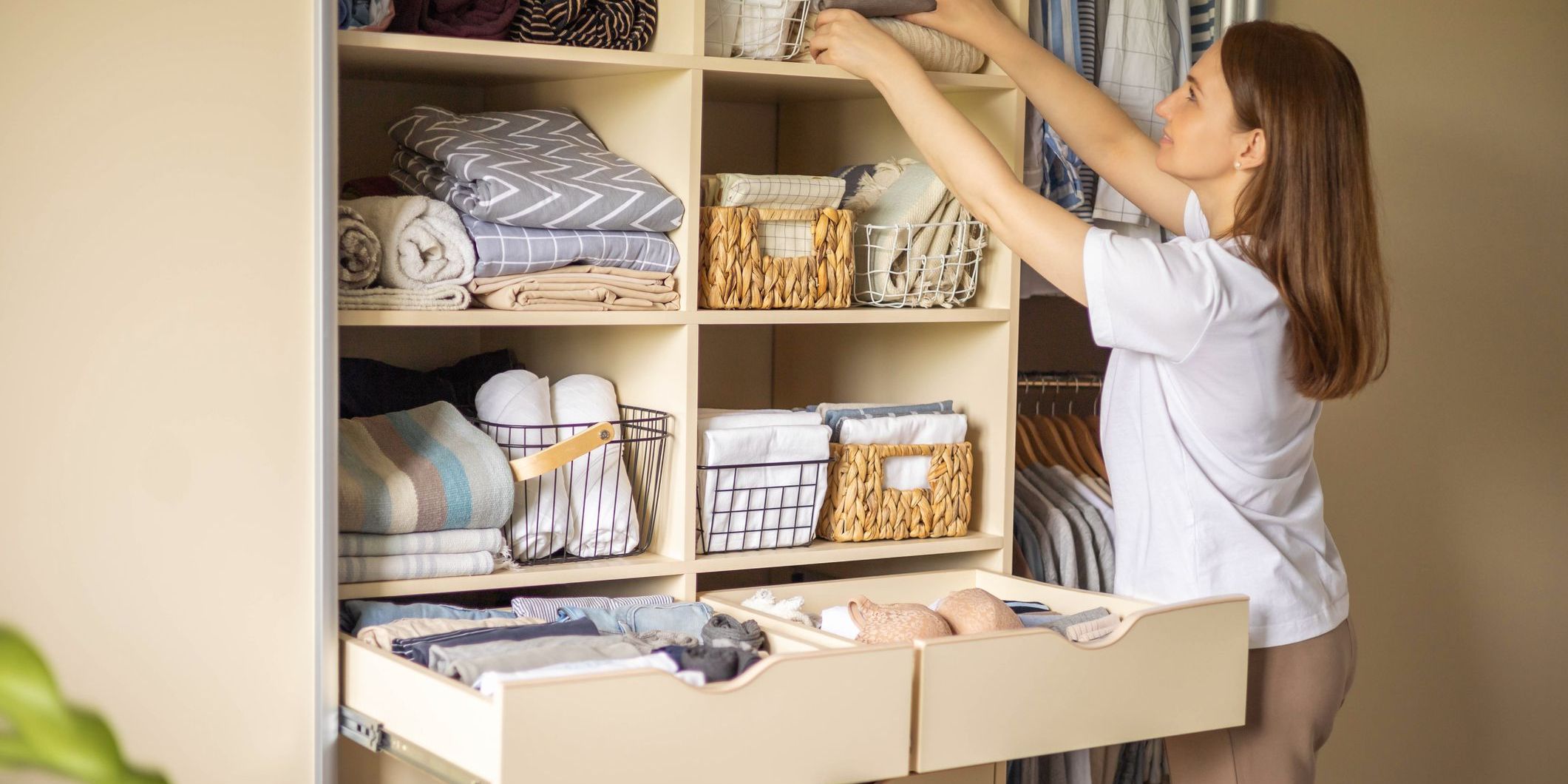
Residential organizers help individuals and families declutter, organize, and optimize the living spaces in their homes. Cluttered or disorganized homes can lead to wasted time, frustration, and even anxiety. Professional organizers work to create well-organized environments that support productivity, mental clarity, and a sense of control.
They also help clients develop simple routines and systems that make it easier to keep their homes tidy over time. This ongoing support empowers people to maintain the results and enjoy a more comfortable, functional living space.
What does a Residential Organizer do?
Duties and Responsibilities
A residential organizer provides clients with guidance and solutions to enjoy a comfortable, orderly, and stress-free home. Here’s a look at what the job entails:
- Assessment of Spaces: Evaluate the client’s home to identify cluttered or inefficient areas and determine organization needs. This step helps prioritize which areas to tackle first and establishes a clear plan of action.
- Decluttering: Help clients sort belongings, decide what to keep, donate, sell, or discard. The process also teaches clients decision-making skills to prevent future accumulation.
- Space Planning: Design layouts and storage solutions that maximize the use of available space. Thoughtful planning ensures both aesthetics and functionality are considered.
- Implementing Organization Systems: Set up functional systems for closets, kitchens, pantries, home offices, garages, and other areas. Proper implementation makes it easier for clients to maintain organization over time.
- Customized Solutions: Tailor organizational strategies to the client’s lifestyle, habits, and preferences. Personalized solutions increase the likelihood that systems will be used consistently.
- Labeling and Categorizing: Label items, storage bins, and shelves to improve accessibility and order. Clear labeling reduces time spent searching for belongings.
- Guidance and Coaching: Educate clients on maintaining organization and implementing daily habits that prevent clutter. Ongoing coaching empowers clients to sustain a clutter-free home independently.
- Coordination with Other Professionals: Work with interior designers, movers, or contractors if needed for large-scale projects. Collaboration ensures a seamless process and professional results.
- Time Management Advice: Offer strategies to optimize daily routines and household management. Effective time management supports a well-organized and stress-free environment.
- Follow-Up Support: Provide ongoing support or check-ins to ensure long-term organization is maintained. This helps clients adjust systems as their needs or lifestyles change.
Different Types of Residential Organizers
Residential organizers often differentiate themselves based on the client’s needs, the space being organized, or their area of expertise:
- Clutter or Hoarding Specialists focus on helping clients who struggle with excessive clutter or hoarding behaviors, often requiring sensitivity and gradual approaches.
- Closet and Wardrobe Organizers specialize in organizing clothing, shoes, and accessories to maximize closet space and improve accessibility.
- Kitchen and Pantry Organizers help streamline kitchen layouts, pantry storage, and cooking workflows for efficiency.
- Home Office Organizers focus on decluttering and optimizing workspaces for productivity, filing systems, and paper management.
- Move-in/Move-out Organizers assist clients during relocations by organizing possessions, packing, and setting up new spaces efficiently.
- Paper and Digital Organizers specialize in sorting, filing, and managing documents, bills, and digital files for easy retrieval.
- Full-Home Organizers work across multiple rooms or entire households, creating cohesive systems throughout the home.
Many residential organizers combine several specialties, depending on their training and client demand.
What is the workplace of a Residential Organizer like?
Residential organizers are typically self-employed or work for professional organizing companies, but they can also be hired by other clients:
- Private Homeowners – seeking help to declutter, organize, or optimize their living spaces
- Real Estate Agents and Stagers – to prepare homes for sale, making them more appealing to potential buyers
- Interior Designers – to ensure functional layouts and efficient use of space in home design projects
- Moving Companies – to assist clients with packing, unpacking, and setting up new homes
- Corporate Clients – for home office organization or lifestyle consulting, particularly for executives or remote workers
- Senior Living Communities – to help older adults downsize, declutter, or optimize their living spaces for safety and convenience
How to become a Residential Organizer
Working as a residential organizer allows you to turn a passion for order and systemization into a service that transforms lives. The journey to entering the field involves building skills, gaining experience, and establishing a business foundation.
Build Foundational Skills and Define Your Niche
- Self-Assessment – Confirm your natural inclination for organizing, attention to detail, punctuality, and, most importantly, empathy and patience. Working with clients often involves emotional attachment to belongings.
- Practical Experience – Start by organizing your own home, then offer to help friends and family for free or at a ‘friends and family’ rate. This is essential for building confidence and a preliminary portfolio of before-and-after photos and client testimonials.
- Define Your Niche – Specialization helps with marketing. Consider areas like seniors/downsizing, chronic disorganization (e.g., hoarding), moving/unpacking services, specific spaces (e.g., closets, kitchens, home offices), or digital organization.
Obtain Training and Education
A formal college degree is not usually required to become a residential organizer, but a high school diploma or equivalent is generally a minimum standard.
Training offered by professional organizations or third-party providers, while voluntary, provides industry-specific knowledge, ethical guidelines, and business acumen. Professional organizing curricula are generally divided into three major areas:
Organizing Skills and Methodology
This section focuses on the practical principles needed to create sustainable organizational systems in various spaces. Core concepts like sorting, decluttering, containing, and maintaining are covered. This may include techniques like ‘KonMari’ or ‘SPACE.’
- The KonMari Method, developed by Marie Kondo, a Japanese organizing consultant, author, and television presenter, uses a unique selection criterion – choosing what sparks joy! You are not choosing what to discard but rather choosing to keep only the items that speak to your heart. Through tidying, you can reset your life and spend the rest of your life surrounded by the people and things that you love the most.
- The SPACE formula comes from organizing pro Julie Morgenstern, author of Organizing from the Inside Out. It’s an acronym that you follow while you work: Sort by grouping similar items. Purge by getting rid of what you don’t need. Assign by giving everything you keep a home. Containerize by putting those items into containers. Evaluate by maintaining your system.
- Space Planning and Layouts – Learning to assess the optimal function of a space, taking measurements, creating floor plans (often digital), and arranging furniture and systems to improve traffic flow and visual balance.
- Storage Solutions – Identifying and utilizing various fixed and movable storage solutions, including shelving, drawers, containers, and closet systems, tailored to different budget types and client needs.
Specialized Areas – Deep-dive into specific organizing niches:
- Residential Organizing – Kitchens, closets, garages, paper/filing systems
- Digital Organizing – Managing files, photos, and email accounts
- Chronic Disorganization – Understanding and working with clients who struggle with hoarding, ADHD (attention deficit hyperactivity disorder), or other challenges that cause severe, long-term clutter
Client Interaction and Ethics
Success in this field heavily relies on soft skills and maintaining a professional relationship built on trust and non-judgment.
- Client Assessment (The Consultation) – Conducting effective interviews to define a client's specific needs, challenges, goals, and lifestyle habits and to create a personalized organizing plan
- Communication Skills – Learning to listen effectively, manage client expectations, and communicate strategies clearly
- Working with Resistance – Strategies for dealing with clients who are emotionally attached to their belongings or resistant to change and new systems
- Ethical Standards and Boundaries – Understanding and adhering to a code of ethics (often provided by professional organizations}, maintaining client confidentiality, and establishing professional boundaries
- Safety Practices – Protocols for working in clients' homes, including safe lifting, handling hazardous materials, and identifying when external services (e.g., social workers, mental health professionals) may be needed
Business Development
For those launching an independent practice, this area covers the essential knowledge for managing and marketing a successful small business.
- Business Planning – Creating a formal business plan, defining your niche market, and determining your service offerings
- Legal and Financial Setup – Steps for legally registering the business, obtaining necessary insurance, and setting up proper bookkeeping and tax records
- Pricing and Finances – Establishing a competitive pricing structure (hourly vs. package rates) and managing business finances
- Marketing and Sales – Learning how to effectively market services both locally and online, building a strong brand, creating a professional portfolio (before-and-after photos), generating referrals, and networking with complementary businesses (e.g., interior designers, real estate agents, moving companies)
- Productivity – Tools and strategies for managing projects, scheduling, and optimizing workflow
Complementary Courses and Degrees
To complement their direct organizing training, some professional organizers may take standalone courses or pursue degrees in disciplines like:
- Psychology or Social Work – Helps in understanding client motivations and managing emotional resistance to decluttering
- Business or Marketing – Essential for running an independent business, including pricing, branding, and client acquisition
- Interior Design or Home Staging – Provides knowledge of aesthetics, spatial planning, and maximizing visual appeal
Certifications and Professional Organizations
While you can work in residential organizing or start a business in the field without one, a certification demonstrates proven competency and ethical commitment. Joining professional organizations provides valuable opportunities for networking and continuing education.
- Certified Professional Organizer (CPO) – The CPO, awarded by the Board of Certification for Professional Organizers (BCPO), is the industry’s most respected, globally recognized credential. To earn it, candidates must have a high school diploma or equivalent and 1,000 to 5,000 hours of paid organizing work experience accumulated within the five years prior to application. In addition, they must pass a comprehensive standardized exam and agree to adhere to the BCPO code of ethics. To maintain their CPO designation, they are required to pay an annual fee and to recertify every three years through either continuing education hours or retaking the exam.
- Certified Home Organizer (CHO) – This certification, administered by the American Society of Professional Organizers (ASPO), is awarded to candidates who complete the ASPO Simple Systems Certification courses. The certification is designed to help organizers build their business and expertise, with benefits like being listed in the ASPO directory and potential SEO boosts from displaying the certification.
- Trained Professional Organizer (TPO) – The Professional Organizers in Canada (POC) awards this credential to individuals who complete their structured education program.
- KonMari Consultant Certification – This specialization credential, focused on the KonMari method of tidying (‘sparking joy’), requires attending a training seminar and completing practice hours.
- Certificates from the Institute for Challenging Disorganization (ICD) – The ICD offers various certificates and a CPO-CD (Certified Professional Organizer – Chronic Disorganization) certification for those specializing in chronic disorganization and related challenges like hoarding and ADHD.
- National Association of Productivity & Organizing Professionals (NAPO) – NAPO is dedicated to helping people and organizations bring order and efficiency to their lives. Its mission is to be the leading source for organizing and productivity professionals by providing education, enhancing business connections, advancing industry research, and increasing public awareness.
- Association of Professional Declutterers & Organisers (APDO) – This membership association provides training and a strong professional community for organizers and declutterers working in the UK.









User's Comments
No comments there.