


Stories you may like
Composer
A composer creates original music that expresses emotions, ideas, or stories through sound. This creative role involves shaping melodies, harmonies, rhythms, and structure to build complete musical pieces. Composers work across many styles, including classical, film music, jazz, electronic, and modern genres. They use their understanding of music theory and style to turn ideas and feelings into music that others can hear and experience.
The process of composing usually combines creativity, technical skill, and inspiration. Composers often work on their own, but they may also collaborate with musicians, conductors, or producers to bring their music to life. Their work can be written for many different settings, from solo instruments to full orchestras or digital productions, making the role flexible and widely used across music and media.
Duties and Responsibilities
The duties and responsibilities of a music composer can vary depending on their specific role and the project they are working on, but some common tasks include:
- Creating Original Music: The primary responsibility of a music composer is to create original musical compositions for a wide range of projects such as films, television shows, video games, commercials, and other media. This involves developing a creative vision for the project, understanding the requirements of the client or director, and creating music that meets those requirements.
- Arranging Music: A music composer is also responsible for arranging music, which involves creating new versions of existing compositions by adding or removing musical elements such as instruments, melodies, harmonies, or rhythms. This requires a deep understanding of music theory, composition techniques, and the ability to collaborate with musicians to create a cohesive sound.
- Conducting Musicians: If the project involves live musicians, the music composer may be responsible for conducting them during the recording process. This requires strong leadership skills, the ability to communicate effectively with musicians, and a deep understanding of how to create an effective musical performance.
- Recording and Mixing Music: The music composer may also be involved in the recording and mixing of the music they have composed. This involves selecting the appropriate equipment, working with sound engineers, and ensuring that the final product meets the client's requirements.
- Collaborating with other Professionals: A music composer must be able to collaborate effectively with other professionals involved in the project, such as directors, producers, music supervisors, sound engineers, and musicians. This requires strong communication and interpersonal skills, as well as the ability to take feedback and incorporate it into their work.
- Managing Time and Resources: A music composer must be able to manage their time and resources effectively, especially when working on multiple projects simultaneously. This involves setting realistic deadlines, prioritizing tasks, and delegating responsibilities as necessary.
- Maintaining Creativity: Finally, a music composer must be able to maintain their creativity and passion for music, even when working on demanding and challenging projects. This requires a deep love and appreciation for music, as well as a willingness to continue learning and exploring new techniques and styles.
Workplace of a Composer
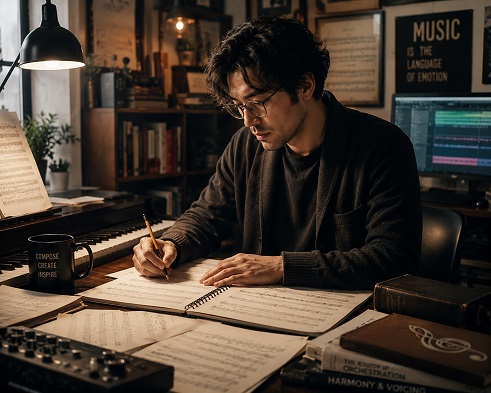
The workplace of a composer can vary a lot depending on the type of music they create. Many composers work independently from home studios, using instruments, computers, and music software to write and produce music. Others may work in professional recording studios, universities, or production companies where they have access to advanced equipment and collaboration spaces.
Composers often spend a large part of their time in quiet, focused environments where they can concentrate on creating music. They may work alone when developing ideas, but they also regularly collaborate with musicians, conductors, producers, or directors depending on the project. For example, film composers often work closely with editing and production teams to match music with visual scenes.
The work environment can also be very project-based, with deadlines tied to albums, performances, films, or events. Some days involve creative writing and experimenting with ideas, while others focus on revising music based on feedback. Even though the work can be flexible, it often requires discipline, attention to detail, and long periods of focused creative effort.
How to become a Composer
Becoming a composer requires a combination of talent, creativity, education, and consistent practice. Here are some steps you can take to become a composer:
- Learn Music Theory and Composition Basics: Building a strong foundation in music theory is essential for any composer. This includes learning how to read and write music, understand notation, scales, keys, chords, harmony, and rhythm. Many people study through private lessons, music programs, or online courses.
- Get Formal Training: While not always required, formal education in music or music theory and composition can provide structure and guidance. Studying at a music school, college, or through specialized programs can also offer opportunities to compose for ensembles and receive mentorship.
- Listen to Music: Developing a wide musical awareness is an important part of becoming a composer. Listening to different styles, genres, and cultural traditions helps you understand how music is structured and expressed. Studying how other composers use melody, harmony, and rhythm can also inspire your own work.
- Develop Your Skills: Regular practice is key to improving as a composer. This involves writing music consistently, experimenting with different styles, and arranging pieces for different instruments or groups. Feedback from teachers, musicians, or peers can help refine your work.
- Build a Portfolio: A portfolio showcases your best compositions and helps demonstrate your skills and style. It can include written scores, recordings, or performance videos. Having a strong portfolio is useful when applying for opportunities or collaborations.
- Network: Connecting with other musicians, composers, and industry professionals is important for finding opportunities. Attending concerts, workshops, and music events can help you meet people in the field and collaborate on projects.
- Seek Opportunities: Gaining experience through competitions, commissions, performances, or media projects helps build a composing career. These opportunities allow you to share your music with wider audiences and gain professional experience.
- Continuously Improve: Growth as a composer happens over time through learning and practice. Seeking feedback, exploring new techniques, and staying open to different musical ideas helps you develop your own unique voice.
Skills Needed for a Composer
- Musical Creativity – The ability to create original melodies, harmonies, and musical ideas.
- Music Theory Knowledge – A strong understanding of harmony, rhythm, scales, chords, and musical structure.
- Instrument Proficiency – Skill in playing one or more instruments, especially piano or keyboard, to develop compositions.
- Notation and Score Writing – Ability to read and write sheet music accurately using traditional notation or music notation software.
- Listening Skills – A keen ear for pitch, rhythm, tone, and balance to refine musical works.
- Arrangement and Orchestration – Knowledge of how to write music for different instruments, ensembles, or orchestras.
- Digital Music Production – Familiarity with Digital Audio Workstations (DAWs), MIDI, virtual instruments, and music production software.
- Creativity and Imagination – The ability to express emotions, stories, and ideas through music in unique ways.
- Collaboration Skills – Ability to work effectively with musicians, conductors, producers, directors, and recording engineers.
- Time Management – Organizing projects and meeting deadlines, especially for film, television, or game music.
- Problem-Solving Skills – Finding creative solutions when revising compositions or adapting music to specific requirements.
- Attention to Detail – Ensuring every note, rhythm, dynamic, and expression marking contributes to the desired musical effect.
- Communication Skills – Clearly explaining musical ideas and collaborating with performers and production teams.
- Adaptability – Composing across different genres, styles, and media such as film, television, video games, advertising, and live performances.
- Continuous Learning – Keeping up with new musical trends, technologies, software, and composition techniques to remain competitive.
Composer Salary
A composer's salary varies widely depending on experience, specialization, industry, and whether they work freelance or full-time.
Average Annual Salary
- Entry-Level Composer: ₹3 lakh – ₹6 lakh per year
- Mid-Level Composer: ₹6 lakh – ₹12 lakh per year
- Experienced Composer: ₹12 lakh – ₹30 lakh+ per year
- Top Film, TV, or Game Composers: ₹50 lakh to several crores per year, depending on the success of their projects and royalties.
Average Salary by Country
- India: ₹3 lakh – ₹15 lakh per year (higher for successful film, television, and advertising composers)
- United States: USD $55,000 – $120,000 per year
- United Kingdom: £30,000 – £70,000 per year
- Canada: CAD $50,000 – $100,000 per year
- Australia: AUD $65,000 – $120,000 per year
Many composers also earn additional income through:
- Royalties from music streaming, broadcasts, and performances
- Film, television, and video game projects
- Advertising jingles and commercial music
- Music licensing
- Teaching music or composition
- Live performances and commissions
Income can fluctuate significantly, particularly for freelance composers, based on the number and scale of projects they undertake.











User's Comments
No comments there.