


Stories you may like
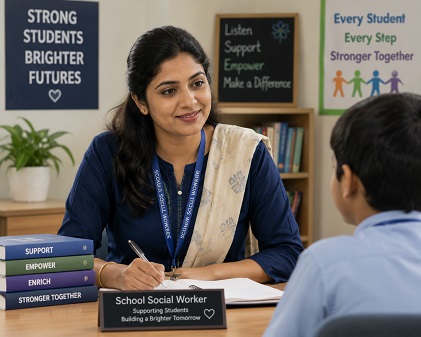
School Social Worker
A school social worker helps students deal with challenges that affect their education and well-being. They work with students, teachers, and families to address issues like bullying, family problems, mental health concerns, and academic struggles. Their goal is to make sure students have the support they need to succeed in school and in life.
School social workers provide counseling, connect students with resources, and create programs to improve student behavior and school climate. They may work with children facing homelessness, substance abuse, or emotional difficulties, offering guidance and solutions. They also help teachers and staff understand the social and emotional needs of students, ensuring a positive and supportive learning environment.
Duties and Responsibilities
A school social worker plays a key role in supporting students’ well-being and academic success. Their duties and responsibilities include:
- Providing Counseling and Emotional Support: School social workers offer one-on-one or group counseling to students dealing with issues such as bullying, anxiety, depression, or family problems. They help students develop coping skills and provide a safe space to talk about their challenges.
- Identifying and Addressing Student Needs: They assess students who are struggling academically, socially, or emotionally to determine what support they require. This may involve working with teachers, parents, and other school staff to create intervention plans.
- Connecting Students and Families with Resources: School social workers help families access important services, such as food assistance, housing support, or mental health counseling. They also provide information about community programs that can help students succeed.
- Supporting Special Education Services: They assist students with disabilities by helping families navigate Individualized Education Programs (IEPs) and ensuring students receive the accommodations they need.
- Promoting a Positive School Environment: School social workers help develop anti-bullying initiatives, conflict resolution programs, and other efforts to create a safe and inclusive school culture.
- Collaborating with Teachers and Staff: They work closely with school personnel to address behavioral issues, improve classroom management strategies, and provide training on mental health awareness.
- Advocating for Students and Families: School social workers ensure that students’ voices are heard and their rights are protected. They may work to improve school policies or help students facing discrimination or unfair treatment.
Types of School Social Workers
School social workers can specialize in different areas based on the needs of students and the school system. Here are some common types of school social workers:
- Special Education Social Worker: These social workers focus on students with disabilities or special needs. They help families navigate Individualized Education Programs (IEPs), ensure students receive appropriate accommodations, and provide counseling for emotional or behavioral challenges.
- Crisis Intervention Social Worker: Crisis intervention social workers respond to urgent situations, such as student trauma, bullying, violence, or suicidal ideation. They provide immediate support, help students cope with difficult experiences, and connect them with further mental health resources.
- Mental Health and Behavioral Social Worker: These social workers specialize in addressing mental health disorders, emotional difficulties, and behavioral challenges. They provide counseling, work on behavior management plans, and collaborate with psychologists or counselors to support students’ mental well-being.
- Attendance and Truancy Social Worker: These professionals focus on reducing absenteeism and improving student attendance. They identify barriers to school attendance, such as family instability or transportation issues, and work with students and families to develop solutions.
- Substance Abuse Prevention Social Worker: These social workers educate students about the dangers of drug and alcohol use and provide counseling to those struggling with substance abuse. They may also run prevention programs and connect students with rehabilitation services if needed.
Workplace of a School Social Worker
A school social worker’s workplace is usually in a school setting, where they have an office to meet with students, parents, and staff. They work in elementary, middle, and high schools, helping students with personal and academic challenges. Their office provides a safe and private space for students to talk about their problems, but they also spend time in classrooms, hallways, and meeting rooms to observe and support students in different situations.
School social workers often move between different areas of the school and sometimes even travel between multiple schools if they serve a district rather than just one school. They may attend meetings with teachers, administrators, and counselors to discuss student progress and create support plans. They also visit students’ homes or work with community organizations to help families access important services like food assistance, counseling, or housing support.
The environment can be busy and emotionally demanding, as school social workers handle a variety of student concerns, from minor behavioral issues to serious crises like abuse or mental health struggles. However, it is also a rewarding workplace where they see the positive impact of their work—helping students overcome challenges, improving school environments, and making sure families have the resources they need.
How to become a School Social Worker
To become a school social worker, you will need to follow a series of educational and professional steps to gain the necessary skills and qualifications for the role.
- Obtain a Bachelor's Degree: Start by earning a Bachelor's Degree in Social Work (BSW) or a related field, such as psychology or sociology. A BSW provides foundational knowledge and prepares you for entry-level social work positions.
- Gain Practical Experience: During your degree program, you’ll typically complete fieldwork or internships. This hands-on experience in schools or community organizations is essential for learning how to address student needs and gaining real-world skills.
- Earn a Master’s Degree in Social Work (MSW): While a BSW allows you to work in entry-level roles, becoming a school social worker generally requires a Master of Social Work (MSW). An MSW provides advanced knowledge and clinical skills needed to work with students facing more complex challenges.
- Obtain Licensure or Certification: Depending on where you plan to work, you may need to obtain licensure as a social worker. In many areas, this involves completing a set number of supervised hours and passing a licensing exam. Some states may also require additional certification specific to school social work.
- Apply for School Social Worker Positions: Once you’ve completed your education and licensing requirements, you can apply for school social worker positions in schools or school districts. You may need to submit your credentials and demonstrate your experience and training in social work and school environments.
Skills Needed for a School Social Worker
A school social worker supports students' academic success, emotional well-being, and social development by working with students, families, teachers, and community organizations. The role requires a combination of professional social work knowledge and strong interpersonal skills.
Hard Skills
- Case Management – Assessing student needs, developing intervention plans, and coordinating support services.
- Counseling Techniques – Providing individual and group counseling for emotional, behavioral, and social issues.
- Crisis Intervention – Responding effectively to emergencies such as bullying, abuse, self-harm risks, family crises, or traumatic events.
- Behavioral Assessment – Identifying emotional, behavioral, and learning challenges affecting students.
- Child Development Knowledge – Understanding physical, emotional, cognitive, and social development across different age groups.
- Mental Health Support – Recognizing signs of anxiety, depression, trauma, and other mental health concerns.
- Conflict Resolution and Mediation – Helping students resolve conflicts peacefully.
- Family Support Services – Connecting families with healthcare, financial assistance, counseling, and community resources.
- Report Writing and Documentation – Maintaining accurate case records, assessments, and progress reports.
- Legal and Ethical Knowledge – Understanding child protection laws, educational policies, confidentiality, and safeguarding procedures.
- Special Education Knowledge – Supporting students with disabilities and collaborating on individualized education plans (IEPs).
- Community Resource Coordination – Building partnerships with healthcare providers, NGOs, and government agencies.
- Data Collection and Evaluation – Monitoring student progress and evaluating intervention outcomes.
- Technology Skills – Using case management software, digital records, and communication platforms.
Soft Skills
- Empathy – Understanding and responding compassionately to students' needs.
- Active Listening – Paying close attention to students, parents, and teachers.
- Communication Skills – Communicating clearly with children, families, educators, and community professionals.
- Problem-Solving – Developing practical solutions for academic, emotional, and family-related challenges.
- Patience – Supporting students with diverse backgrounds and needs.
- Emotional Intelligence – Managing emotions while understanding the feelings of others.
- Critical Thinking – Analyzing complex situations to make informed decisions.
- Cultural Competence – Respecting and working effectively with students from diverse cultural and socioeconomic backgrounds.
- Collaboration and Teamwork – Working closely with teachers, school counselors, psychologists, administrators, and parents.
- Organization Skills – Managing multiple student cases and administrative responsibilities efficiently.
- Adaptability – Adjusting interventions based on changing student needs and school environments.
- Leadership – Promoting student welfare initiatives and advocating for supportive school policies.
- Confidentiality and Professional Ethics – Protecting sensitive student information and maintaining trust.
- Resilience – Remaining calm and effective in challenging or emotionally demanding situations.
Salary of a School Social Worker
The salary of a school social worker varies depending on education, experience, employer, location, and whether they work in public or private educational institutions.
India (Approximate Annual Salary)
- Entry-Level (0–2 years): ₹3 lakh – ₹5 lakh per year
- Mid-Level (3–7 years): ₹5 lakh – ₹8 lakh per year
- Experienced (8+ years): ₹8 lakh – ₹15 lakh+ per year
- Government Schools: Salaries may range from ₹6 lakh to ₹12 lakh+ per year, depending on the state, pay commission, and years of service.
International (Approximate Annual Salary)
- United States: $50,000 – $85,000 per year
- United Kingdom: £30,000 – £50,000 per year
- Canada: CAD 55,000 – CAD 85,000 per year
- Australia: AUD 70,000 – AUD 100,000 per year
Factors That Influence Salary
- Level of education (Bachelor's, Master's, or MSW)
- Professional licensure and certifications
- Years of experience
- Public vs. private school employment
- Geographic location
- Size and type of educational institution
- Additional responsibilities, such as crisis intervention or special education support
- Government pay scales and benefits
School social workers employed in government school systems or large educational districts, particularly those with advanced qualifications and extensive experience, generally receive higher salaries along with benefits such as health insurance, pensions, and paid leave.










User's Comments
No comments there.